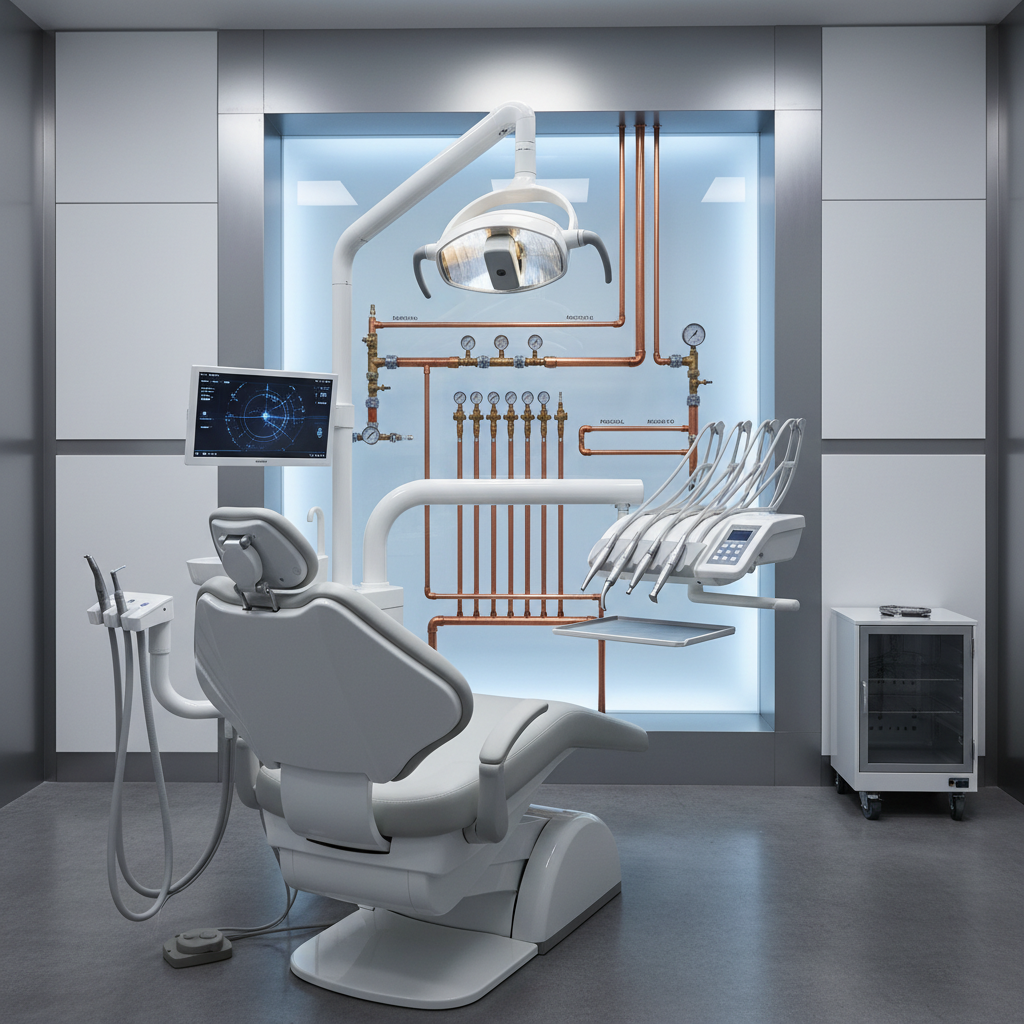
Planning Your Dental Nitrous Oxide System Installation
A successful nitrous oxide and oxygen (N2O/O2) system installation begins long before the first pipe is run. Proper planning is paramount to ensure your system is safe, compliant, and perfectly suited to your practice's clinical needs. This initial phase involves critical decisions about system design, equipment selection, and understanding the regulatory landscape.
For a dental office in Lexington, KY, this means designing a system that not only delivers medical-grade gases reliably but also adheres strictly to national and local building codes. Key considerations include the number of operatories you need to service, the physical layout of your practice, and the type of sedation you plan to offer.
System Sizing: Manifold vs. Portable Tanks
Your first major decision is how you will store and supply the nitrous oxide and oxygen. The two primary options are a central manifold system or portable E-cylinders.
- Portable E-Cylinders: Best for very low-volume users (e.g., one operatory, infrequent use). A portable yoke stand holds one N2O and one O2 cylinder. While the upfront cost is lower, it requires frequent tank changes and is not practical for multi-operatory practices.
- Central Manifold System: The standard for most dental practices. A gas manifold automatically switches from a primary cylinder bank to a secondary bank, ensuring an uninterrupted supply. This system is housed in a secure, dedicated room or closet, with gas delivered to the operatories via a network of pipes. It is far more efficient and safer for regular use.
For most Lexington dental offices planning a new build-out or renovation, a central manifold system is the recommended choice for safety, efficiency, and long-term scalability. Medical Testing Solutions offers turnkey installation for these systems.
Designing for NFPA 99 Compliance
The National Fire Protection Association's NFPA 99, "Health Care Facilities Code," is the foundational document for medical gas systems. Your system's design must comply with these standards to ensure patient and staff safety.
Why this matters for compliance: NFPA 99 provides the minimum criteria for the design, installation, inspection, testing, and maintenance of medical gas and vacuum systems. Failure to comply can result in failed inspections, costly rework, and significant safety hazards. Insurance carriers and local fire marshals in Lexington will require adherence to this code.
Key NFPA 99 design considerations include:
- Dedicated Storage: Gas cylinders and manifolds must be located in a dedicated, well-ventilated room that meets specific fire-resistance ratings.
- Pipe Material: All piping must be medical-grade, seamless copper (Type K or L), cleaned for oxygen service.
- Shut-off Valves: Zone valves must be installed to isolate specific areas (like each operatory) in case of emergency or for maintenance.
- Alarm Systems: A master alarm panel and area alarm panels are required to monitor gas pressure and alert staff to any system irregularities.
Core Components of a Dental N2O/O2 System
A complete nitrous oxide sedation system is more than just a tank and a mask. It's an integrated network of components all working together. Here are the core parts you'll need.
1. Gas Source: Manifold & Cylinders
The heart of the system. A typical setup includes:
- Nitrous Oxide Manifold: Automatically manages the N2O supply.
- Oxygen Manifold: Manages the O2 supply. Oxygen is also a critical life-safety gas.
- Cylinders: High-pressure cylinders of N2O and O2, connected to the manifold.
2. The Piping Network
This network of brazed, medical-grade copper piping delivers the gases from the source to the operatories. Proper installation by an ASSE 6010 certified technician is crucial to prevent leaks and contamination. The entire network must be purged with nitrogen and tested for pressure and purity during the medical gas verification process.
3. Alarms and Monitoring
NFPA 99 mandates alarm systems to ensure continuous monitoring.
- Master Alarms: Located in an area of continuous surveillance (e.g., reception), they monitor the primary gas supply.
- Area Alarms: Installed in each sedation area, they monitor the pressure of the specific zone.
- WAGD Monitoring: Waste Anesthetic Gas Disposal (WAGD) is a critical safety component. You may also need WAG monitoring to ensure your scavenging system is effective and staff are not exposed to harmful levels of nitrous oxide.
4. In-Operatory Equipment
This is the "point-of-use" equipment.
- Zone Valve Box: Provides an emergency shut-off for the gases in a specific operatory.
- Outlets/Terminal Units: Gas-specific outlets that prevent accidental cross-connection.
- Flowmeter (Head Unit): This is the device that mixes the N2O and O2 and delivers it to the patient. It has critical safety features, such as a minimum 30% oxygen flow. For issues with these units, you may need specialized dental flowmeter repair and calibration services.
- Scavenging System: A vacuum system that actively removes exhaled N2O gas from the operatory to protect staff from chronic exposure.
| Component | NFPA 99 Requirement | ASSE Standard (Personnel) | Common Brands |
|---|---|---|---|
| Piping | Seamless Copper (Type K/L), cleaned for O2 service. | ASSE 6010 (Installer) | - |
| Manifold | Automatic changeover, secured in a dedicated room. | ASSE 6010 (Installer) | Harris, BeaconMedaes |
| Alarms | Master, Area, and Local alarms required per code. | ASSE 6010 (Installer) | BeaconMedaes, Tri-Tech |
| Flowmeter | Minimum 30% O2 flow, fail-safe mechanism. | ASSE 6040 (Maintenance) | Porter, Belmed, Accutron |
| Verification | Must be tested by a third party before patient use. | ASSE 6030 (Verifier) | - |