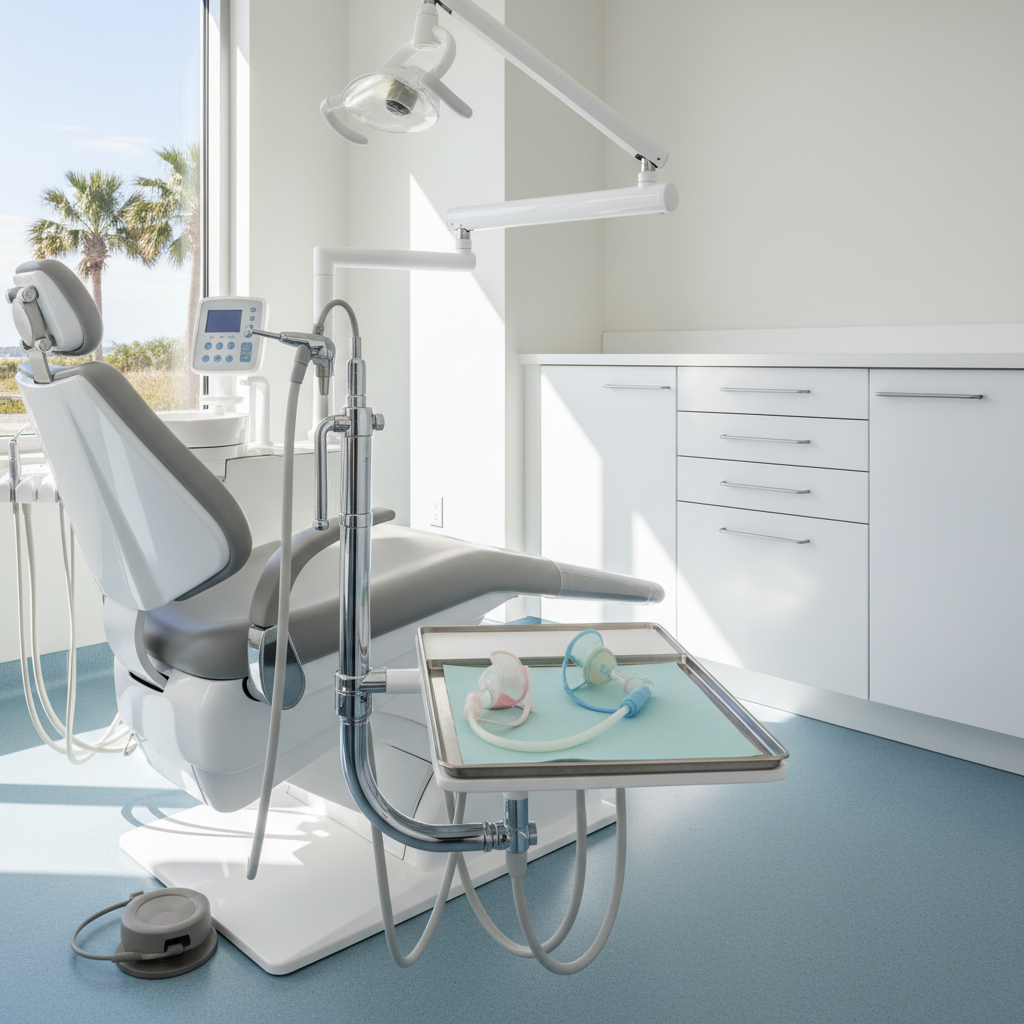
Turnkey Dental Nitrous Oxide Installation in Hilton Head, SC: A Complete Guide for Dentists
Installing or upgrading a nitrous oxide/oxygen sedation system in your Hilton Head dental practice is a significant investment in patient comfort and your practice's capabilities. However, it's also a complex process governed by strict codes and standards to ensure the safety of your patients and staff. A faulty installation can lead to serious risks, including leaks, system failures, and potential health hazards from long-term exposure to waste anesthetic gas (WAG). This guide provides a definitive overview of the entire turnkey installation process, from initial design to final verification, ensuring your system is safe, reliable, and fully compliant.
You will learn the key components of a code-compliant dental gas system, the critical role of NFPA 99 and ASSE 6000 standards, the differences between manifold and portable systems, and the essential steps for post-installation certification. Our goal is to equip you with the knowledge to make informed decisions for your Hilton Head practice.
The Core Components of a Dental N2O/O2 System
A compliant dental nitrous oxide and oxygen system is more than just a flowmeter on a mobile stand. It's an integrated network of medical-grade components designed to deliver gases safely from the source to the patient. Understanding these components is the first step in planning your installation.
Gas Source: Manifolds vs. Portable Cylinders
- Central Gas Manifold: This is the heart of a central system. Located in a secure, well-ventilated room, the manifold connects multiple large cylinders (typically G or H size) of nitrous oxide and oxygen. It automatically switches from the primary bank to the secondary bank when pressure drops, ensuring an uninterrupted gas supply. This is the preferred method for practices with multiple operatories.
- Portable E-Cylinder Yoke Systems: Smaller practices or those with limited space may opt for a portable system. These units hold smaller "E" cylinders of N2O and O2 directly on a mobile cart. While less complex, they require more frequent cylinder changes and careful monitoring to prevent running out of gas mid-procedure.
Piping, Outlets, and Flowmeters
- Medical Gas Piping: All piping used to transport nitrous oxide and oxygen must be medical-grade, cleaned for oxygen service, and brazed by a certified ASSE 6010 installer. The piping network runs from the manifold to each operatory.
- Terminal Units (Outlets): Each operatory will have specific outlets for N2O and O2. These are key-indexed (DISS or proprietary) to prevent accidental cross-connection of gas lines.
- Flowmeters: Devices like the Porter MXR or Belmed flowmeter are the final control point. They blend the gases and control the flow rate administered to the patient through the nasal mask. Regular calibration is essential for accuracy and safety.
Safety Systems: Alarms and Scavenging
- Master and Area Alarms: NFPA 99 requires alarm systems to monitor gas pressure and manifold status. A master alarm panel is placed in a location where it can be continuously monitored (e.g., reception), while area alarms are located within the sedation operatory itself. They provide immediate audible and visual warnings of system issues.
- Scavenging System: This is a critical safety component. A scavenging system, integrated with the dental vacuum, actively removes exhaled waste anesthetic gas (WAG) from the operatory, protecting staff from the health risks of chronic exposure. Proper flow and regular WAG monitoring are non-negotiable.
Why this matters for compliance: NFPA 99 (Health Care Facilities Code), specifically Chapter 5, outlines the stringent requirements for the design, installation, and testing of medical gas systems, including dental N2O/O2. Failure to comply can result in project delays, costly rework, and significant liability.
The Installation Process: An ASSE 6010-Certified Approach
A successful installation hinges on a qualified installer. Only technicians holding an ASSE 6010 Medical Gas Systems Installer certification are qualified to braze the medical gas piping. This certification ensures the technician has been trained and tested on the specific requirements of NFPA 99.
Here’s what to expect from a professional installation process with Medical Testing Solutions:
- Design & Planning: We work with you and your contractor to design a system that meets your clinical needs and fits your facility's layout, ensuring all code requirements are met from the start.
- Sourcing & Placement: We procure all necessary equipment, from manifolds and alarm panels to flowmeters and outlets. The source equipment is placed in a designated, compliant room.
- Piping Installation: Our ASSE 6010 certified technicians run the medical-grade copper piping from the source equipment to the designated outlets in each operatory. Every joint is meticulously brazed and inspected.
- Component Installation: We install zone valve boxes, alarm panels, terminal outlets, and connect the scavenging system to your dental vacuum.
- Initial System Check: Before the final verification, our installation team performs preliminary pressure tests and functional checks to ensure the system is ready for certification.
For a full scope of our capabilities, see our page on medical gas installation.