Installing a nitrous oxide and oxygen delivery system in a dental office is a significant undertaking that directly impacts patient safety, staff well-being, and regulatory compliance. For dental practices in Greensboro, NC, a proper installation is not just about connecting pipes and regulators; it’s about engineering a complete, sealed, and verified medical gas system that adheres to stringent national standards. This guide provides a definitive overview of the entire process, from initial design considerations and equipment selection to the critical final verification and certification. You will learn the key components of a compliant system, the importance of scavenging, the role of alarm systems, and the standards that govern every step, ensuring your practice is both safe and inspection-ready.
Dental Office Nitrous Oxide Installation in Greensboro, NC: A Complete Guide
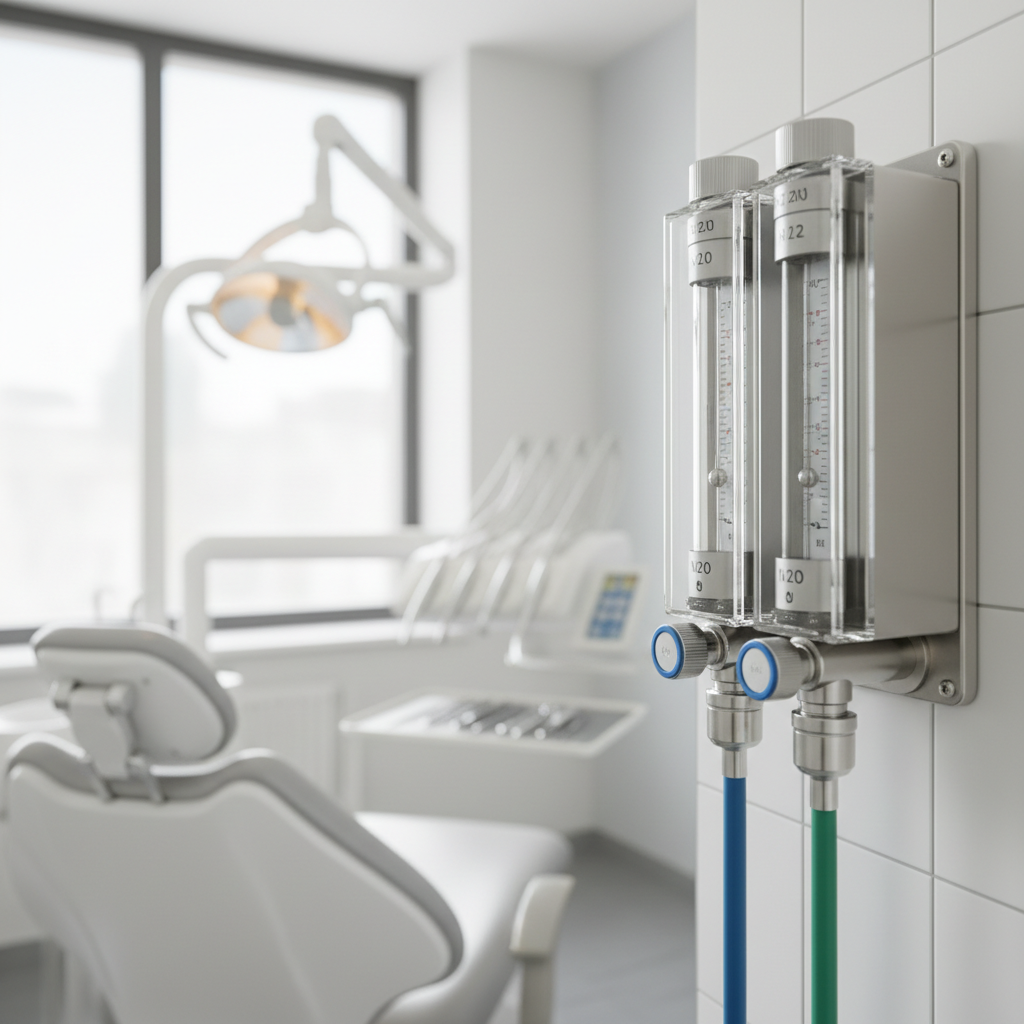
Understanding the Core Components of a Dental N2O/O2 System
A turnkey nitrous oxide/oxygen sedation system is more than just the flowmeter in the operatory. It’s an integrated network of components that must work in concert to ensure safe, reliable gas delivery. Understanding these parts is the first step for any Greensboro dental office planning an installation.
Gas Source & Manifold
- Cylinders: The system begins with high-pressure cylinders of nitrous oxide (N2O) and oxygen (O2). These are typically stored in a secure, well-ventilated room or closet with specific fire-resistance ratings as defined by NFPA 99.
- Manifold: A gas manifold is the control center for your gas supply. It connects multiple cylinders to the main pipeline, ensuring an uninterrupted flow. A primary benefit of a manifold is its ability to automatically switch from an empty cylinder to a full one, sending a signal to an alarm panel to alert staff that a cylinder needs replacement.
Pipeline & Distribution
- Piping: Medical-grade copper piping (ASTM B819) is required for distributing the gases from the source to the operatories. All joints must be brazed by an ASSE 6010 certified installer, a credential that demonstrates proficiency in medical gas system installation.
- Zone Valves: NFPA 99 mandates the installation of zone valves, which allow specific areas or "zones" of the dental office to be isolated from the main gas supply. This is crucial for maintenance, repairs, or emergencies without shutting down the entire practice.
Operatory Equipment
- Flowmeters: The dental flowmeter is the most visible component. Devices from brands like Porter, Belmed, and Accutron control the precise mixture and flow rate of N2O and O2 delivered to the patient. They include critical safety features like a minimum 30% oxygen flow and a failsafe that stops N2O flow if the oxygen supply is interrupted.
- Outlets & Hoses: Quick-connect outlets in each operatory provide the final link. These are gas-specific (DISS or another standard) to prevent cross-connection. Flexible, color-coded hoses connect the flowmeter to these outlets.
Why this matters for compliance: NFPA 99, Chapter 5 (Gas and Vacuum Systems), outlines the minimum requirements for the design, installation, and testing of these systems. Failure to use the correct materials (e.g., medical-grade copper) or installation procedures (e.g., brazing by a certified technician) can result in immediate inspection failure and significant safety hazards.
The Critical Role of Scavenging and WAG Management
Controlling waste anesthetic gas (WAG) is not an option, it's a requirement for protecting your staff. Chronic exposure to even low levels of nitrous oxide can have health consequences. A properly designed scavenging system is essential.
How Scavenging Works
- A scavenging system actively captures exhaled N2O from the patient’s nasal hood and directs it away from the breathing zone of the dentist and assistants.
- This is achieved via a dedicated vacuum system, distinct from the practice's dental suction system, that vents the captured gas safely outside the building.
Key Scavenging Components:
- Scavenging Nasal Hoods: Modern hoods are designed with a "mask-within-a-mask" system to deliver fresh gas while simultaneously capturing waste gas.
- Dedicated Vacuum Producer: A vacuum pump specifically sized and calibrated for the WAG system ensures consistent and effective removal without creating excessive negative pressure for the patient.
- WAG Monitoring: OSHA recommends periodic exposure monitoring to ensure your scavenging system is effective and staff exposure levels remain below recommended limits. Medical Testing Solutions can perform this monitoring to validate system performance.
Alarms and Monitoring: Your System’s Early Warning Network
NFPA 99 requires alarm systems to provide immediate audible and visual warnings of system malfunctions. For a dental N2O/O2 system in Greensboro, this typically involves two types of alarms.
- Master Alarms: Located in an area of continuous surveillance (e.g., the front desk or main staff area), the master alarm monitors the primary gas supply. It will trigger an alert for conditions like "Manifold Switched to Secondary Bank" or "High/Low Line Pressure."
- Area Alarms: Installed in the sedation area itself, these alarms monitor the gas pressure within that specific zone. They provide immediate warnings of pressure drops or increases that could affect patient care in that location.
| Alarm Type | Monitored Condition | Typical Location | NFPA 99 Reference |
|---|---|---|---|
| Master Alarm | Gas supply changeover, high/low source pressure | Area of continuous surveillance (reception) | 5.1.9.2 |
| Area Alarm | High/low line pressure in a specific zone | Sedation area / operatory hallway | 5.1.9.3 |
The Installation Process: From Design to Go-Live
A successful installation is a phased process managed by certified professionals. Medical Testing Solutions offers a turnkey service that covers every step.
- Design & Planning: We work with your architects and builders to design a system that meets your clinical needs and all code requirements, including proper location of the gas source closet and pipeline routing.
- Installation by ASSE 6010 Technicians: Our team, holding ASSE 6010 certification, installs all components, manifold, piping, valves, and alarms. All brazing is performed with a nitrogen purge to prevent internal oxidation, which could otherwise contaminate the gas stream.
- Initial Pressure Testing: The installer performs initial pressure tests to check the integrity of the brazed joints before closing up the walls.
- Connecting Outlets & Equipment: Once walls are closed, the outlets, alarm panels, and source equipment are installed and connected to the pipeline.
Final Verification: The ASSE 6030 Stamp of Approval
Before any patient can be connected to the system, a rigorous, unbiased final inspection is mandatory. This is not performed by the installer, but by a separate, independent party to avoid conflicts of interest. This is where ASSE 6030 Medical Gas Verification comes in.
A verifier, like the certified team at Medical Testing Solutions, will perform a battery of tests specified by NFPA 99, including:
- Cross-Connection Test: Verifies that only oxygen flows from oxygen outlets and N2O from N2O outlets.
- Purity Test: Confirms that the gas delivered to the outlets is pure and free from contaminants.
- Particulate Test: Checks for any particulate matter within the pipeline.
- Pressure & Flow Tests: Ensures the system operates at the correct pressures and can deliver the required flow rates to all operatories simultaneously.
- Alarm Testing: Functionally tests every master and area alarm to confirm they activate under the specified fault conditions.
Only after the system passes every single one of these tests can a "Verified" sticker be placed on the outlets, and the system can be legally and safely put into service.
Your Partner for Turnkey Nitrous Oxide Systems in Greensboro
For dental practices in Greensboro, NC, ensuring a safe and compliant nitrous oxide and oxygen system is paramount. From initial design to the final ASSE 6030 verification, every step requires certified expertise. Medical Testing Solutions provides a true turnkey service, handling the complete installation, testing, and certification process. Our ASSE-certified technicians ensure your system is built right the first time, giving you peace of mind and protecting your patients and staff.
Ready to plan your nitrous oxide system installation or need your existing system inspected? Contact our team today for a comprehensive quote. Call us at (754) 315-1078 or request a quote online.
Frequently Asked Questions
Request a quote for your facility
Talk with Medical Testing Solutions about your next inspection, repair or equipment request.