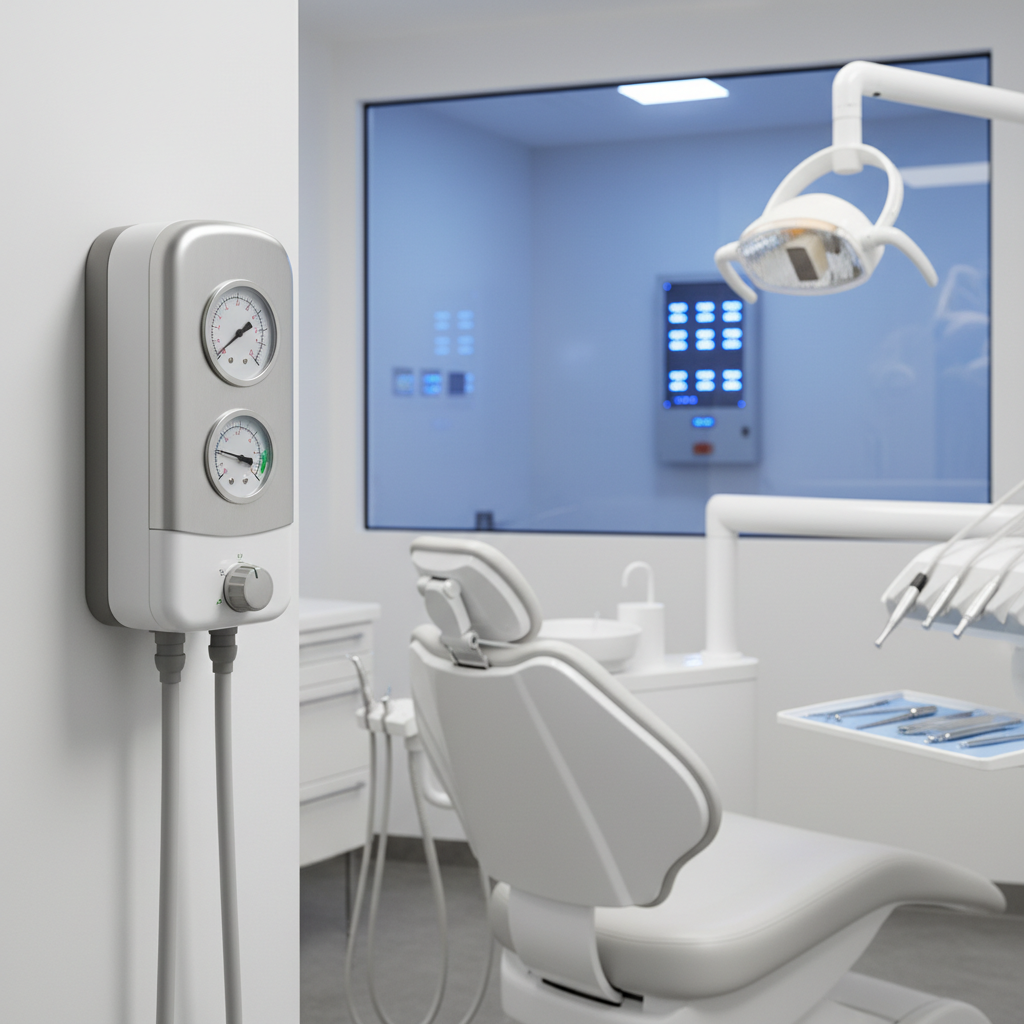
Frankfort Dental Office Nitrous Oxide Installation: A Turnkey Guide for Your Practice
Installing a nitrous oxide and oxygen (N2O/O2) system in a dental office is more than just running pipes; it’s a critical infrastructure project governed by strict safety codes and standards. For dental practices in Frankfort, Kentucky, a properly designed and installed system is essential for patient safety, practitioner confidence, and regulatory compliance. This comprehensive guide walks you through the entire process, from initial design and equipment selection to the final verification and certification, ensuring your installation meets all NFPA 99 and ASSE 6000 series requirements. You will learn the key components, code considerations, and crucial steps to a successful, turnkey installation.
At Medical Testing Solutions (MTS), we specialize in providing ASSE 6010 certified medical gas installations for dental facilities, ensuring every system is built for safety and long-term reliability.
Understanding the Core Components of a Dental N2O/O2 System
A compliant dental nitrous oxide system is an integrated network of components working together to deliver a precise, safe mixture of gases to your operatories. Understanding these parts is the first step in planning your installation.
1. Gas Source: Cylinders and Manifolds
The heart of your system is the gas source, typically housed in a secure, well-ventilated room. For a dental office, this usually consists of:
- High-Pressure Cylinders: '''H''' or '''K''' type cylinders for both nitrous oxide and oxygen.
- Manifold: The manifold is the crucial hardware that connects multiple cylinders to the piping system. A primary and secondary bank of cylinders ensures an uninterrupted gas supply. When the primary bank is depleted, an automatic changeover manifold switches to the secondary bank and triggers an alarm, alerting staff to order more gas.
2. Zone Valve Boxes
Zone valve boxes are installed to control the flow of gas to specific areas or "zones" within your facility. In an emergency, such as a fire or a significant leak, these valves allow you to shut off the gas supply to an entire wing or floor without affecting other areas. They are a critical life safety component required by NFPA 99.
3. Alarms: Master and Area Alarms
Alarms are the system's nervous system, providing immediate audible and visual warnings of abnormal conditions.
- Master Alarms: Located in an area of continuous surveillance (e.g., reception), they monitor the entire system, including manifold status (e.g., "secondary bank in use") and high/low line pressure.
- Area Alarms: Placed within individual treatment zones, they monitor the gas pressure being delivered to the operatories in that specific area.
4. Operatory Equipment: Flowmeters and Scavenging
This is where the gas is delivered to the patient.
- Flowmeters: Devices like the Porter MXR or Belmed Accu-Vac precisely mix N2O and O2. Modern flowmeters have a fail-safe that prevents the delivery of less than 30% oxygen.
- Scavenging System: An active vacuum system is essential to capture exhaled nitrous oxide, protecting staff from chronic exposure. This system must be properly balanced to ensure effective waste anesthetic gas (WAG) removal without compromising the patient's sedation.
The Installation Process: An ASSE 6010 Certified Approach
A compliant installation follows a meticulous, documented process performed by ASSE 6010 certified technicians. This isn’t a job for a standard plumber; it requires specialized knowledge of medical gas systems.
Step 1: System Design and Planning The first phase involves mapping out the entire system. This includes sizing the pipes based on the number of operatories and the total flow rate, determining the optimal location for the manifold room, and planning the pipe routing to minimize length and bends.
Step 2: Piping Installation All piping must be medical-grade, ACR Type L or K copper, cleaned for oxygen service, and clearly labeled. Crucially, all joints must be brazed, not soldered, using a continuous nitrogen purge. This purge prevents the formation of carbonaceous oxides inside the pipe, which could otherwise be delivered to patients.
Why this matters for compliance: NFPA 99 (Section 5.1.10.11.11) mandates the nitrogen purge during brazing. Failure to do so contaminates the pipeline and will cause the system to fail verification, requiring a costly and invasive re-installation.
Step 3: Component Integration Once the piping is in place, technicians install the manifold, zone valves, alarms, and outlets. Every connection is torqued to specification and checked for leaks.
Step 4: Post-Install Verification (ASSE 6030) After the mechanical installation is complete, a separate, independent ASSE 6030 Certified Medical Gas Verifier must test and certify the system before it can be used for patient care. This is not optional. The verifier confirms:
- Purity: Ensures the gas is what the outlet says it is (e.g., N2O is N2O, O2 is O2).
- Cross-Connection: Confirms that no gas lines have been accidentally swapped.
- Pressure & Flow: Verifies the system operates at the correct pressures.
- Particulate Tests: Checks for contaminants within the pipeline.
Medical Testing Solutions provides both ASSE 6010 installation services and independent ASSE 6030 verification to ensure a seamless and compliant project from start to finish.