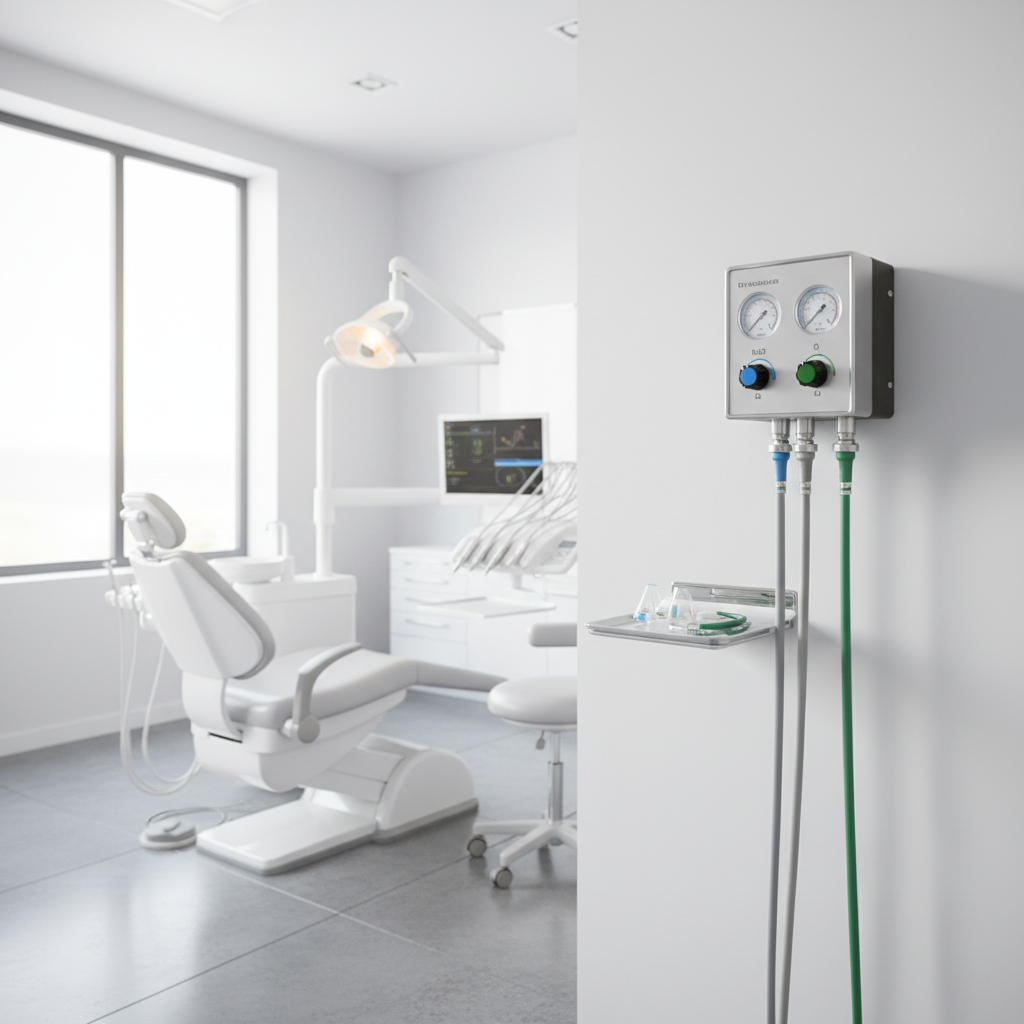
Understanding Turnkey Nitrous Oxide & Oxygen Systems
A turnkey nitrous oxide and oxygen system is the most efficient and reliable way to deliver conscious sedation in a dental practice. Unlike piecemeal solutions, a turnkey installation handles every aspect of the project, from initial design and equipment specification to final connection and system verification. For a dental office in Florence, SC, this means ensuring your setup is not only functional but also fully compliant with state and national safety codes right from the start.
At its core, a dental sedation system has several key components:
- Central Gas Supply: Typically located in a secure, well-ventilated room, this includes high-pressure cylinders of nitrous oxide (N2O) and oxygen (O2).
- Piping Network: Medical-grade copper piping, brazed by an ASSE 6010 certified technician, runs from the central supply to each operatory.
- Zone Valve Boxes: These allow staff to shut off the gas supply to specific zones or rooms in an emergency.
- Alarm Panels: Master and area alarms are required to provide audible and visual warnings of pressure changes or system failures, as mandated by NFPA 99.
- Flowmeters & Outlets: In each operatory, a dental flowmeter (e.g., Porter, Belmed, Accutron) mixes the gases and delivers them to the patient through a nasal hood.
- Scavenging System: A critical safety component, this active vacuum system removes exhaled N2O from the operatory to protect staff from chronic exposure.
Partnering with a certified provider like Medical Testing Solutions ensures that every one of these components is installed correctly and functions as a cohesive, safe system.
NFPA 99: The Code of Compliance for Dental Gas Systems
The National Fire Protection Association's NFPA 99, "Health Care Facilities Code," is the foundational document governing medical gas installation. For dental offices using nitrous oxide, compliance is not optional. The code classifies systems based on risk to patients. A typical dental office system is designated a "Level 3" system, though certain components or office types may require Level 1 or 2 considerations.
Key NFPA 99 requirements for dental N2O/O2 systems include:
- Chapter 5: Gas and Vacuum Systems: This is the core chapter, detailing requirements for storage, piping, alarms, and labeling.
- Cylinder Storage: N2O and O2 cylinders must be stored in a dedicated, properly ventilated room, segregated from flammable materials, and secured with chains or restraints.
- Piping: All piping must be medical-grade (Type K or L), cleaned for oxygen service, and installed by a certified ASSE 6010 technician.
- Shut-off Valves: The system must have a main shut-off valve, as well as zone valve boxes for each operatory or group of operatories.
- Alarm Systems: Master alarms must monitor the source equipment, while area alarms monitor pressure in the specific patient care areas.
- System Verification: Before any system is used on a patient, it must undergo a rigorous inspection and verification process by an ASSE 6030 certified verifier. This is a crucial final step to ensure patient safety.
Why this matters for compliance: Adhering to NFPA 99 isn't just about following rules; it's about patient and staff safety. A non-compliant system can lead to serious risks, including cross-connection, gas contamination, and fire hazards. It can also result in failed inspections, costly rework, and potential liability.
The Installation Process: An ASSE 6010 Certified Approach
A proper nitrous oxide installation follows a structured, multi-phase process managed by an ASSE 6010 Certified Medical Gas Systems Installer. This certification ensures the technician has the specialized knowledge to braze medical-grade copper and build a system that is safe, leak-free, and compliant.
Here’s what a turnkey installation project with Medical Testing Solutions involves:
- Design & Planning: We work with your architects and builders to design a system that meets your clinical needs and all code requirements. This includes planning the location of the manifold, the piping routes, and the placement of alarms and outlets.
- Source Equipment Installation: Our team installs the central supply manifold, pressure regulators, and automatic changeover systems in the gas storage room.
- Piping Rough-In: The ASSE 6010 certified installer runs the medical-grade copper piping from the source to each operatory. Every joint is meticulously brazed with a nitrogen purge to prevent oxidation inside the pipe, a critical step for preventing contamination.
- Component Installation: We install zone valve boxes, area alarm panels, and the gas outlets (e.g., DISS connectors) in each treatment room.
- Flowmeter & Scavenging Setup: The dental flowmeters, rubber goods, and the active scavenging system are connected and integrated.
- Labeling & Documentation: All pipes, valves, and outlets are clearly labeled according to NFPA 99 standards.
Throughout the process, we coordinate with other trades on-site to ensure a smooth and efficient build-out for your Florence practice.