Planning Your Dental Nitrous Oxide System in Durham
A properly installed nitrous oxide and oxygen (N2O/O2) system is a cornerstone of modern patient comfort in dentistry. For a dental practice in Durham, NC, installing one of these systems is a significant investment that requires meticulous planning to ensure patient safety, staff security, and regulatory compliance. This guide outlines the essential steps and considerations for a turnkey nitrous oxide installation, from initial design and equipment selection to final verification and staff training. You will learn the key components, compliance standards, and processes necessary for a successful and safe installation.
At Medical Testing Solutions, we specialize in providing and installing ASSE-certified medical gas systems for dental practices throughout North Carolina. Our process ensures your system is not only functional but fully compliant with all relevant codes.
Core Components of a Dental N2O/O2 System
A compliant dental sedation system is more than just a mask and a tank. It's an integrated network of components designed to deliver a precise, safe gas mixture. Understanding these parts is the first step in planning your installation.
1. Gas Source & Manifold
This is the heart of your system. It typically consists of high-pressure cylinders of nitrous oxide and oxygen connected to a manifold.
- Cylinders: Usually large 'H' or 'K' size cylinders are stored in a secure, well-ventilated room or exterior enclosure.
- Manifold: The manifold automatically switches from the primary "in-use" cylinder bank to the secondary "reserve" bank when pressure drops, ensuring an uninterrupted gas supply. This prevents any disruption during a patient procedure. It also regulates the high pressure from the cylinders down to a usable line pressure (typically 50-55 psi).
2. Piping Distribution Network
Medical-grade copper tubing (ASTM B819) is used to transport the gases from the source to the treatment rooms. The integrity of this piping is critical.
- Installation: All joints must be brazed by an ASSE 6010 certified installer. Solder is not permitted. The lines must be properly labeled and supported.
- Purity: During brazing, the lines must be continuously purged with oil-free, dry nitrogen to prevent the formation of toxic oxides inside the pipe.
3. Zone Valve Boxes
Zone valves are installed to isolate specific areas or "zones" of the dental office. In an emergency or during maintenance, a zone valve allows you to shut off gas flow to one operatory without affecting the others.
4. Alarms and Monitoring
NFPA 99 mandates a robust alarm system to monitor gas pressure and status.
- Master Alarms: Located where they can be continuously monitored (e.g., reception area), they signal issues with the gas source or main lines.
- Area Alarms: Installed in the local area they serve (e.g., the sedation operatory), they warn staff of pressure deviations within that specific zone.
5. Operatory Equipment
This is the "point-of-use" equipment your clinical team interacts with daily.
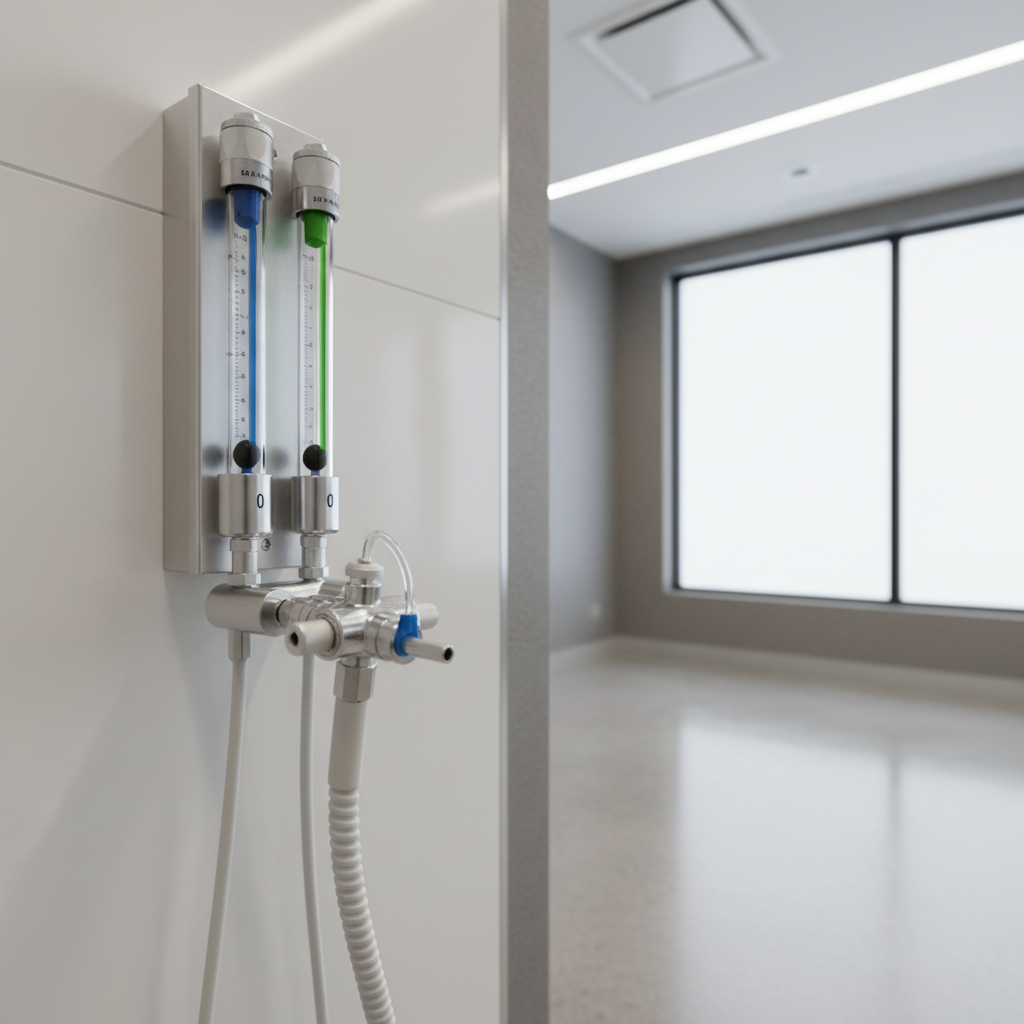
- Flowmeters: Devices like the Porter MXR or Accutron Digital Ultra are precision instruments that mix N2O and O2. They have built-in safety features, such as a minimum 30% oxygen flow and a fail-safe that stops N2O flow if the oxygen supply is cut off.
- Scavenging System: This is a critical safety component. A scavenging system actively removes exhaled N2O from the operatory to protect staff from chronic exposure. It must be connected to a dedicated medical vacuum system.
- Rubber Goods: Hoses, masks, and breathing circuits must be regularly inspected for wear and tear.
The Installation Process: An ASSE 6010 Certified Approach
A successful installation follows a strict, phased approach handled by credentialed professionals. Here’s what to expect when working with an ASSE 6010 certified company like Medical Testing Solutions.
- Design & Planning: We assess your floor plan, number of operatories, and clinical needs to design a system that is both efficient and compliant.
- Rough-In: The copper piping network is installed within the walls, connecting the manifold location to each operatory.
- Initial Pressure Test: Before the walls are closed, the piping is pressurized (typically to 150 psi) and monitored for 24 hours to ensure there are no leaks.
- Component Installation: Once walls are up, the manifold, alarms, and flowmeter outlets are installed.
- Final Verification (ASSE 6030): This is the most critical step. A third-party ASSE 6030 Certified Medical Gas Verifier must inspect and test the entire system. This is not optional; it's required by code before the system can be used on patients.
Why this matters for compliance: NFPA 99 (2021 Edition, Chapter 5) mandates that all new, added, or modified medical gas systems be verified by a party other than the installer to ensure objectivity and safety. This verification confirms gas purity, system integrity, and component functionality.