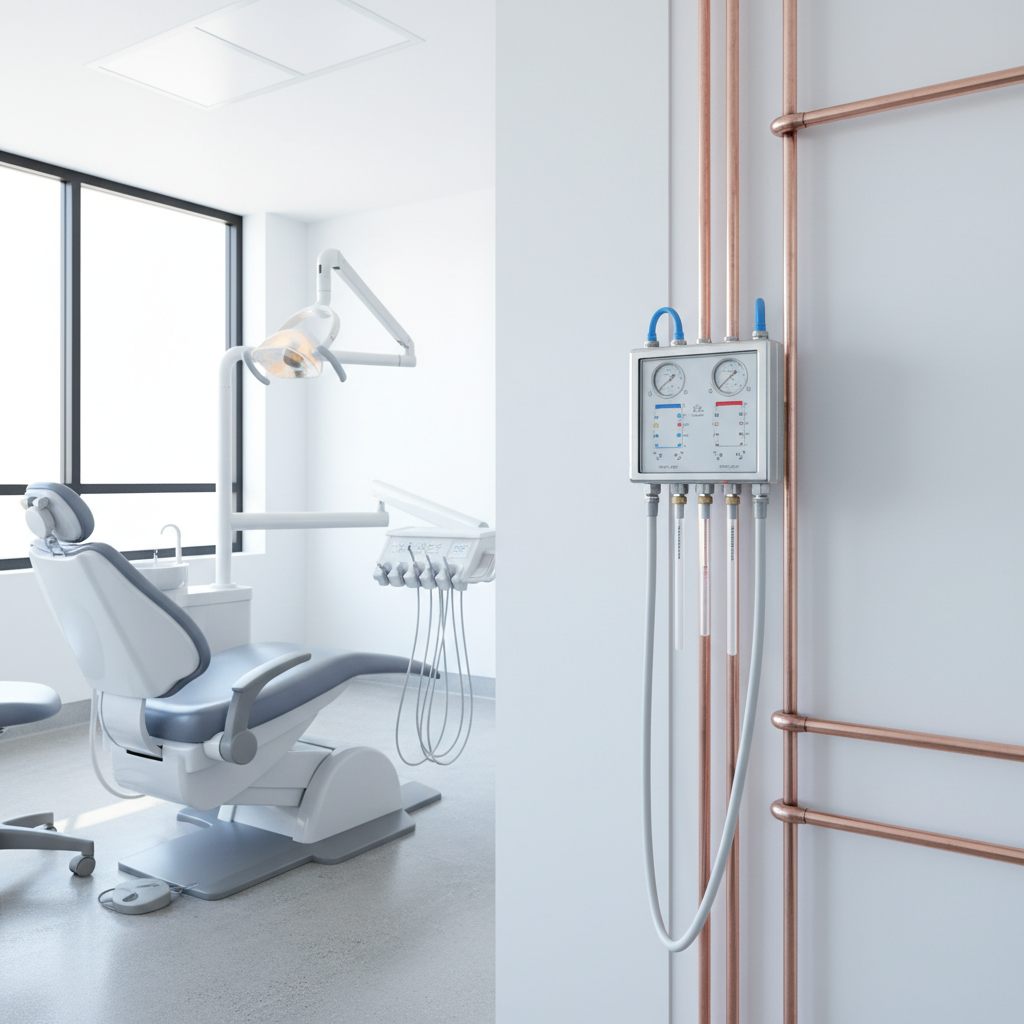
Turnkey Dental Office Nitrous Oxide Installation in Charlottesville, VA: A Comprehensive Guide for Clinicians
A safe, reliable, and compliant nitrous oxide/oxygen (N2O/O2) delivery system is a cornerstone of modern dental practices offering conscious sedation. For dentists in Charlottesville, Virginia, planning a new office build-out or upgrading an existing facility, the installation process can seem daunting. It's a complex undertaking that goes far beyond simply connecting a flowmeter to a gas cylinder. A proper installation involves meticulous planning, adherence to strict national codes, and precise execution by certified professionals. This guide provides a definitive overview of the entire turnkey process, from initial design and equipment selection to final verification and certification, ensuring your practice meets all safety and regulatory requirements.
Understanding the Scope: What a "Turnkey" Installation Means
A turnkey nitrous oxide installation is an end-to-end solution. It means your medical gas partner, like Medical Testing Solutions, handles every aspect of the project. You aren't left coordinating multiple vendors or trying to interpret complex building codes.
The process typically includes:
- System Design & Engineering: Creating blueprints for the piping network that comply with NFPA 99 standards.
- Equipment Sourcing: Selecting and providing all necessary components, including manifolds, alarms, outlets, and scavenging systems.
- Installation: Running the medical-grade copper piping, performed by technicians certified to ASSE 6010 standards.
- System Verification: A comprehensive, multi-point inspection and testing process performed by an independent ASSE 6030 verifier.
- Staff Training & Documentation: Ensuring your team understands the system's operation and providing all necessary compliance paperwork.
Core Components of a Dental N2O/O2 System
A compliant dental sedation system is more than just the flowmeter on the wall. It comprises a source, a distribution network, and delivery components, all monitored by a sophisticated alarm system.
The Source: Manifolds and Cylinders
Your nitrous oxide and oxygen supplies originate at a central source, typically a manifold system. For a dental office, this is usually a "Manual Changeover" or "Automatic Changeover" manifold.
- Manual Changeover: Requires a staff member to manually switch from the empty "primary" cylinder bank to the "reserve" bank.
- Automatic Changeover: Automatically switches to the reserve bank when the primary is depleted, ensuring an uninterrupted gas supply. This is the preferred and more common setup.
The manifold, along with the high-pressure cylinders (H-tanks or smaller), must be located in a secure, well-ventilated room with specific signage as mandated by NFPA 99, Health Care Facilities Code.
The Distribution Network: Piping and Zone Valves
Pipelines are the arteries of the medical gas system. For N2O and O2, NFPA 99 requires Type K or L seamless copper tubing, cleaned for oxygen service. An ASSE 6010 certified installer must perform this work, employing a specific brazing technique with a nitrogen purge to prevent internal oxidation.
- Zone Valves: These are critical safety components. A shut-off valve must be installed to isolate each sedation operatory or group of operatories. In an emergency, this allows you to shut off gas flow to one area without affecting the rest of the practice.
Delivery and Scavenging Equipment
- Outlets/Station Inlets: These are the connection points in the operatory. They are gas-specific (DISS or proprietary connectors) to prevent accidental cross-connection.
- Flowmeters: Devices like the Porter MXR or Belmed Quantum are the final control point before the patient. Regular calibration and repair of dental flowmeters is essential for patient safety and accurate delivery.
- Scavenging Systems: An active vacuum system is required to remove exhaled waste anesthetic gas (WAG) from the operatory. This is a critical component for protecting staff from chronic exposure to nitrous oxide.
Why this matters for compliance: NFPA 99 (Chapter 5) provides extensive requirements for the design, materials, and installation methods of medical gas piping. Failure to use the correct materials or installation procedures (like nitrogen purging during brazing) can lead to system contamination and immediate failure during verification.
The Installation Process: An ASSE 6010 Perspective
The physical installation of the piping network is one of the most critical phases. This work must be performed by individuals holding a current ASSE 6010 Medical Gas Systems Installer certification.
- Initial Rough-in: After the design is approved, installers run the copper tubing from the manifold room to each operatory, before the walls are finished.
- Brazing with Nitrogen Purge: Every joint is brazed, not soldered. During this process, a slow flow of nitrogen is pushed through the pipe. This inert gas displaces the oxygen, preventing the formation of copper oxides on the interior pipe wall that could flake off and contaminate the gas stream.
- Labeling: All piping must be appropriately labeled with the gas name and direction of flow at specific intervals, per code.
- Pressure Testing: Once the piping is installed, the installer performs an initial pressure test to check for leaks.