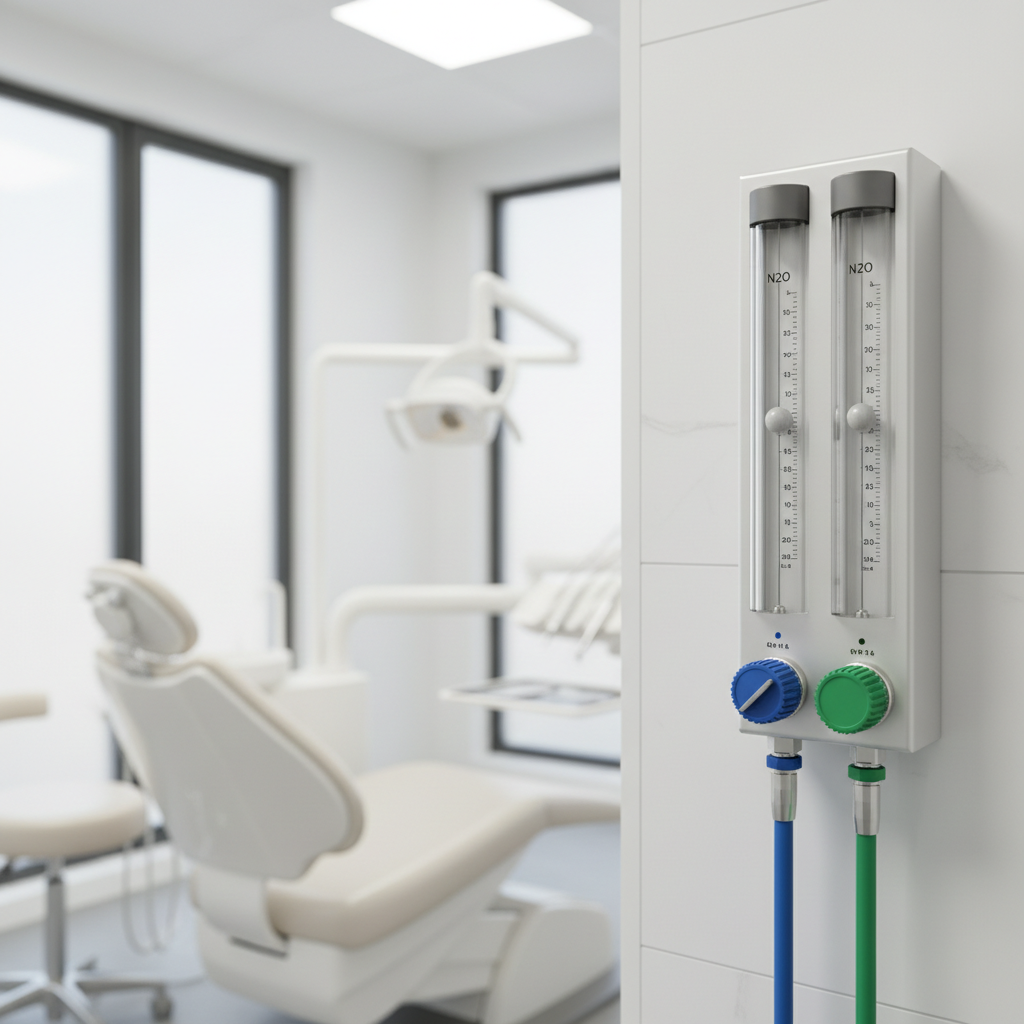
Turnkey Dental Nitrous Oxide Installation in Charleston, SC: A Complete Guide
Installing a nitrous oxide and oxygen (N2O/O2) delivery system in your Charleston dental practice is a significant investment in patient comfort and your service offerings. However, it's also a project governed by strict codes and standards to ensure the safety of patients and staff. A compliant installation is not just about connecting pipes; it involves meticulous planning, certified expertise, and a deep understanding of NFPA 99 and ASSE 6000 standards. This guide will walk you through the critical components of a turnkey dental nitrous oxide installation, from system design and equipment selection to the final verification, ensuring your practice is safe, compliant, and ready for patient care.
Medical Testing Solutions (MTS) specializes in providing ASSE 6010 certified medical gas installations for dental practices throughout Charleston and the Lowcountry. Our expertise ensures your system is designed and installed correctly the first time, meeting all regulatory requirements.
System Design: Planning Your N2O/O2 Installation
The foundation of a safe and efficient nitrous oxide system is a well-thought-out design. This initial phase goes beyond simply deciding where to place the cylinders; it maps out the entire delivery infrastructure, ensuring safety and compliance from the source to the operatory.
Manifold vs. Portable E-Cylinders
A key decision is how you will source your gases. Your practice can choose between a central manifold system or portable E-cylinders.
- Portable E-Cylinders: Best for very low-volume users. These are the small, moveable tanks often seen on portable stands. While they have a low initial cost, they require frequent changing, can be a workplace safety hazard if not handled properly, and are less cost-effective for regular use.
- Central Manifold System: The standard for most dental practices. A central system houses large H-cylinders in a secure, dedicated room or closet, feeding the gases through a network of pipes to each operatory. This setup is safer, more cost-effective for moderate to high use, and ensures a continuous, reliable supply.
Piped Gas System Layout
For a central system, the piping network is critical. All piping must be medical-grade, ACR Type L or K copper, cleaned for oxygen service, and brazed by an ASSE 6010 certified installer. The layout must be meticulously planned to ensure consistent pressure and flow to every operatory, with emergency shut-off valves strategically placed for immediate access.
Why this matters for compliance: NFPA 99 (Health Care Facilities Code), specifically Chapter 5, dictates the materials, design, and installation practices for medical gas systems. Using improper materials or uncertified installers can lead to immediate project failure during verification and pose a significant safety risk.
Core Components of a Compliant Nitrous System
A turnkey installation involves more than just the gas source and pipes. Several key components work together to ensure a safe, controlled delivery of nitrous oxide.
1. The Manifold and Gas Storage
Your gas storage area (e.g., a "nitrous closet") must be secure, properly ventilated, and built with fire-rated materials. The manifold itself is the heart of the system, automatically switching from the primary cylinder bank to the secondary one when pressure drops, ensuring an uninterrupted supply. It includes pressure regulators to step down the high pressure from the cylinders to a usable line pressure (typically 50-55 psi).
2. Alarms: Your First Line of Defense
NFPA 99 mandates a series of alarms to monitor the health of your gas system. These are not optional.
- Source Alarms: Located at the manifold, these indicate when the system has switched to the secondary bank, alerting staff that it's time to order more gas.
- Area Alarms: Installed in each treatment area (or zone), these monitor the line pressure of both nitrous oxide and oxygen. They will trigger an audible and visual alert for any high or low-pressure conditions, warning of potential issues like a depleted cylinder or a line obstruction.
3. The Scavenging System
Perhaps the most critical safety component for your staff is the scavenging system. Nitrous oxide is a waste anesthetic gas (WAG), and chronic exposure is linked to health risks. A scavenging system actively captures exhaled N2O from the patient's nasal hood and safely vents it outside the building.
This is not simply a tube out the window. A proper system must be calibrated to ensure it removes the waste gas effectively without impacting the patient's breathing or the sedation level. Regular WAG monitoring and flow rate checks are essential for ongoing staff safety.
4. Operatory Equipment: Flowmeters and Outlets
In the operatory, the gas is delivered via station outlets (e.g., DISS, quick-connects) that are specific to each gas to prevent cross-connection. The gas then flows to the dental flowmeter, which allows the clinician to precisely control the N2O/O2 mixture.
Modern flowmeters have several built-in safety features:
- Minimum Oxygen Flow: Prevents the delivery of 100% nitrous oxide.
- Oxygen Fail-Safe: Automatically shuts off the nitrous oxide flow if the oxygen supply is lost.
- Oxygen Flush Button: Delivers 100% oxygen to the patient.
| Feature Comparison | Porter/Matrx Flowmeters | Belmed Flowmeters | Accutron Flowmeters |
|---|---|---|---|
| Mounting Options | Cabinet, Wall, Mobile | Cabinet, Wall, Mobile | Cabinet, Wall, Mobile |
| Safety Features | O2 Fail-Safe, Min. O2 Flow | O2 Fail-Safe, Min. O2 Flow | O2 Fail-Safe, Min. O2 Flow |
| Scavenging | Integrated | Integrated | Integrated |
| Typical Warranty | 5-7 Years | 5 Years | 2-5 Years |