Dental Office Nitrous Oxide Installation in Cary NC: A Complete Guide
Medical Testing SolutionsOctober 1, 20267 min read
Share
As a dental practitioner in Cary, North Carolina, providing nitrous oxide sedation is a proven way to enhance patient comfort and manage anxiety. However, installing a new or upgraded N2O/O2 system is a complex process governed by strict safety standards. A compliant installation is not just a matter of connecting pipes; it involves meticulous planning, precise execution, and rigorous verification to ensure the safety of your patients and staff. This guide provides a definitive overview of the entire process, from system design and component selection to final ASSE 6030 certification.
You will learn the critical requirements of the National Fire Protection Association (NFPA) 99 Health Care Facilities Code, the role of ASSE 6000 series personnel qualifications, and the key components of a modern, safe nitrous oxide and oxygen delivery system, including scavenging systems and alarm panels.
Designing Your NFPA 99-Compliant N2O/O2 System
The foundation of a safe dental gas system is a design that adheres to the latest edition of NFPA 99. This code is the bedrock of medical gas safety in the United States. For a dental office, your system will likely be classified as a Level 3 piped gas system, though specific requirements may vary based on the number of operatories and the nature of the procedures performed.
Key Design Considerations:
Source Equipment: Your nitrous oxide and oxygen will be supplied from cylinders. The manifold, which connects the cylinders to the piping system, must be designed for the specific gas and include pressure regulators, gauges, and check valves. NFPA 99 (Chapter 5) outlines specific requirements for the location and security of these cylinder storage areas.
Piping Material and Sizing: All piping must be medical-grade, seamless copper (Type K or L), cleaned for oxygen service, and installed by qualified personnel. An ASSE 6010 certified installer has the training to properly braze and purge the lines with nitrogen to prevent the formation of toxic oxides inside the pipes.
Zone Valves: Each operatory or group of operatories must be isolatable with a zone valve box. This allows for targeted shutdowns for maintenance or in an emergency without affecting the entire office. These valves must be clearly labeled and accessible.
Scavenging System: An active scavenging system is non-negotiable. It is critical for removing exhaled nitrous oxide from the operatory, protecting your staff from the health risks of chronic exposure (Waste Anesthetic Gases or WAGs). The system must be designed to draw waste gas away at the correct flow rate without impacting the patient's breathing.
Why this matters for compliance: A properly documented design plan is the first step reviewed during an inspection. Failing to account for NFPA 99 requirements at this stage can lead to costly rework and significant project delays. Medical Testing Solutions can help you design a system that is safe, efficient, and fully compliant from the outset.
Essential Components of a Dental Nitrous System
A turnkey nitrous oxide installation involves more than just the plumbing. Several key components work together to ensure safe and effective delivery and monitoring.
Manifolds and Cylinders
Your gas supply originates here. A typical setup includes primary and secondary cylinder banks for both N2O and O2, ensuring an uninterrupted supply. The manifold automatically switches from the primary to the secondary bank when pressure drops, often triggering an alarm to alert staff that it's time to change cylinders.
Alarms: Your System's Watchdog
NFPA 99 mandates alarms for all medical gas systems. For a dental office, this typically includes:
Source Alarms: Located at the manifold, these indicate when a changeover from the primary to the secondary cylinder bank has occurred.
Master Alarms: These panels provide centralized monitoring of the entire system. For a dental practice, a master alarm panel might be located in the reception area or main office, providing visual and audible alerts for pressure changes or changeover status. Medical Testing Solutions offers a range of alarm panels and can help you select the right one for your facility.
Operatory Equipment: Flowmeters and Outlets
Gas Outlets: Each operatory will have specific quick-connect or DISS (Diameter Index Safety System) outlets for both nitrous oxide and oxygen. These outlets are gas-specific to prevent accidental cross-connection.
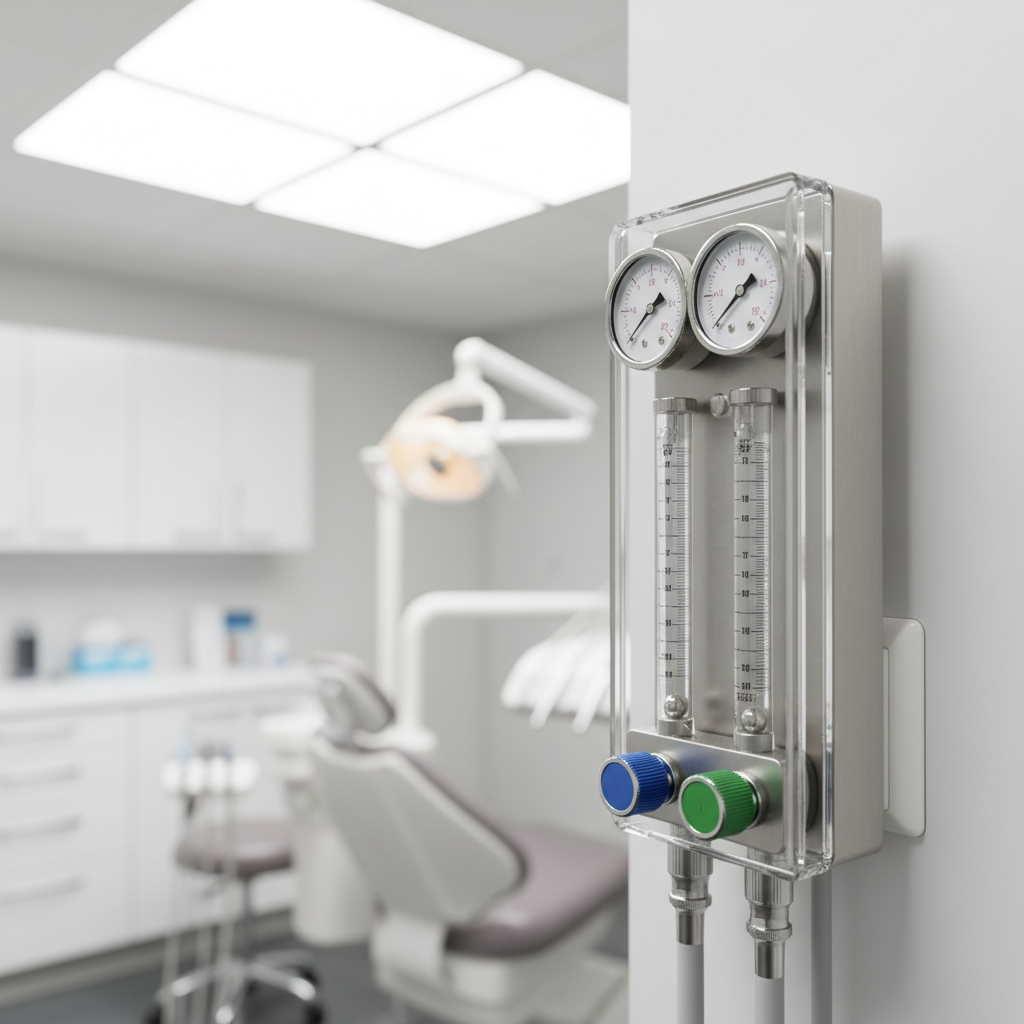
Dental Flowmeters: This is the device that mixes N2O and O2 and controls the flow rate to the patient. Modern flowmeters have critical safety features, such as a minimum oxygen flow (typically 30%) and a fail-safe mechanism that shuts off N2O flow if the oxygen supply is interrupted.
Comparing Flowmeter Brands
Feature
Porter
Belmed
Accutron
Matrx
Fail-Safe
Yes
Yes
Yes
Yes
O2 Flush Button
Yes
Yes
Yes
Yes
Min. O2 Flow
30%
30%
25-30%
30%
Mounting Options
Wall, Cabinet, Mobile
Wall, Cabinet, Mobile
Wall, Cabinet, Mobile
Wall, Cabinet, Mobile
Scavenging Hood
Multiple Options
Integrated
Multiple Options
Integrated
The Installation Process: What to Expect
A professional installation follows a strict protocol to ensure quality and safety. Only ASSE 6010 Certified Medical Gas Systems Installers should perform this work.
Pre-Installation Review: The installer verifies the site plans and ensures all required materials are on hand.
Piping Installation: The copper piping is run from the source manifold to each operatory. At every joint, the pipe is brazed while being purged with oil-free nitrogen. This critical step prevents oxidation inside the pipe, which could otherwise introduce dangerous contaminants into the gas stream.
Component Installation: Manifolds, alarm panels, zone valve boxes, and terminal outlets are installed and connected to the piping network.
Initial Pressure Test: The system is pressurized with nitrogen to check for any leaks in the piping network before any sensitive components are attached.
Verification and Certification: The Final Step
After the physical installation is complete, the system cannot be used until it is thoroughly tested and verified by an independent, third-party ASSE 6030 Certified Medical Gas Verifier. This is arguably the most critical phase of the project.
Standing Pressure Test: The verifier will perform another pressure test to confirm there are no leaks.
Cross-Connection Test: Each outlet is checked to ensure that the gas being delivered matches the label on the outlet (e.g., oxygen comes out of the O2 outlet and N2O out of the N2O outlet).
Purity Test: Gas samples are taken from the outlets to ensure they meet the purity standards outlined in USP (United States Pharmacopeia).
Alarm Testing: The verifier will systematically test every alarm function to ensure they trigger correctly under fault conditions (e.g., simulating a pressure drop or manifold changeover).
Flow and Pressure Test: The verifier confirms that every outlet in every operatory delivers the correct gas at the specified pressure and flow rate.
Once all tests are passed, the verifier will provide a comprehensive report and certify the system for patient use. This documentation is essential for your facility's records and for inspections by state dental boards or other regulatory bodies.
Maintaining Your System for Long-Term Safety
Your responsibility doesn't end after certification. Regular maintenance is crucial for ongoing compliance and safety.
Annual Inspections: It's highly recommended to have your system checked annually by a certified technician. This includes checking for leaks, verifying regulator pressures, and testing alarms. MTS provides comprehensive annual medical gas inspections to keep your system in top condition.
WAG Monitoring: OSHA has guidelines for occupational exposure to nitrous oxide. Periodic Waste Anesthetic Gas (WAG) monitoring can help ensure your scavenging system is working effectively to protect your staff.
Choosing Your Installation Partner in Cary, NC
When selecting a company for your dental office nitrous oxide installation in Cary, NC, it's vital to choose a partner with proven expertise in medical gas systems. Look for a company that employs ASSE 6010 Installers and ASSE 6030 Verifiers.
Medical Testing Solutions is a premier, ASSE-certified medical gas service and equipment company providing turnkey solutions. We handle everything from the initial design and consultation to professional installation and final third-party verification, ensuring your system is safe, compliant, and ready for patient use.
Get a Quote for Your Cary, NC Dental Practice
Ensuring your nitrous oxide system is installed correctly is one of the most important investments you can make in your practice's safety and efficiency. If you are planning a new build-out or an upgrade to your existing system, trust the certified experts.
Contact Medical Testing Solutions today for a comprehensive, no-obligation quote for your dental office nitrous oxide installation in Cary, NC. Call us at (754) 315-1078 or request a quote online to get started.
Frequently Asked Questions
The timeline can vary depending on the size of the office and the complexity of the installation. A typical installation for a small to medium-sized dental practice can take anywhere from a few days to a week, not including the final verification.
An ASSE 6010 Installer is certified to physically install the medical gas piping and components. An ASSE 6030 Verifier is a third-party agent certified to test and certify that the installed system meets all NFPA 99 safety and performance standards. They cannot be the same person or from the same company that did the installation.
Yes. Any modification, addition, or repair to a medical gas system requires re-verification of the affected portions of the system to ensure no cross-connections were made and that the system integrity is intact.
No. NFPA 99 and most state dental boards require that medical gas systems be installed by qualified individuals (e.g., ASSE 6010 certified) and certified by a qualified third-party verifier (ASSE 6030). The safety risks and liability of an improper installation are far too great.
Request a quote for your facility
Talk with Medical Testing Solutions about your next inspection, repair or equipment request.