Skip to content
    New: Medical Gas Outlet Retrofit & Rebuild Matrix — cross-reference legacy Chemetron, Ohio Diamond, Puritan-Bennett & more →
    ASSE Certified 24/7
    Medical Gas Service
    Compliance & Standards

    Dental Office Medical Gas Inspection in Charlotte, NC: Your NFPA 99 Guide

    Medical Testing SolutionsJune 25, 20266 min read
    Share
    Dental Office Medical Gas Inspection in Charlotte, NC: Your NFPA 99 Guide

    Dental Office Medical Gas Inspection Charlotte NC: Your Complete NFPA 99 Guide

    For dental practices in Charlotte, NC, the medical gas systems, supplying oxygen (O2), nitrous oxide (N2O), and medical vacuum, are the lifeblood of patient comfort and safety. But these systems are not "set-it-and-forget-it" utilities. They are complex networks that require regular, professional inspection to ensure they are safe, effective, and compliant with both North Carolina state regulations and national standards like NFPA 99. This guide provides a definitive overview of the medical gas inspection process, explaining why it’s critical, what the standards demand, and how to choose a qualified inspector to protect your patients, your practice, and your license.

    Why Regular Medical Gas Inspections Are Non-Negotiable

    A fully functional and compliant medical gas system is a cornerstone of modern dentistry. For practices in Charlotte, neglecting their upkeep is not an option. The risks span patient safety, legal liability, and professional standing.

    • Patient Safety: This is the paramount concern. A leaking nitrous oxide line, a cross-connected gas, or insufficient vacuum suction can have catastrophic consequences. Regular inspections verify that the right gas is being delivered at the right pressure, and that waste gases are safely scavenged.
    • State Compliance: The North Carolina Board of Dental Examiners has specific requirements for the use and maintenance of sedation equipment. Failure to produce proper documentation of system maintenance and inspection can lead to disciplinary action.
    • NFPA 99 Adherence: The National Fire Protection Association's NFPA 99, Health Care Facilities Code, is the primary standard governing medical gas systems. Compliance is mandatory, and facilities must be prepared to demonstrate it.
    • Insurance and Liability: In the event of an adverse incident, your insurance carrier will scrutinize your maintenance and inspection records. A lack of documented, professional oversight can expose your practice to significant financial and legal liability.

    Understanding the Core Standards: NFPA 99 and ASSE 6000

    Navigating the web of regulations can be confusing. For dental offices, two sets of standards are central: NFPA 99 for the system and ASSE 6000 for the personnel who inspect it.

    NFPA 99: The Health Care Facilities Code

    NFPA 99 is the foundational text for medical gas systems in the United States. It outlines the minimum requirements for the design, installation, testing, and maintenance of these critical systems. For a dental office, the code specifies everything from the type of piping that can be used to the required placement and testing of alarms, valves, and outlets.

    An annual inspection will verify that your system components, from the source equipment in the utility closet to the flowmeters in the operatory, still meet the stringent criteria laid out in NFPA 99, Chapter 5 (Gas and Vacuum Systems).

    Why this matters for compliance: The NFPA 99 code is not a set of suggestions; it's the standard adopted into law in most jurisdictions, including North Carolina. An inspector's report is your primary proof that you are operating in accordance with this established safety code. Adherence is essential for passing fire marshal checks and state board reviews.

    ASSE 6000 Series: The Credential for Competency

    How do you know the person inspecting your system is qualified? The American Society of Sanitary Engineering (ASSE) 6000 series provides the answer. It's a set of standards that certifies the qualifications of personnel.

    • ASSE 6020 Certified Medical Gas Systems Inspector: This is the credential required for individuals performing routine inspections of existing medical gas systems to ensure they continue to meet code requirements.
    • ASSE 6030 Certified Medical Gas Systems Verifier: This is a higher-level credential for individuals who test and "verify" brand new installations or modifications to existing systems. If you're building a new clinic or renovating an operatory, you'll need an ASSE 6030 Verifier. Medical Testing Solutions offers expert medical gas verification services for such projects.

    It is crucial that your inspector holds, at a minimum, the ASSE 6020 credential.

    The Annual Inspection Process: What Charlotte Dentists Should Expect

    A professional medical gas inspection is a thorough, systematic process. While every system is unique, a certified inspector will typically perform the following key actions:

    • Documentation Review: The inspector will start by reviewing your system's "as-built" drawings and previous inspection reports.
    • Source Equipment Check: They will inspect the N2O and O2 manifolds, regulators, and main shut-off valves for leaks, correct pressure settings, and proper labeling.
    • Alarm System Testing: The master and area alarm panels are tested to ensure they accurately report high/low pressure conditions and other critical information.
    • Zone Valve Assessment: Every zone valve box throughout the facility will be checked to confirm it is accessible, labeled correctly, and functions properly.
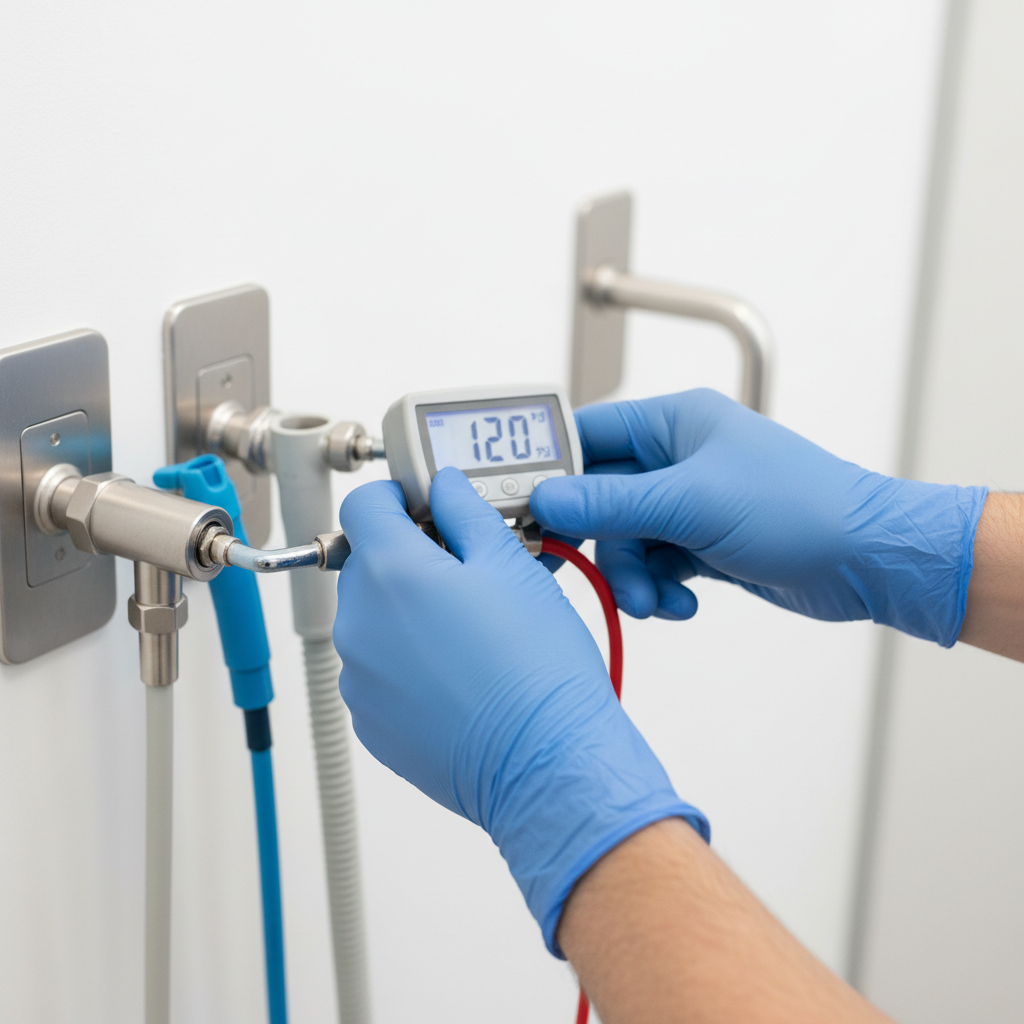
    • Outlet and Inlet Testing: Each medical gas outlet (O2, N2O) and vacuum inlet in the operatories is tested for flow, pressure, and leakage. This includes ensuring gas-specific connections prevent cross-connection.
    • Scavenging System Verification: For nitrous oxide systems, the waste anesthetic gas disposal (WAGD) or scavenging system is tested to confirm it provides adequate negative pressure to protect staff from chronic exposure.
    • Labeling and Signage: The inspector will verify that all piping, valves, and outlets are clearly and correctly labeled per NFPA 99 standards.
    • Detailed Reporting: Upon completion, you will receive a comprehensive report detailing all findings, pressures, deficiencies, and any corrective actions needed. This document is your proof of an annual medical gas inspection.

    Choosing Your Inspector in the Charlotte Area: Certified vs. Uncertified

    Not all "technicians" are created equal. The single most important factor when choosing an inspection provider is their certification. Relying on an uncertified individual, even one from your equipment supplier, can provide a false sense of security and leave your practice non-compliant. Medical Testing Solutions employs a team of ASSE-certified professionals who are qualified to inspect and verify dental medical gas systems across North Carolina.

    Here’s how a certified inspector compares to a general technician:

    FeatureUncertified "Technician"ASSE 6020 Certified Inspector
    CredentialNone or basic manufacturer trainingVerifiable ASSE 6020/6030 credential
    Code KnowledgeVariable, often limited to one brandDeep expertise in NFPA 99, CGA, and state codes
    Report ValidityMay not be accepted by state boards or authoritiesOfficially recognized for compliance documentation
    LiabilityHigh risk; you are liable for their errorsMitigates practice risk with proven expertise

    When vetting a provider, always ask to see their ASSE credentials. If your practice uses sedation, issues with flowmeters are also common. It's wise to partner with a company that understands both the gas system and the equipment attached to it, including dental flowmeter repair and calibration.

    Secure Your Practice and Protect Your Patients Today

    Your medical gas system is too important to leave to chance. Ensuring it is compliant, safe, and fully functional is a professional responsibility. For dental practices in Charlotte and across North Carolina, investing in a professional, ASSE-certified annual inspection is the best way to uphold that responsibility.

    The team at Medical Testing Solutions is ready to be your partner in compliance. Our ASSE-certified inspectors have the expertise to ensure your system meets every standard. Contact us today to secure the safety of your practice and patients.

    Call +1 (754) 315-1078 or request a quote online for your dental office medical gas inspection.


    Frequently Asked Questions

    According to NFPA 99, medical gas systems must be inspected at least annually. Depending on your location and insurance, more frequent inspections may be required.

    An inspection (requiring an ASSE 6020 credential) is a yearly examination of an existing system. A verification (requiring an ASSE 6030 credential) is a more in-depth testing process for new, modified, or repaired systems before they are used for patient care.

    Yes. All components of a portable system, including tanks, regulators, hoses, and scavenging apparatus, must be regularly inspected to ensure they are safe and functioning correctly.

    A certified inspector will give you a report listing all deficiencies. A qualified service provider can then perform the necessary repairs to bring your system into full compliance.

    The cost depends on the size of your practice and the number of outlets. It is a minor business expense compared to the significant costs associated with a safety incident, legal action, or loss of licensure.

    This article is provided for educational purposes and reflects industry standards as of publication. Always verify against current NFPA 99, CGA, and AHJ requirements. Medical Testing Solutions is ASSE-certified and ready to help — contact us for facility-specific guidance.

    Request a quote for your facility

    Talk with Medical Testing Solutions about your next inspection, repair or equipment request.

    Get a quote in 1 business day

    I agree to receive text messages from Medical Testing Solutions, L.L.C. at the phone number provided, including informational and marketing messages. Consent is not a condition of purchase. Message frequency varies. Message & data rates may apply. Reply STOP to opt out or HELP for help. See our Privacy Policy and Messaging Terms.

    Prefer to talk? Call (754) 315-1078

    Related articles