A Comprehensive Guide to Your Dental Nitrous Oxide System
Medical Testing SolutionsJune 20, 20269 min read
Share
minimal and moderate sedation. But a safe, effective, and compliant system is far more than just a flowmeter and a nasal hood. It’s a complex network of gas sources, plumbing, and safety components, all governed by strict regulatory standards. For the uninitiated, designing a system from scratch can be a daunting task.
This guide provides a definitive overview for dentists and practice managers on designing a dental nitrous oxide/oxygen (N2O/O2) system. We’ll dissect the entire process, from the gas source to the patient-facing equipment. You will learn the critical components, NFPA 99 code requirements, key safety considerations like scavenging, and a realistic breakdown of installation costs. We will equip you with the knowledge to plan your system confidently and ensure it meets the highest standards of safety and compliance.
Understanding the Core Components of a Dental N2O/O2 System
A central dental nitrous oxide system is an integrated network designed to deliver a precise blend of nitrous oxide and oxygen to multiple operatories from a single, central source. This is in contrast to portable E-cylinder systems, which are typically used for single operatories or as a backup. A central system is composed of several key subsystems working in concert.
Source Equipment: This is the starting point, where the gases are stored under high pressure. It includes the cylinders, the manifold that connects them, and pressure regulators.
Distribution Network: The piping infrastructure, typically hidden within walls and ceilings, that carries the gases from the source to the operatories.
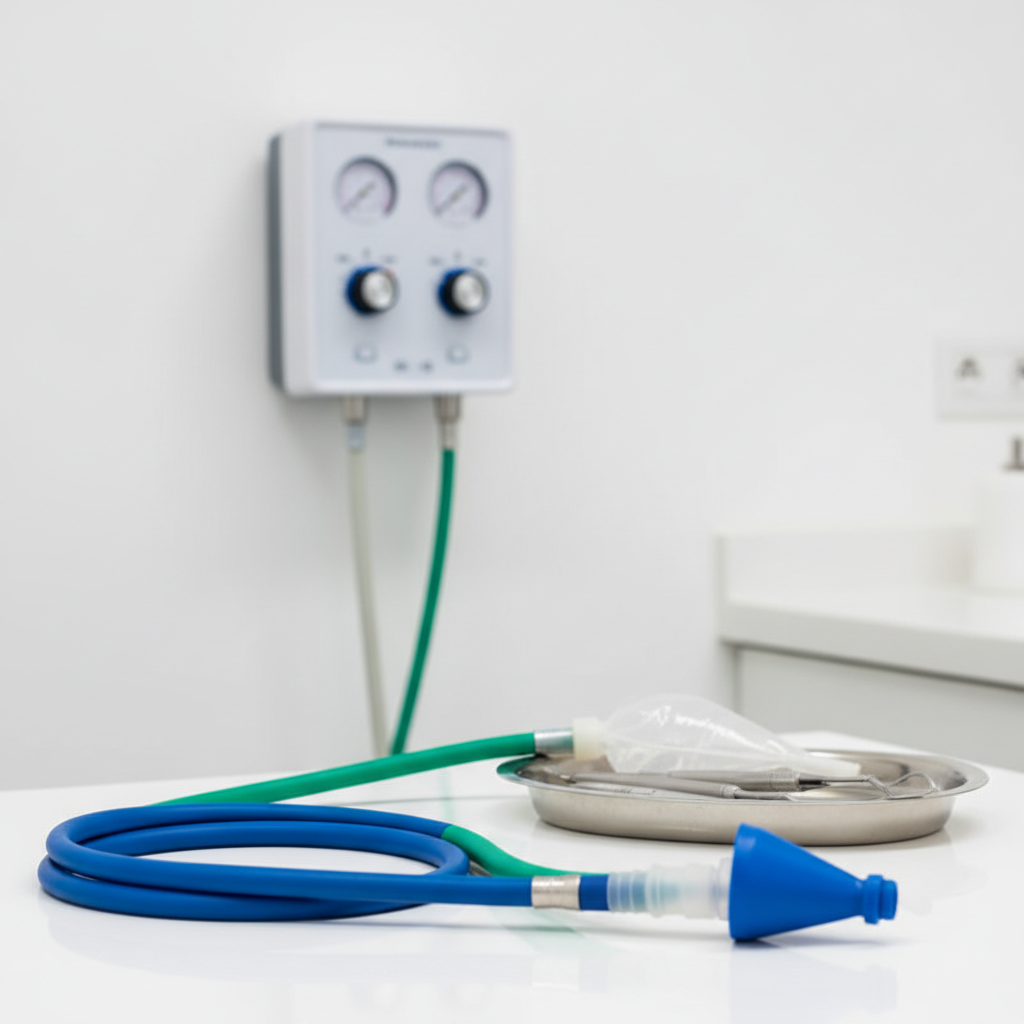
Operatory Equipment: The patient-facing components, including zone valve boxes, station outlets, and the flowmeter apparatus with its breathing circuit and scavenger mask.
Safety and Alarm Systems: A critical network of alarms and monitoring devices required by code to ensure gas purity, pressure, and flow are always within safe limits.
The Heart of the System: Manifolds and Gas Sources
The gas supply is the foundation of your system. Its design dictates the system's capacity, reliability, and the labor required for ongoing management.
Manifold: The Gas Traffic Controller
The manifold is the central hub that connects multiple high-pressure gas cylinders to the main pipeline. Its primary job is to ensure an uninterrupted flow of gas by automatically switching from a depleted cylinder bank to a full one. For a dental practice, manifolds are typically configured for nitrous oxide and oxygen.
Automatic Changeover Manifolds: This is the standard for any modern clinic. It consists of a primary and secondary bank of cylinders. When the primary bank's pressure drops to a preset level, the manifold automatically switches to the secondary bank and triggers an alarm, signaling that the primary bank needs to be replaced. This prevents any interruption in gas delivery during a procedure.
Manual Manifolds: These require a staff member to manually open and close valves to switch cylinder banks. They are not recommended for medical or dental applications due to the high risk of service interruption.
Gas Cylinders
Nitrous oxide and oxygen are stored in high-pressure cylinders, color-coded for safety (Blue for N2O, Green for O2). The most common sizes used in dental practices are:
H-Cylinders: Large cylinders typically chained to a wall in a dedicated storage room. They offer the largest capacity and are the most cost-effective solution for central systems.
G-Cylinders: A medium-sized alternative to H-cylinders.
Your choice of cylinder size and quantity will depend on the number of operatories and your anticipated caseload for sedation procedures.
Plumbing and Distribution: NFPA 99 Guidelines
Once the gas leaves the manifold, it travels through a network of pipes to each operatory. The National Fire Protection Association's NFPA 99: Health Care Facilities Code dictates every aspect of this medical gas distribution system.
Why this matters for compliance: NFPA 99 is not a set of recommendations; it is the law in most jurisdictions. Failure to adhere to its stringent requirements during installation can lead to failed inspections, costly rework, and most importantly, significant safety risks for patients and staff. An ASSE 6030 certified third-party verifier, like Medical Testing Solutions, must test and confirm every component of a new installation.
Pipe Material and Sizing
According to NFPA 99 (Chapter 5), all medical gas plumbing must be constructed from seamless Type K or L copper tubing, which must be cleaned for oxygen service by the manufacturer. Pipes must be brazed by an installer holding an ASSE 6010 Certified Medical Gas Installer credential. Brazing uses a filler metal with a melting temperature above 1,000°F and is performed under a continuous nitrogen purge to prevent oxidation inside the pipe, which could contaminate the gas stream.
Key Plumbing Components
Main Line Shutoff Valve: A master valve located at the immediate outlet of the source equipment that can shut down the entire system.
Zone Valves: Each operatory or group of operatories must have its own zone valve box. This allows staff to shut off the gas supply to a specific area in an emergency or for maintenance without affecting the rest of the facility. These valves must be clearly labeled and readily accessible.
Station Outlets: These are the termination points in the operatory where the flowmeter is connected. They are gas-specific, using a pin-indexing system (DISS - Diameter Index Safety System) that prevents the accidental connection of the wrong gas hose.
Safety First: Scavenging and Exhaust Systems
Nitrous oxide is a safe anesthetic for the patient, but chronic exposure to ambient N2O can pose health risks to clinical staff. The National Institute for Occupational Safety and Health (NIOSH) recommends limiting exposure to 25 ppm during administration. A proper scavenging system is not just a best practice; it is essential for safety.
The scavenging system is a vacuum system that actively removes exhaled N2O from the patient's nasal mask and vents it safely outside the building. This requires its own dedicated exhaust fan and plumbing, completely separate from the general dental vacuum system.
Regular system checks and personnel monitoring are crucial. Services like waste anesthetic gas (WAG) monitoring can help ensure your scavenging system is effective and your practice remains in compliance with occupational safety standards.
The Operatory End: Flowmeters and Breathing Circuits
The flowmeter is the command center of the sedation process. It precisely blends nitrous oxide and oxygen and delivers it to the patient. Modern flowmeters have numerous built-in safety features:
Minimum Oxygen Flow: They are designed to never deliver less than 30% oxygen (a flow of 3 L/min O2 and 7 L/min N2O).
Oxygen Fail-Safe: The flowmeter will immediately shut off the supply of nitrous oxide if the oxygen supply is interrupted.
Oxygen Flush: A button that delivers 100% oxygen to the patient.
Leading brands like Porter, Belmed, Accutron, and Matrx are common in dental settings. These units require regular maintenance and calibration to ensure accuracy and patient safety. For reliable service, it's critical to partner with a certified specialist for your dental flowmeter repair and calibration.
Cost Analysis: Budgeting for Your Dental Nitrous Oxide System
The cost of a central nitrous oxide system can vary significantly based on the size of the practice, the number of operatories, and regional labor rates. Below is a table providing an estimated cost breakdown for the equipment and installation. These are budgetary figures; for a precise figure, you should always request a quote based on your specific floor plan.
Component / Service
Small Practice (1-3 Ops)
Medium Practice (4-8 Ops)
Large Practice (9+ Ops)
Equipment
N2O/O2 Auto-Manifold
$6,000 - $9,000
$6,000 - $9,000
$8,000 - $12,000
Main Alarm Panel
$3,000 - $5,000
$3,000 - $5,000
$4,000 - $6,000
Zone Valve Boxes
$1,500 - $3,000
$3,000 - $6,000
$6,000 - $10,000
Station Outlets (per op)
$1,000 - $1,500
$2,000 - $4,000
$4,500 - $9,000
Scavenger System
$4,000 - $7,000
$5,000 - $9,000
$8,000 - $15,000
Flowmeter (per op)
$3,000 - $5,000
$6,000 - $15,000
$12,000 - $25,000
Labor & Services
Installation Labor (ASSE 6010)
$8,000 - $15,000
$15,000 - $30,000
$30,000+
Total Estimated Cost
$26,500 - $45,500
$40,000 - $78,000
$72,500+
ASSE 6010 Installation and ASSE 6030 Verification
The installation and verification of your dental nitrous oxide system are two distinct but equally critical phases governed by the ASSE 6000 series standards.
Installation (ASSE 6010): The entire system must be installed by a tradesperson who holds an ASSE 6010 Medical Gas Systems Installer certification. This ensures they have the training to properly braze copper, understand the intricacies of the NFPA 99 code, and assemble a system that is both safe and functional. Medical Testing Solutions provides expert ASSE 6010 certified medical gas installation services.
Verification (ASSE 6030): After the installation is complete and before any patients are connected, a third-party verifier must inspect and test the entire system. This verifier must hold an ASSE 6030 Medical Gas Systems Verifier credential. The verification process includes:
Checking that all components match the design specifications.
Pressure testing the piping to ensure it is leak-free.
Performing a gas concentration analysis to ensure 100% purity.
Verifying that all alarms and fail-safe mechanisms are functioning correctly.
Only after the system has passed this rigorous ASSE 6030 verification can it be certified for patient use. This independent, third-party check is a cornerstone of medical gas safety.
Regular, planned maintenance and annual medical gas inspections are also essential to ensure the system remains safe and compliant for its entire lifespan.
Take the Next Step with Confidence
Designing and installing a dental nitrous oxide system is a major project that directly impacts patient safety and practice efficiency. By understanding the components, adhering strictly to NFPA 99 standards, and partnering with certified professionals, you can ensure your system is a reliable asset for years to come.
If you are planning a new dental office or upgrading your existing sedation capabilities, the experts at Medical Testing Solutions can help. We provide a full suite of services, from system design and equipment sales to certified installation and verification. Contact us today for a comprehensive consultation.
Ready to build a safe and compliant nitrous oxide system? Call us at +1 (754) 315-1078 or request a quote online to speak with one of our ASSE-certified specialists.
Frequently Asked Questions
A portable system uses small E-cylinders on a mobile stand and is designed for single-patient use in one operatory. A central system uses large H-cylinders in a dedicated storage area to supply gas to multiple operatories simultaneously through a network of permanent copper piping.
A new or modified system must be fully verified by an ASSE 6030 Verifier before use. After that, all station outlets should be tested annually by a qualified technician as part of a comprehensive preventative maintenance program to ensure pressures, flows, and gas identity are correct.
NFPA 99 sets forth extensive requirements, including the use of seamless Type K or L copper, brazing under a nitrogen purge by an ASSE 6010 installer, specific alarm systems for pressure and changeover, zone valves for each operatory, DISS safety connections at the outlets, and mandatory third-party verification.
No. NFPA 99 mandates that medical gas systems must be installed by a certified ASSE 6010 installer. This is not a standard plumbing job; it requires specialized knowledge of brazing techniques, code requirements, and safety protocols to prevent catastrophic failures or contamination.
The room size depends on the manifold and cylinder configuration. At a minimum, it must be large enough to secure the cylinders, allow staff to replace them safely, and meet NFPA 99 requirements for ventilation and construction. A typical room for an H-cylinder manifold might be 5 ft x 5 ft, but it must be a dedicated, secure space.
Request a quote for your facility
Talk with Medical Testing Solutions about your next inspection, repair or equipment request.