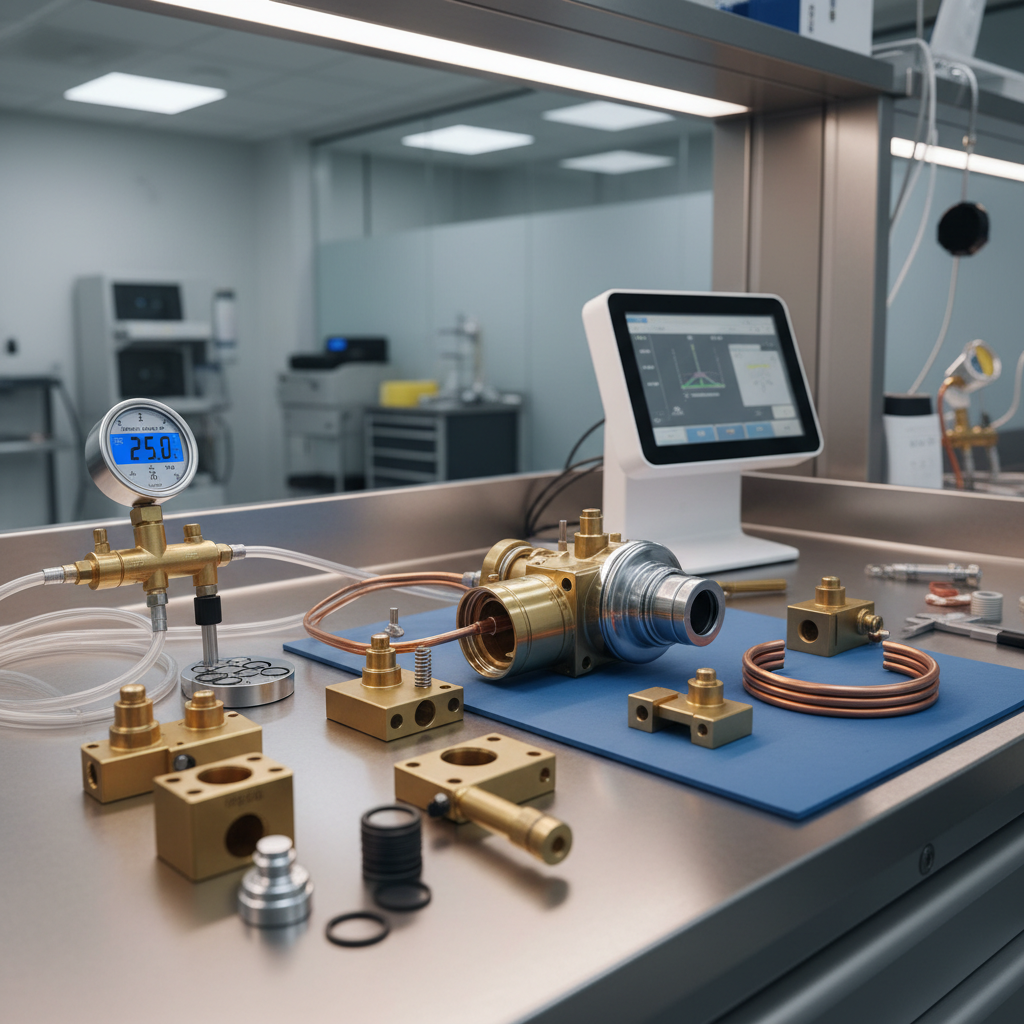
Operating a modern dental practice in the Salt Lake City metropolitan area requires absolute reliability from your conscious sedation equipment. When a nitrous oxide-oxygen flowmeter drifts out of calibration, leaks internal gas, or fails a failsafe interlock test, patient safety drops and regulatory liability surges. Local service options across northern Utah are often limited, leaving clinic managers facing exorbitant diagnostic charges, unpredictable hourly billing, and weeks of uncommunicative downtime.
Medical Testing Solutions (MTS) provides a direct, factory-grade solution: our transparent $750 flat-rate dental flowmeter repair program. Whether your practice operates along the Wasatch Front in downtown Salt Lake City, Sandy, Murray, South Jordan, or Draper, you simply box and ship your flowmeter head directly to our certified repair depot. We rebuild, clean, calibrate, and pressure-test your unit back to original manufacturer tolerances, returning it ready for clinical compliance.
Below, we detail the mechanics of dental flowmeter failure, NFPA 99 requirements, brand-specific rebuild protocols for Porter, Belmed, Accutron, and Matrx, and why our mail-in flat-rate service remains Utah’s premier repair pathway.
The Hidden Costs of Uncalibrated Sedation Equipment
Inhalation sedation demands precision. Dental flowmeters act as precision mixing manifolds, balancing oxygen ($O_2$) and nitrous oxide ($N_2O$) to produce therapeutic analgesia while preventing patient hypoxia. When these mechanical or digital systems degrade, the consequences manifest both clinically and financially.
Clinical Risks: Failsafe Failure and Hypoxic Mixtures
The paramount mechanical safety feature of any dental flowmeter is its 30% minimum oxygen failsafe mechanism. If internal proportional valves warp, diaphragms fatigue, or balance chambers become contaminated with particulate debris, the delivery mixture can deviate. Delivering a gas blend with less than the minimum statutory oxygen concentration creates immediate clinical emergencies, including arterial desaturation, unconsciousness, and neurological events.
Occupational Hazards and Environmental Leaks
Flowmeter degradation rarely stays confined to the patient delivery circuit. Worn internal O-rings, cracked indicator tube gaskets, and leaking proportioning valves vent sub-clinical concentrations of $N_2O$ directly into the operatory breathing zone. Chronic ambient nitrous oxide exposure presents documented reproductive and neurological hazards to dental hygienists, assistants, and clinicians. Regular maintenance and WAG chemical vapor monitoring are critical companion measures to prevent compliance citations and maintain clean operatory air.
Regulatory and Insurance Exposure
Utah State Division of Professional Licensing (DOPL) rules, combined with standards established by the American Dental Association (ADA) and the Occupational Safety and Health Administration (OSHA), mandate properly operating sedation gear. If an adverse event occurs and investigation reveals your clinic skipped required routine maintenance or annual calibration, malpractice coverage can be contested, and professional licenses placed under scrutiny.
NFPA 99 & ASSE Standards Governing Dental Flowmeters
Medical gas distribution and clinical delivery are tightly governed by national fire safety and piping codes. Dental clinics often misunderstand how hospital-level codes apply to ambulatory outpatient facilities.
Why this matters for compliance:
NFPA 99 (Health Care Facilities Code, 2024 edition) Chapter 15 specifically addresses Dental Gas and Vacuum Systems. Dental practices utilizing Category 1, 2, or 3 sedation piping systems must maintain equipment in a manner that prevents internal cross-connection, backflow, and gas delivery contamination. Flowmeters that fail internal pressure retention can backfeed nitrous oxide into low-pressure oxygen supply drops or exhaust unregulated gases into building infrastructure.
NFPA 99 Category Requirements
- Category 1 & 2 Spaces: Deep sedation or general anesthesia practices must adhere to rigorous inspection protocols, requiring annual system inspections and verified delivery devices.
- Category 3 Spaces: Standard dental clinics utilizing moderate or minimal sedation ($N_2O/O_2$) are still required under Section 15.3 to ensure their administration manifolds and delivery mechanisms are leak-free, verified, and functioning to manufacturer performance criteria.
- ASSE 6000 Series Alignment: While ASSE 6010 governs installers and ASSE 6030 establishes guidelines for third-party verifiers, ASSE 6040 professionals maintain medical gas equipment. Medical Testing Solutions applies ASSE 6000-level rigor to every bench repair, verifying that gas pressures (typically 50–55 psig input) yield stable delivery across all volume ranges.
Practices maintaining complex medical gas distribution systems also rely on MTS for broader facility needs, including annual medical gas inspections and complete medical gas verification.
Why Salt Lake City Dental Practices Choose Flat-Rate Mail-In Repair
Salt Lake County dental practices often find that local biomedical service companies either subcontract out nitrous repairs or bill open-ended hourly fees. The logistics of the Wasatch Front make shipping your flowmeter to a specialized facility both faster and significantly more economical.
| Diagram text |
|, |
| THE $750 FLAT-RATE ADVANTAGE: SALT LAKE CITY TO MTS DEPOT |
| [SLC Dental Clinic] - → Pack & Ship Head (UPS/FedEx) - → [MTS Depot] |
| [Re-install & Use] → - Calibrated Unit Shipped Back → - [Bench Rebuild] |
| (Includes NIST Traceability) (OEM Seals, |
| Valves, Run) |
The Breakdown of the $750 Flat Rate
Traditional repair shops bill an initial evaluation fee ($150–$250), hourly labor ($175+/hr), plus marked-up individual gaskets, O-rings, and valves. A standard flowmeter rebuild easily climbs past $1,200 without warning.
Medical Testing Solutions changes this dynamic with our $750 Flat-Rate Program. Our comprehensive tier includes:
- Complete disassembly and ultra-clean ultrasonic degreasing of all brass and aluminum manifold bodies.
- Complete replacement of internal elastomeric seals, Viton O-rings, poppets, and check valves.
- Overhaul or replacement of proportioning gears and control knobs.
- Glass indicator tube cleaning, seal replacement, and flow bead polishing (for analog models).
- Sensor zeroing, flow transducer verification, and printed circuit board diagnostics (for digital models).
- Failsafe shut-off threshold calibration (ensuring $N_2O$ cuts off completely if $O_2$ falls below 30 psig).
- Minimum 30% oxygen concentration mechanical stop recalibration.
- Calibrated multi-point pressure and flow testing against mass flow standards traceable to NIST.
- Return shipping packaging and formal documentation of compliance.
No surprise parts invoices. No hourly estimates that balloon mid-repair. If a major cast housing is cracked beyond repair, we contact you immediately with clear replacement alternatives before proceeding. Explore our dedicated dental flowmeter repair and calibration services to review model specifics.
Supported Brands: Accutron, Porter, Belmed, and Matrx
Every major flowmeter manufacturer utilizes distinct mechanical valving, mixing chamber architecture, and failsafe designs. Our technicians are trained across the four dominant dental sedation brands installed across Salt Lake City clinics.
1. Porter Instrument (Parker Hannifin)
Porter flowmeters, including the legendary Porter MXR-1, MXR-20, and Porter Digital (SILENCO), are considered industry benchmarks.
- Common Failures: Stiff proportioning control dials caused by dried lubricant, cloudy dual-scale glass flow tubes, worn dynamic O-rings in the gear-driven gear train, and erratic emergency air intake check valves.
- Rebuild Focus: We restore Porter's unique mechanical proportioning gear, replace all sub-surface Viton seals, clean and polish the volumetric flow tubes, and calibrate the spring-loaded oxygen flush mechanism to deliver its rated 40–50 L/min burst.
2. Belmed
Belmed systems (such as the Belmed PC-7, Belmed 5110, and 5210 models) feature rugged, modular brass construction favored by institutional practices.
- Common Failures: Leaks around the front-mounted gas inlet blocks, drifting needle valves, and degraded O-rings in the bottom bag-mount stem.
- Rebuild Focus: Precision reseating of needle metering valves, rebuilding internal check valves, torque-setting internal manifold blocks, and verifying failsafe cutoff pressures.
3. Accutron (Crosstex / Cantel Medical)
Accutron produces popular analog models like the Accutron PC4A and market-leading digital systems like the Digital Ultra Flush-Mount and Digital Ultra Cabinet Mount.
- Common Failures: Digital models suffer proportional solenoid valve drift, diaphragm stiffening, and membrane switch wear. Analog units often exhibit bead stickiness inside the calibrated tubes.
- Rebuild Focus: Analog units receive comprehensive valve seat replacements and indicator tube overhauls. Digital units receive multi-point digital flow transducer calibrations, power supply checks, solenoid cleaning, and failsafe electronic system verification.
4. Matrx by Midmark
From traditional analog mixers to the widely deployed Matrx MDM and modern Digital MDM, these flowmeters utilize a patented mechanical mixing matrix that permits single-knob total flow adjustments while maintaining independent mixture percentages.
- Common Failures: Differential gear binding between the percentage dial and total flow dial, worn internal diaphragm regulators, and dried seals along the nitrous safety shut-off pin.
- Rebuild Focus: Complete teardown of the dual-action mechanical proportioning block, replacement of internal diaphragms, cleaning of the low-pressure mixing chamber, and verification of balance regulator pressures.
Comparison Table: Dental Flowmeter Repair Specifications
| Brand & Series | Common Models | Primary Operating Mechanism | Common Failure Sign | MTS $750 Rebuild Scope |
|---|
| Porter | MXR-1, MXR-20, 3400 Series | Mechanical gear-driven proportional valve; analog tubes | Proportioning dial hard to turn; stickiness in $N_2O$ flow bead | Gear train rebuild, Viton O-rings, glass tube polish, failsafe reset |
| Belmed | PC-7, 5110, 5210, PC-9 | Needle-metering analog manifold; modular brass block | Audible hiss behind control knobs; micro-leaks at bag tee | Block reseating, needle valve replacement, O-ring kit, cutoff check |
| Accutron | Digital Ultra, PC4A, Clearview | Digital solenoid mixing / analog dual-glass tube | Error codes on startup; sticky analog flow tubes; proportion drift | Solenoid service, sensor recalibration, tube rebuild, purge overhaul |
| Matrx (Midmark) | MDM, Digital MDM, Analog Cabinet | Combined total-flow & % mixer; diaphragm regulated | Mixture drifting as total flow increases; leaking flush button | Diaphragm replacement, mixing block overhaul, flush assembly reset |
Diagnosing Flowmeter Failures in Your Salt Lake City Operatory
Before shipping your unit to our depot, your clinical staff can run basic operational checks to determine if a full rebuild is warranted.
1. The Audible Leak Test
With supply lines pressurized to standard wall pressure (50–55 psig) and the flow control knobs turned fully "OFF":
- Listen closely to the back of the chassis and the bag-arm mount stem.
- An audible hiss indicates failure of the main manifold O-rings, internal tubing fatigue, or a cracked supply stem block.
- Action: Shut off primary zone valves immediately. Continuous leaking vents nitrous into the operatory and wastes medical gas.
2. The Oxygen Flush Volume Assessment
Depress the emergency oxygen flush button:
- The button should actuate smoothly without mechanical catching and spring back instantly upon release.
- Output flow should instantly rise to a continuous blast (minimum 30–50 L/min depending on model).
- If the button sticks open, hisses after release, or produces weak flow, the primary flush seat valve has failed.
3. Indicator Tube "Float Sticking" Check
On analog flowmeters (Porter MXR, Belmed PC-7, Accutron PC4A):
- Dial the flow upward slowly. The indicator floats (beads) must rise smoothly in direct correlation with dial movement.
- If a float "hops," sticks at the baseline, or remains suspended after gas is closed, static buildup, internal moisture, or hydrocarbon contamination has compromised the glass bore.
- Never apply aerosol lubricants or WD-40 into a medical gas flow tube. Hydrocarbons combined with compressed nitrous oxide and oxygen present serious fire and toxicity risks.
4. Low Oxygen Failsafe Verification
- Turn on a baseline flow of $O_2$ (3 L/min) and $N_2O$ (3 L/min).
- Disconnect or bleed down the upstream Oxygen line at the quick-connect wall outlet while leaving the Nitrous Oxide supply live.
- As oxygen line pressure falls below 30–35 psig, the flowmeter must automatically drop nitrous oxide flow down to zero.
- If $N_2O$ continues to flow when $O_2$ supply drops, the failsafe mechanism has failed completely. The flowmeter must be removed from service immediately.
Step-by-Step: Shipping Your Flowmeter from SLC to Our Repair Facility
Medical Testing Solutions makes sending equipment from Salt Lake City seamless, whether you are located in the University of Utah medical corridor, downtown SLC, Sugar House, West Valley, or South Jordan.
Step 1: Disconnect and Depressurize
- Disconnect your medical gas hose assemblies from the wall or ceiling quick-connect couplers (DISS, Chemetron, or Ohmeda drops).
- Open both flow dials fully to depressurize any gas trapped within the head and supply hoses until indicators drop to zero.
- Turn off power toggles or unplug power supplies for digital flowmeters.
Step 2: Unmount the Flowmeter Head
- Loosen the locking collar or set screws securing the flowmeter to the wall bracket, cabinet slide-out, or mobile cart telescoping pole.
- Remove the flowmeter head. Do not ship heavy cart bases, mobile rolling stands, or gas cylinders.
- Unscrew your flexible DISS supply hoses unless you suspect the hoses themselves are leaking and require replacement testing.
Step 3: Secure and Package
- Wrap the entire flowmeter head in at least 3 to 4 inches of industrial bubble wrap. Pay particular attention to glass flow tubes and front control dials.
- Pack into a heavy-duty, double-walled corrugated box. Fill all remaining voids with dense packing material (do not use loose foam peanuts, which shift during transit).
- Include an internal packing slip with your clinic’s contact name, facility address, phone number, and a brief description of the symptoms observed.
Step 4: Ship Directly to MTS
Send the package via UPS, FedEx, or USPS Priority directly to our dedicated medical gas depot:
Medical Testing Solutions
Attn: Flowmeter Service Dept
501 E Las Olas Blvd, Ste 300
Fort Lauderdale, FL 33301
Phone: (754) 315-1078
Upon intake, our certified biomedical technicians log the serial number, conduct an initial non-destructive baseline evaluation, and begin the flat-rate overhaul process.
The MTS Rebuild Process: Precision Bench Engineering
Our service facility operates clean bench environments designed specifically for medical gas service, meeting strict contamination control standards.
| Diagram text |
|, |
| MTS BENCH RESTORATION PROTOCOL |
| [Intake & Triage] |
| ▼ |
| [Ultrasonic Degrease] → Clean brass/aluminum in medical-grade baths |
| ▼ |
| [Seal Replacement] → 100% replacement of O-rings, seats, gaskets |
| ▼ |
| [Failsafe Reset] → Calibrate 30% min O2 & supply-loss cutoff |
| ▼ |
| [NIST Flow Run] → Multi-point verification across all ranges |
| ▼ |
| [Certification] → Affix compliance label; issue formal report |
1. Decontamination and Teardown
Each unit is disassembled down to its primary manifold castings. All components are cleared of particulate dust, tape adhesive, and biological residue. Brass blocks undergo ultrasonic cleaning using oxygen-safe, non-hydrocarbon cleaning solutions to eliminate potential fire risks.
2. High-Grade Seal and Component Replacement
Every elastomeric sealing component is replaced. We install factory-grade fluorocarbon (Viton) and EPDM O-rings rated for continuous high-pressure gas service. Control needle valves are microscopically inspected for galling or scoring and polished or replaced as necessary.
3. Precision Calibration and Gas Testing
Using calibrated test stands connected to pure medical-grade $O_2$ and $N_2O$ sources regulated to 50 psig:
- We set the mechanical proportioning zero and span stops.
- We calibrate the minimum delivery parameter: ensuring no mixture can exceed 70% Nitrous Oxide / 30% Oxygen.
- The unit undergoes an extended pneumatic static-hold test at 60 psig to guarantee absolute leak-free performance.
- Flow accuracy is confirmed at 25%, 50%, 75%, and 100% of maximum delivery volume using NIST-traceable mass flow equipment.
4. Certification and Return Dispatch
Once verified, the unit receives an MTS certification inspection label detailing the date of service, technician ID, and verification parameters. We box the unit in custom-formed foam packaging and return-ship it directly to your Salt Lake City office.
For clinics upgrading their entire nitrous infrastructure, MTS also stocks new equipment in our comprehensive products catalog and provides broader medical gas maintenance services.
Salt Lake City Service Logistics: Shipping vs. Local Technicians
Dentists across the Salt Lake Valley, from Downtown to West Jordan, Sandy, Bountiful, and Park City, frequently ask whether hiring a local on-site contractor makes more financial sense than mail-in service.
| Diagram text |
|, |
| COST & EFFICIENCY COMPARISON: LOCAL ON-SITE VS. MTS FLAT-RATE |
| Feature Local Utah Tech MTS Mail-In Program |
| Initial Trip / Travel Fee $150 – $300 $0 |
| Labor Structure $175+/hr (Open) Included in $750 |
| Internal Rebuild Seals Extra Line-Item Included |
| Factory Calibration Rig Rare in the field Dedicated Clean Bench |
| Turnaround Time 2–4 Weeks (Parts) Fast Bench Cycle |
| Total Predictable Cost $1,100 – $1,600+ $750 Flat Rate |
Field service technicians rarely carry the specialized micro-component seal kits, proportioning dials, or glass tube assemblies required across Porter, Belmed, Accutron, and Matrx units. As a result, an on-site visit often amounts to a costly diagnostic call: the technician dismounts your head, brings it back to their shop, waits weeks for component orders, and bills you for two round trips.
By shipping directly to the Medical Testing Solutions repair facility, you bypass the middleman, eliminate travel surcharges, and ensure your sedation head is serviced by technicians who rebuild these units daily.
Essential Best Practices for Maintaining Dental Flowmeters
Prevent premature component breakdown and maintain clinical compliance between overhauls with these operational best practices:
- Bleed System Pressure Nightly: Do not leave supply lines pressurized at 50 psig over weekends or extended holiday breaks. Turn off upstream zone valves and vent the flowmeter to relax internal diaphragms and springs.
- Never Lubricate Connection Ports: Petroleum-based lubricants, silicones, and mineral oils can explode upon contact with high-pressure oxygen and degrade internal Viton components. Only oxygen-compatible, fluorinated greases (e.g., Krytox) applied by trained technicians may be used inside gas delivery pathways.
- Use Dedicated Scavenging: Ensure vacuum systems deliver the recommended 45 L/min flow rate at the scavenging interface to prevent nitrous leakage into the operatory air during administration.
- Inspect Supply Hoses Annually: Check the flexible reinforced color-coded hoses (Green for $O_2$, Blue for $N_2O$) connecting your flowmeter to wall quick-connects for dry rot, stiffness, or bubbling.
- Schedule Routine Compliance Evaluations: Pair your flowmeter maintenance with broader clinic certifications, including annual medical gas inspections and periodic testing of clinical safety systems.
Restore Your Dental Sedation Equipment Today
Do not allow drifting calibrations, worn manifold seals, or compliance questions to compromise your Salt Lake City practice. Medical Testing Solutions delivers the nationwide gold standard in ASSE-aligned medical gas service, combining factory-precision bench work with the pricing transparency of a flat $750 rebuild program.
Protect your patients, your staff, and your clinical license.
Reach out to our biomedical service team today to schedule your flowmeter overhaul or receive detailed shipping paperwork.