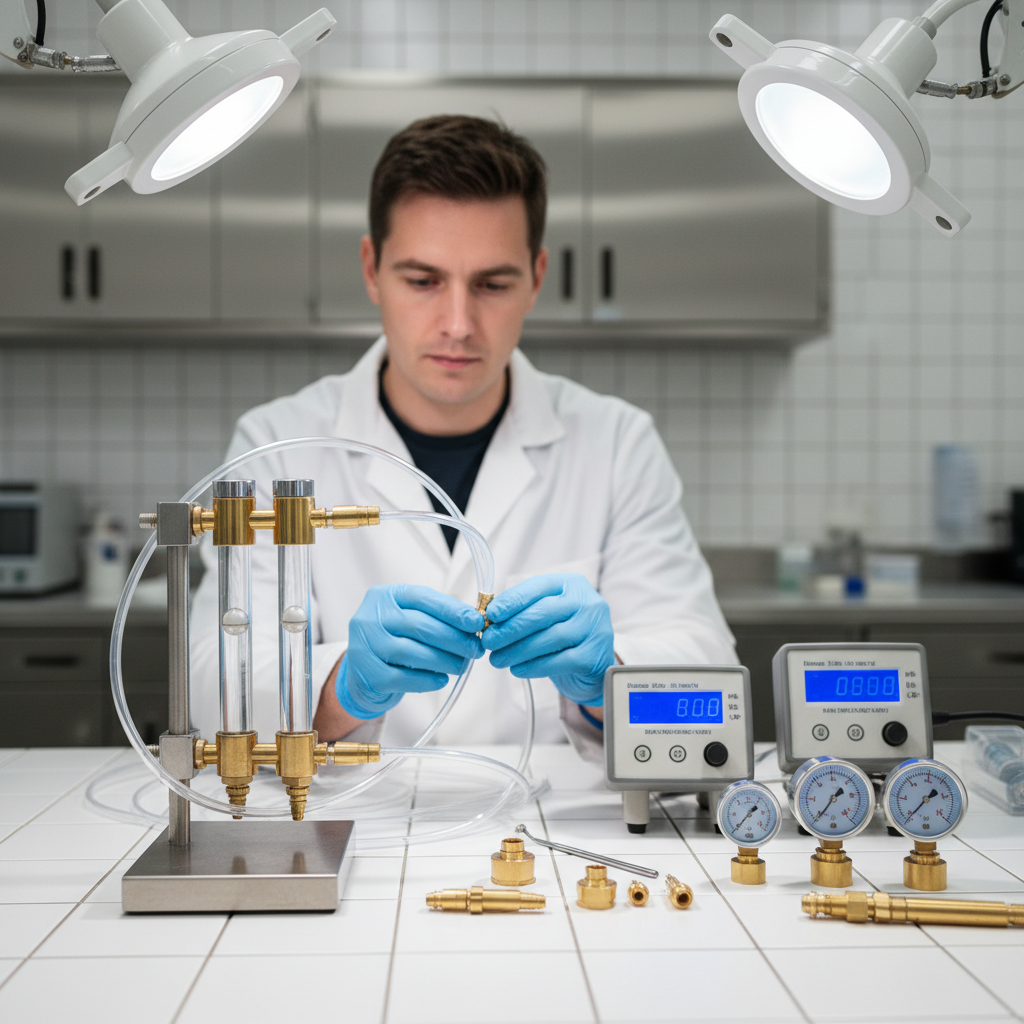
Dental practices across the Research Triangle rely on nitrous oxide sedation daily to manage patient anxiety, discomfort, and procedural compliance. When an analog or digital relative analgesia machine begins sticking, leaking gas, or failing its minimum oxygen threshold test, clinical operations come to a halt. Sourcing certified dental flowmeter repair Raleigh NC dental teams can count on has historically meant navigating unpredictable repair bills, hidden diagnostic fees, and weeks of uncommunicative bench delays.
Medical Testing Solutions changes that paradigm. We provide a transparent, $750 flat-rate mail-in dental flowmeter rebuild, testing, and NIST-traceable recertification service for practices in Raleigh, Durham, Cary, Wake Forest, and the broader Triangle region. Whether your clinic operates a workhorse Porter mechanical block, a legacy Matrx unit, an Accutron digital console, or a Belmed mixer, this guide details how our ASSE-certified technicians restore your equipment to factory tolerances and ensure full regulatory compliance under NFPA 99.
The High Cost of Uncalibrated Nitrous Oxide Equipment
Nitrous oxide/oxygen ($N_2O/O_2$) sedation is one of the safest modalities in outpatient ambulatory healthcare, but its safety hinges entirely on precise gas proportioning. A malfunctioning flowmeter introduces clinical, liability, and occupational hazards that no dental office should tolerate.
Clinical Sedation Failures
Modern dental flowmeters are engineered to prevent hypoxic gas delivery. Under standard dental manufacturing parameters (CGA V-5 and ADA specifications), every flowmeter must enforce a fail-safe minimum of 30% oxygen delivery (or 3 LPM $O_2$ minimum flow baseline) and feature an immediate nitrous shutoff if oxygen supply pressure drops below 35–40 psig. When internal proportioning diaphragms warp or metering valves collect particulate matter:
- Patients may receive erratic gas ratios, resulting in inadequate analgesia, unmanaged panic, or dysphoria.
- A sticking float tube can visually indicate 50% $O_2$ while actually delivering sub-ambient or dangerously low oxygen concentrations.
- Pressure-drop fail-safes can jam in the open position, failing to terminate nitrous flow during a primary oxygen line rupture or manifold exhaustion.
Occupational Safety and Waste Gas Exposure
Flowmeter leaks do not merely impact the patient in the chair; they bleed directly into the breathing zone of the dentist, hygienist, and surgical assistants. The National Institute for Occupational Safety and Health (NIOSH) establishes a Recommended Exposure Limit (REL) of 25 ppm as a time-weighted average (TWA) during anesthetic administration.
Internal manifold leaks, degraded synthetic elastomers, cracked acrylic housing seals, and worn valve packings leak concentrated $N_2O$ directly behind operatory walls or mobile cart mounts. Over an eight-hour clinical shift, this chronic venting can spike ambient operatory levels into hundreds of parts per million, causing reproductive, hematological, and neurological concerns for your clinical staff. Addressing these risks requires coupling proactive maintenance with WAG chemical vapor monitoring across your operatories.
Why this matters for compliance:
The National Fire Protection Association under NFPA 99 (Health Care Facilities Code), Chapter 15, classifies dental sedation delivery systems as medical gas equipment requiring routine maintenance, mechanical verification, and leakage thresholds that do not exceed manufacturer specifications. Failure to document recurring functional testing leaves a practice vulnerable during North Carolina State Board of Dental Examiners audits and OSHA respiratory standard inspections.
Understanding the $750 Flat-Rate Mail-In Program for Raleigh Practices
Most medical gas repair depots bill through an opaque combination of "bench inspection fees," variable labor hours, and retail-marked replacement parts. Practices in Raleigh frequently send out a flowmeter expecting a simple rebuild, only to receive a revised quote exceeding $1,200 to $1,500.
Medical Testing Solutions operates on a predictable, $750 flat-rate model specifically engineered to streamline logistics for Raleigh, NC dental practices.
| Diagram text |
|, |
| MTS $750 FLAT-RATE REPAIR WORKFLOW |
| [Step 1] Request Pre-Addressed Label & Packaging Guidance from MTS |
| [Step 2] Pack & Ship Head from Raleigh (2-Day Transit to Diagnostic Facility) |
| [Step 3] Complete Strip-Down, Ultrasonic Cleaning & Mechanical Rebuild |
| [Step 4] NIST-Traceable Multi-Point Calibration & Pressure Decay Leak Testing |
| [Step 5] Digital Compliance Certificate Issued & Return Shipping to Your Operatory |
What Is Covered Under the $750 Flat Rate?
Our comprehensive flat rate covers everything required to restore standard mechanical and digital flowmeters to factory specifications:
- Complete Teardown and Ultrasonic Decontamination: Removal of internal copper oxides, particulate debris, flux residues, and old synthetic greases from gas pathways.
- Component Rebuild: Replacement of internal elastomeric O-rings, check valves, proportioning diaphragms, dynamic valve packings, and gas-specific inlet filter screens.
- Fail-Safe Mechanism Overhaul: Testing, readjustment, and rebuilding of the minimum $O_2$ flow baseline (30% or 3 LPM) and the instantaneous $N_2O$ automatic shut-off safety block.
- Resealing Float and Manifold Blocks: Reseating or replacing worn flow tube gaskets, needle valves, and flush valve buttons.
- NIST-Traceable Multi-Point Calibration: Precision verification of gas flow rates and mixtures across 10% to 70% nitrous ranges using calibrated primary flow standards.
- Pressure Decay and Bubble Testing: High-pressure static hold testing (50–55 psig) to guarantee zero ambient gas leakage from casing seams or control valve stems.
- Compliance Documentation: A formal Certificate of Calibration documenting pre- and post-repair flow tolerances, serial numbers, and technician credentials.
There are no hidden bench fees. If a unit has suffered severe catastrophic physical trauma, such as a shattered aluminum casting or cracked primary manifold block from a direct fall, we contact you immediately with clear options before proceeding.
For practices seeking broader clinical system assessments, our ASSE-credentialed technicians also deliver comprehensive annual medical gas inspections to evaluate your piped infrastructure from the tank room to the operatory wall outlet.
Brands and Models Serviced
Medical Testing Solutions repairs, rebuilds, and recertifies all primary dental relative analgesia systems used across Wake County and North Carolina clinical facilities.
Porter Instrument (MXR-1, MXR, Century Series)
Porter mechanical flowmeters are legendary for their glass dual-tube analog design. However, the internal precision glass ball floats and rubber seatings degrade after years of daily cycling. Common failures include:
- Sticking glass beads caused by compressor oil vapor mist entering from contaminated air or unpurged oxygen cylinders.
- Binding of the single-knob percentage control ring.
- Degradation of the internal emergency air intake valve.
Our team carries dedicated rebuild packages for Porter MXR, MXR-1, and cabinet/wall mount assemblies, restoring buttery-smooth single-knob control and airtight valve seals.
Matrx by Parker Hannifin (MDM, Quantiflex)
Matrx analog units, notably the classic MDM (Medical Dental Mixer) and Quantiflex systems, employ a dual-control mechanical proportioning architecture.
- The primary failure mode in older MDM heads is diaphragm creep inside the differential pressure controller, causing the mixed percentage to drift widely from the front-panel dial settings.
- Quantiflex flow tubes frequently suffer from dried stem packing, causing slow continuous leaks behind the operatory mounting arm.
- We completely replace the internal diaphragm sets, calibrate the internal mixer block, and restore the $O_2$ flush button mechanism to immediate spring-return performance.
Accutron (Digital Ultra, Newport, PC4A)
Accutron produces both digital touch-pad flowmeters and precision mechanical consoles.
- Digital Models (Digital Ultra): Internal solenoid valves and flow transducers fall out of balance due to voltage spikes or moisture inside dental gas lines. We calibrate digital mass-flow sensors, replace pilot valves, and update internal tubing runs.
- Mechanical Newport Systems: We overhaul the front-mounted flow indicators, replace internal check valves, and reset the 30% oxygen safety stop mechanism.
Belmed (5110, PC-7 Series)
Belmed flowmeters are common across Raleigh dental practices due to their rugged, compact builds. Over time, the internal needle valves develop grooves that prevent complete shut-off, and the nitrous safety cut-off piston sticks. We machine-polish or replace the needle seat assemblies, replace all buna-n/viton internal packings, and recalibrate the total flow rate indicators.
Explore our dedicated dental flowmeter repair and calibration services to submit your head's model number for immediate transit processing.
Flowmeter Repair vs. Replacement: A Technical Comparison
Practice managers frequently ask whether it makes financial sense to repair an existing flow head or simply buy a new unit. In more than 85% of cases, an ASSE-certified rebuild restores the head to factory-original operational tolerances at a fraction of the cost of new equipment.
| Evaluation Metric | MTS $750 Flat-Rate Rebuild | Purchasing New Flowmeter Head | Uncertified Local Depot Repair |
|---|
| Average Cost | $750 flat rate | $3,200 – $5,800+ | $600 – $1,200+ (variable) |
| Turnaround Time | 4–7 business days | 2–4 weeks (backorders common) | 3–6 weeks |
| Internal Rebuild | 100% new O-rings, seals, diaphragms | Brand new factory unit | Partial repair; replaces only broken part |
| Calibration Standard | NIST-traceable multi-point gas test | Factory calibrated | Often uncalibrated; bubble test only |
| Compliance Proof | Formal Calibration Certificate (NFPA 99) | Manufacturer factory sheet | None or handwritten receipt |
| Warranty | Comprehensive parts & labor warranty | 1-year manufacturer warranty | 30–90 days limited |
| Infrastructure Impact | Drops directly back onto existing arm | May require new mount/hosing blocks | Drops onto existing arm |
Rebuilding preserves your operatory ergonomics. A new model from a different manufacturer often demands replacement mounting brackets, updated bag-well configurations, and altered pipeline quick-connect hoses, driving real installation expenses well beyond the equipment purchase price.
NFPA 99, ASSE Standards, and North Carolina Regulations
Operating medical gas systems requires strict adherence to nationally recognized safety codes. Dental practices administering nitrous oxide in North Carolina fall under specific technical mandates that govern piped supply and delivery machinery.
NFPA 99 (Health Care Facilities Code)
NFPA 99 categorizes dental piping and gas delivery under specific risk tiers (Category 1 through Category 3).
- Under Chapter 15 (Dental Gas and Vacuum Systems), nonflammable medical gas systems, including relative analgesia consoles, must be inspected, calibrated, and maintained to ensure zero hazards from contamination, over-pressurization, or delivery of improper gas concentrations.
- Piped supply pressure must deliver a steady 50 to 55 psig to the backplate of the flowmeter head. If an operatory regulator drops pressure under dynamic load, the flowmeter's internal balance chamber can misread flow rates.
ASSE 6000 Series Professional Qualifications
Medical gas work should never be entrusted to standard equipment repairmen lacking medical gas credentials. The American Society of Sanitary Engineering (ASSE) sets the gold standard for medical gas systems:
- ASSE 6010: Certified Medical Gas Installers responsible for physical pipeline, station outlet, and manifold work. See our certified medical gas installation capabilities.
- ASSE 6030: Certified Medical Gas Verifiers who perform rigorous analytical testing on third-party installations. See our medical gas verification solutions.
- ASSE 6040: Certified Medical Gas Maintenance Personnel trained specifically to service, overhaul, and troubleshoot operational clinical delivery machinery.
Medical Testing Solutions employs ASSE-certified technicians who handle every step of your rebuild, ensuring your equipment meets or exceeds the mechanical safety mandates specified in CGA Pamphlet G-4.1 (Cleaning Equipment for Oxygen Service).
North Carolina State Board of Dental Examiners (21 NCAC 16Q)
The North Carolina Dental Board enforces stringent rules regarding minimal, moderate, and deep sedation permits. Operating uninspected or uncalibrated nitrous delivery machinery risks administrative penalties, suspension of sedation credentials, or failed clinic facility checks during routine board reviews. Maintaining current calibration certificates on-site satisfies inspector inquiries immediately.
The 8-Step Bench Rebuild and Calibration Process
When your dental flowmeter arrives at the Medical Testing Solutions technical facility from Raleigh, it undergoes a disciplined, rigorous restoration workflow:
| • Visual Intake Insp | | • Deep Decontam | | • High-Pressure Hold |
|---|
| • Pre-Test Flow Spec | ────► | • 100% Seal Replace | ────► | • NIST Flow Matrix |
| • Complete Teardown | | • Diaphragm Overhaul | | • Certification Doc |
1. Intake Logging and Initial Baseline Analysis
The unit is unboxed, documented for cosmetic condition, and checked against its serial number. If mechanically functional, it undergoes baseline digital mass-flow testing to record "as-found" operational parameters.
2. Complete Mechanical Disassembly
Technicians strip the flow head down to the base casting. All control knobs, flow tubes, needle valves, balance chambers, fail-safe cut-offs, and oxygen flush assemblies are fully removed.
3. Oxygen-Safe Cleaning and Degreasing
Medical gas components exposed to high-pressure oxygen must be 100% free of hydrocarbons, oils, and particulate matter to prevent spontaneous combustion. Every metallic component undergoes multi-stage ultrasonic cleaning in specialized, non-flammable, oxygen-compatible solutions compliant with CGA G-4.1.
4. Full Elastomer and Wear-Part Replacement
Every single Buna-N, silicone, or Viton O-ring is discarded. We install brand-new, medical-grade seals lubricated exclusively with perfluorinated, oxygen-compatible Krytox grease. Internal poppet springs, diaphragm assemblies, and directional check valves are completely renewed.
5. Reseating and Alignment of Flow Tubes
For analog units (Porter, Matrx, Belmed), glass flow indicator tubes are cleaned with high-purity isopropyl alcohol, fitted with new top and bottom shock bushings, aligned with precision plumb gauges, and secured against manifold vibration.
6. High-Pressure Static Leak and Pressure-Decay Testing
The reassembled manifold is pressurized to 55 psig using certified medical-grade dry nitrogen and submerged or tested with micro-leak detection fluid. Pressure-decay monitoring verifies that internal seals hold constant static pressure for a minimum of 15 minutes with zero acceptable pressure drop.
7. Dynamic NIST-Traceable Calibration
The flowmeter is connected to digital primary flow calibrators (traceable to the National Institute of Standards and Technology). Technicians verify:
- Minimum 30% $O_2$ output baseline across all flow ranges.
- Automatic nitrous shutoff within 100 milliseconds upon drop of $O_2$ supply line pressure below 35 psig.
- Accuracy of the emergency oxygen flush button (verifying delivery between 30 and 50 LPM instantaneous flow).
- Dial/float accuracy across 10%, 20%, 30%, 40%, and 50% mixed gas delivery increments.
8. Final Certification and Packaging
The flow head receives a tamper-proof service label indicating test date and certification validity. We issue an official Certificate of Calibration for your practice's compliance records, wrap the head in heavy anti-static foam, and return it via trackable shipping directly to your Raleigh clinic.
If your facility requires ongoing mechanical maintenance for compressors, vacuum systems, or zone valves, consult our comprehensive medical gas maintenance services.
Shipping Your Flowmeter from Raleigh to MTS: Step-by-Step
Shipping a precision medical device is straightforward when properly staged. Follow these instructions to send your unit from your Raleigh-area practice to our diagnostic center:
Step 1: Disconnect and Relieve System Pressure
- Close the primary zone valves or tank shutoffs for both nitrous oxide and oxygen.
- Depress the $O_2$ Flush button on the flowmeter head until all residual system pressure drops to 0 psig on both front gauges.
- Unscrew the diameter-index safety system (DISS) hose lines from the back or bottom of the flowmeter.
- Unscrew the scavenging bag-tee and set the rubber breathing reservoir bag aside (do not ship the rubber bag).
Step 2: Remove Head from Mount
- Wall Arm Mounts: Loosen the mounting thumb-screw or bracket bolt underneath the flowmeter and slide the head forward off the articulating arm.
- Cabinet Slides: Depress the retention pin and slide the chassis free.
- Mobile Carts: Unbolt the head from the central pole yoke.
Step 3: Cushion and Box
- Wrap the flowmeter head in at least 3 to 4 layers of heavy-duty 1/2-inch bubble wrap. Pay special attention to the front glass tubes and control dials.
- Select a heavy-duty, double-walled corrugated box (minimum 200 lb. burst strength).
- Place at least 2 inches of packaging peanuts, foam blocks, or dense bubble wrap at the bottom of the box.
- Insert the wrapped flowmeter and pack all surrounding voids tightly. The unit should not move or shift when the box is closed and shaken.
- Place a sheet inside the box containing your practice name, contact phone number, email address, physical Raleigh return shipping address, and a brief note describing any specific problems experienced in the operatory (e.g., "bead sticking at 4 LPM," "hissing sound near flush button").
Step 4: Dispatch via UPS or FedEx
Label your package clearly and send it via standard ground or express courier (transit time from Raleigh, NC to our regional facility is typically just 2 business days). Contact our office or visit our online intake portal to obtain pre-filled shipping forms.
| Diagram text |
|, |
| [ Double-Walled Heavy Shipping Box ] |
| ┌──────────────────────────────────────────────────┐ |
| Dense Packing Foam / Peanuts (2" Minimum) |
| ┌────────────────────────────────────────────┐ |
| 3-4 Layers Heavy Bubble Wrap |
| ┌──────────────────────────────────────┐ |
| PROTECTED FLOWMETER HEAD |
| • Knobs & Glass Shielded |
| • DISS Ports Protected |
| └──────────────────────────────────────┘ |
| └────────────────────────────────────────────┘ |
| Dense Packing Foam / Peanuts (2" Minimum) |
| └──────────────────────────────────────────────────┘ |
Preventive Maintenance: Extending Flowmeter Lifespan
While our $750 flat-rate rebuild fully restores worn units, taking basic preventive measures in your Raleigh operatory will prevent premature component failure:
- Eliminate Pipeline Particulates: Ensure that station outlets and DISS quick-connects feature intact internal 50-micron wire mesh filter screens. Solder scale, teflon flakes, and copper dust can travel down supply lines and wedge inside delicate flowmeter needle valves.
- Avoid Aggressive Surface Sprays: Never saturate flowmeter faces with aggressive quat or alcohol surface disinfectants. Aerosolized liquid penetrates the perimeter seams of clear faceplates, clouding acrylic covers and chemically degrading internal Buna-N seals. Spray disinfectant onto a microfiber cloth and gently wipe the chassis instead.
- Depressurize at Day’s End: Leaving relative analgesia heads pressurized under 55 psig continuous load overnight fatigues internal balance diaphragms and accelerates spring tension loss. Close local zone valves or tank regulators at the close of daily clinical operations and bleed the lines through the flush button.
- Test the Oxygen Flush Button Weekly: Depress the flush valve periodically without a patient present to confirm that the internal return spring actuates cleanly and snaps closed instantly. A sluggish flush button points to degraded dynamic grease or internal particulate contamination.
- Schedule Annual Calibration Checks: Routine recalibration ensures minor flow drift is corrected before it impacts clinical sedation depth or triggers state inspection infractions.
Restore Your Dental Operatory Flowmeters Today
Reliable nitrous oxide delivery protects your patients, shields your clinical staff from chronic waste anesthetic exposure, and keeps your North Carolina sedation license in good standing. Do not let sticking floats, wandering mixture percentages, or continuous operatory gas hissing disrupt your patient scheduling.
Medical Testing Solutions is your certified partner for medical gas maintenance, installation, and equipment recertification.
Ready to service your flowmeter?
Contact our technical support desk today to generate your shipping manifest, or connect directly with our ASSE-certified medical gas specialists:
Send your Porter, Matrx, Accutron, or Belmed console to Medical Testing Solutions and experience the precision, safety, and predictability of our $750 flat-rate rebuild program.