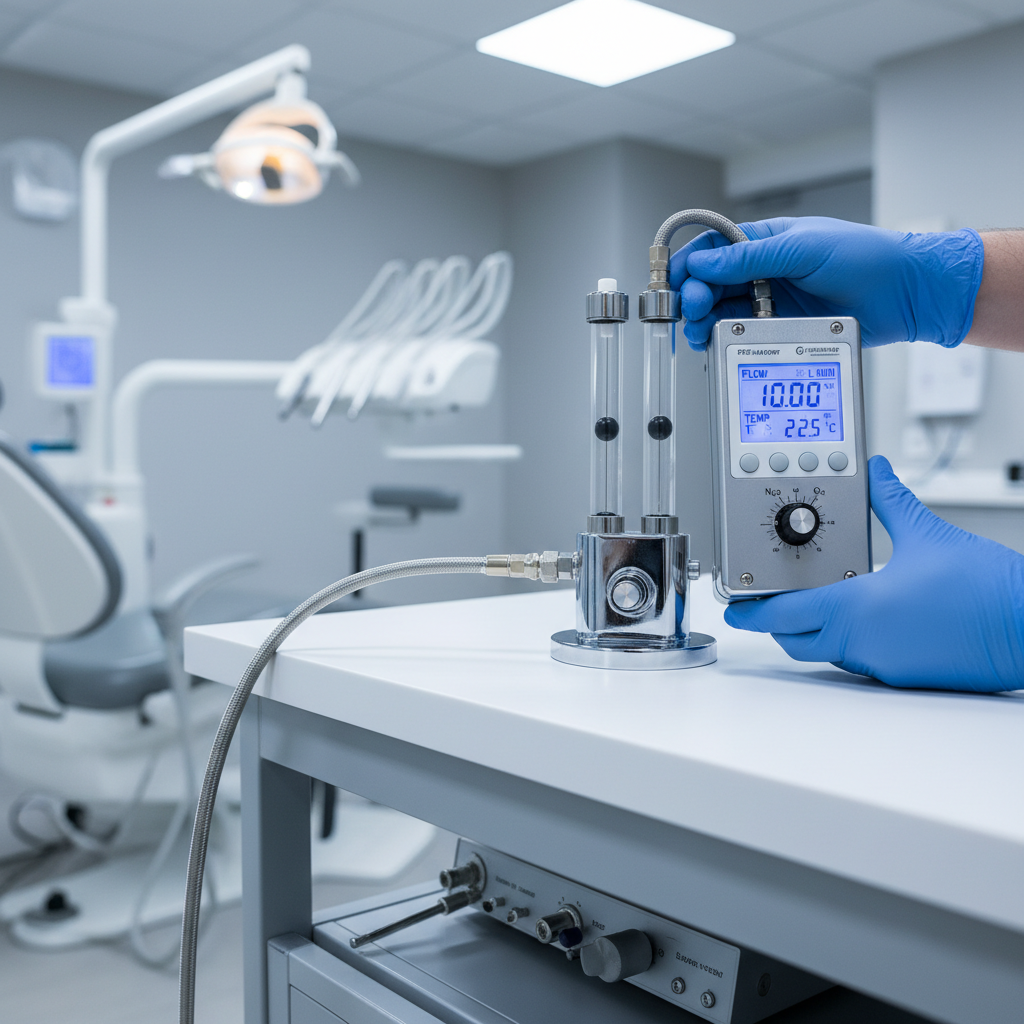
For dental practices in Weston, Florida, utilizing nitrous oxide for patient sedation, the accuracy of your delivery systems is not just a matter of operational efficiency, it's a cornerstone of patient safety and regulatory compliance. The dental flowmeter, the control center for N2O/O2 delivery, requires precise and regular calibration to ensure it performs as expected. This comprehensive guide explains the critical importance of dental flowmeter calibration, the standards that govern it, and how to ensure your practice remains compliant, safe, and efficient. You will learn the what, why, and how of calibration, from understanding NIST-traceable standards to scheduling your next service with confidence.
What is Dental Flowmeter Calibration and Why is it Crucial?
Dental flowmeter calibration is the process of verifying and adjusting a flowmeter's accuracy against a known, precise standard. Over time and with regular use, these sensitive instruments can drift from their original factory settings due to mechanical wear, contamination, or physical shock. A flowmeter that reads 5 LPM (liters per minute) but only delivers 4 LPM can compromise the efficacy of sedation, while one that delivers more than indicated can pose a significant risk to patient safety.
The Role of Flowmeters in Nitrous Oxide Sedation
Nitrous oxide ("laughing gas") is administered in combination with oxygen. The flowmeter is the critical device that allows a dentist or hygienist to precisely control the concentration and flow rate of each gas delivered to the patient. An accurate flowmeter ensures that the patient receives the intended therapeutic mixture, typically ranging from 30% to 70% nitrous oxide. Key safety features, such as the minimum 30% oxygen flow and a fail-safe that cuts off N2O if the oxygen supply fails, are integral to the flowmeter's design and must be functionally verified.
Accuracy, Patient Safety, and Legal Requirements
Inaccurate gas delivery can lead to several adverse outcomes:
Under-sedation: If the flowmeter delivers less N2O than indicated, the patient may not achieve the desired level of anxiolysis, leading to discomfort and anxiety.
Over-sedation: Conversely, delivering a higher concentration of N2O than intended can lead to deeper, unintended levels of sedation, nausea, and other complications.
Hypoxia: In a worst-case scenario, a malfunctioning device could fail to deliver adequate oxygen, posing a severe risk to the patient.
Beyond patient safety, dental practices are subject to stringent regulations. In Florida, state dental boards and healthcare administrations look to national standards as the benchmark for care. Failure to maintain equipment according to these standards can result in liability, fines, or loss of licensure.
NFPA 99 and ASSE 6000 Standards for Dental Gas Systems
The National Fire Protection Association (NFPA) sets the primary standards for medical gas systems in the United States. The NFPA 99 Health Care Facilities Code is the foundational text that outlines the requirements for the installation, performance, and maintenance of these systems.
Key Requirements for Flowmeter Accuracy and Maintenance
While NFPA 99 doesn't specify a rigid calibration interval for every device, it mandates that all medical gas systems be maintained in accordance with the manufacturer's instructions and accepted standards of practice. It explicitly requires that systems be periodically verified and maintained by qualified individuals to ensure their continued safety and performance.
Furthermore, the American Society of Sanitary Engineering (ASSE) provides personnel certifications for this work. An ASSE 6010 certified technician is qualified for medical gas system installation, while an ASSE 6030 verifier is certified to perform the critical tests to confirm a system is safe for patient use. For ongoing service, working with a company that employs ASSE 6040 certified maintenance personnel is crucial.
Why this matters for compliance: The NFPA 99 code is not a suggestion; it's the law in most jurisdictions, adopted by the Centers for Medicare & Medicaid Services (CMS) and other authorities. Documented, professional calibration provides the necessary proof that your practice is meeting its legal obligation to provide a safe environment for patients and staff.
At Medical Testing Solutions, our technicians are ASSE-certified, ensuring that all dental flowmeter repair and calibration services are performed to the highest industry standards, keeping you compliant.
The Calibration Process: A Step-by-Step Overview
Professional calibration is a meticulous process that goes far beyond simply turning a dial. It requires a controlled environment and sophisticated, certified testing equipment.
NIST-Traceable Standards Explained
When a service provider claims "NIST-traceable calibration," it means their own testing equipment has been calibrated against reference standards maintained by the National Institute of Standards and Technology (NIST). This creates an unbroken chain of calibrations, ensuring the measurements taken at your local service center are verifiably accurate and meet the highest national standard. It's the gold standard for any metrology or calibration work.
How Medical Testing Solutions Performs Calibration
For a typical dental flowmeter, our process includes:
Initial Inspection: The unit is visually inspected for damage, wear, and potential points of failure.
Leak Testing: The entire unit is pressurized and checked for gas leaks, which can waste gas and create a hazardous environment.
Flow Verification: The flowmeter is connected to a certified mass flowmeter (our NIST-traceable standard). We test the flow accuracy at multiple common set points for both nitrous oxide and oxygen.
Concentration Dial Verification: We check the accuracy of the mixture control, ensuring that a 50% N2O setting delivers a true 50/50 mix.
Fail-Safe and Alarm Testing: All safety features are functionally tested, including the oxygen supply pressure alarm and the N2O cut-off.
Adjustment and Repair: If any reading is outside the manufacturer's tolerance (typically ±5%), the device is adjusted. If adjustment is not possible, our team is equipped to perform necessary repairs.
Final Certification: Once the unit is confirmed to be within tolerance, a calibration certificate is issued, detailing the as-found and as-left data. A calibration sticker is affixed to the unit showing the date of service and the next due date.
Common Flowmeter Brands and Their Calibration Needs
Most dental practices in the Weston, FL area use one of a few major brands. While all are high-quality devices, they each have their own nuances.
Brand
Common Models
Typical Calibration Notes
Porter
MXR, Silhouette
Robust and widely used. Known for durability, but older units may develop leaks in tubing or block seals.
Belmed
PC7, Digital Ultra
Often feature digital displays. Calibration must verify both the internal flow sensors and the accuracy of the digital readout.
Accutron
Digital Ultra, ClearView
Known for their clear visual displays. Calibration ensures the physical flow matches the indicated percentage and LPM.
Matrx
Centurion, MDM
Reliable workhorses. Calibration often focuses on verifying the accuracy of the glass flow tubes and needle valves.
Regardless of the brand, consistent, annual calibration is key. If you're unsure about your unit, our team at Medical Testing Solutions can help. We have extensive experience with all major brands and our annual medical gas inspections can help identify issues before they become problems.
Choosing a Calibration Provider in Weston, FL
When your dental flowmeter needs service, you can't afford to take chances. Choosing the right provider is critical.
Questions to Ask a Potential Vendor:
Are you ASSE 6040 certified for maintenance?
Is your calibration equipment NIST-traceable, and can you provide documentation?
What is your standard turnaround time?
Do you provide a detailed calibration certificate after service?
Can you perform repairs if the unit is out of spec?
Our $450 NIST-Traceable Calibration with 5-Day Turnaround
Medical Testing Solutions is proud to offer a fast, reliable, and affordable solution for dental practices in Weston and across South Florida. For $450, we provide a complete, NIST-traceable calibration of your dental flowmeter. Our standard turnaround time is just 5 business days from receipt of the unit, minimizing downtime for your practice.
As a full-service medical gas installation and verification company, we understand the entire gas system from the source to the patient. This holistic expertise ensures that our calibration service is not just a simple check, but a comprehensive verification of a critical piece of your life-support equipment.
Get Your Quote Today
Don't wait for an inspector to flag an out-of-date calibration sticker or risk the safety of your patients. Ensure accuracy, compliance, and peace of mind with professional, NIST-traceable calibration.
Contact Medical Testing Solutions today for a fast quote on your dental flowmeter calibration. Our team is ready to help you maintain the highest standards of safety and care at your Weston, FL practice.
At a minimum, you should follow the manufacturer's recommendation, which is typically every one to two years. However, best practices and many state boards recommend an annual calibration schedule.
This means the calibration was performed using equipment that is verifiably benchmarked against the master standards kept by the National Institute of Standards and Technology (NIST), ensuring the highest level of measurement accuracy.
Yes, Medical Testing Solutions services and calibrates all major brands of dental flowmeters, including Porter, Belmed, Accutron, and Matrx.
We offer an industry-leading 5-day turnaround for our standard $450 calibration service to minimize downtime for your dental practice.
Yes. After service, you receive a detailed calibration certificate for your records, showing the as-found and as-left data, and a dated sticker is placed on the device.
Request a quote for your facility
Talk with Medical Testing Solutions about your next inspection, repair or equipment request.