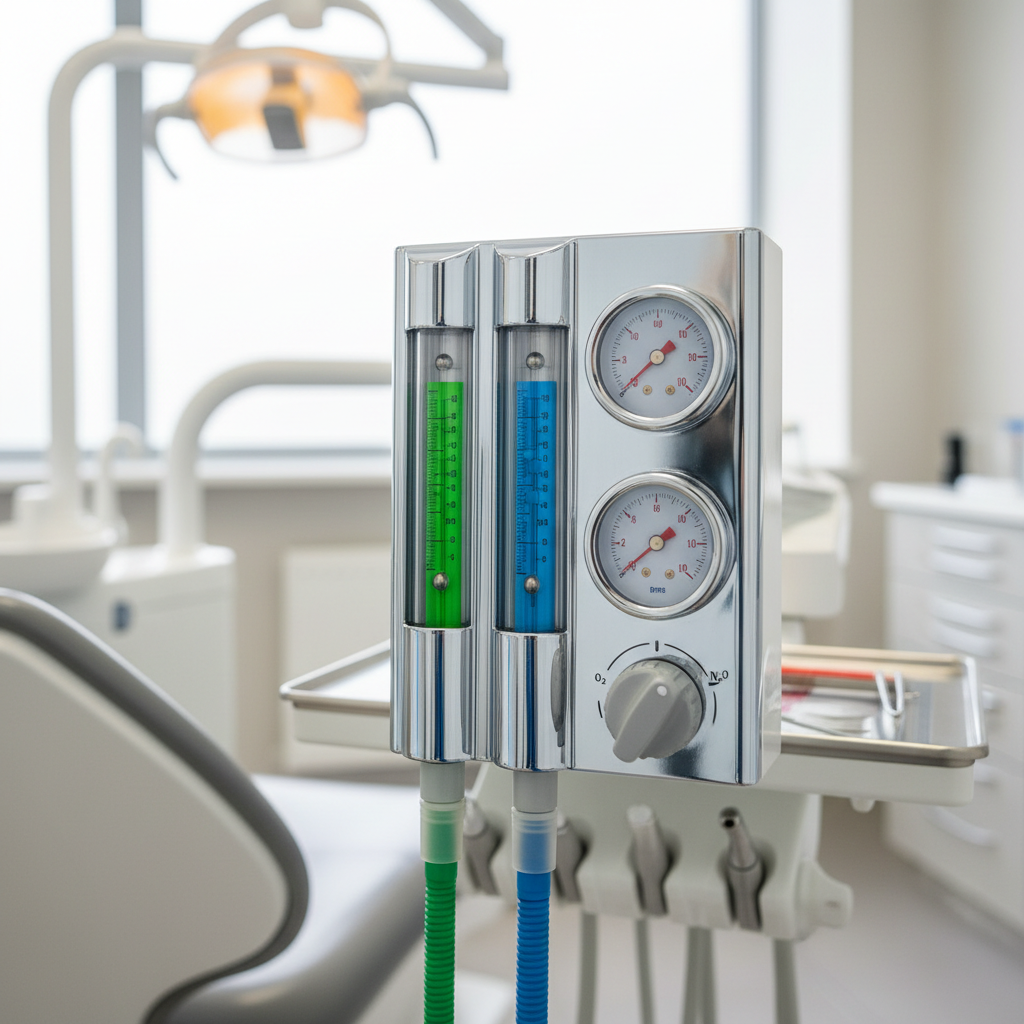
Dental Flowmeter Calibration in Wellington FL: A Guide
Medical Testing SolutionsAugust 9, 20267 min read
Share
As a dental practitioner in Wellington, Florida, ensuring the safety and comfort of your patients during sedation is paramount. Central to this is the precise functioning of your nitrous oxide-oxygen (N2O-O2) sedation systems, specifically the flowmeter. These devices require regular, precise calibration to guarantee they deliver the exact gas concentrations prescribed. This guide provides a definitive overview of dental flowmeter calibration, its importance for patient safety, NFPA 99 compliance, and how to meet these critical requirements in the Wellington area.
You will learn what NIST-traceable calibration is, the step-by-step process, how often it's required, and what to look for in a certified service provider. We'll explore why documented accuracy is non-negotiable for both regulatory compliance and protecting your practice from potential liability. For dental professionals committed to the highest standards of care, this is your comprehensive resource for ensuring your sedation equipment operates flawlessly.
What is Dental Flowmeter Calibration and Why is it Crucial?
Dental flowmeter calibration is the process of verifying and adjusting a nitrous oxide-oxygen delivery unit to ensure its readings are accurate. The process involves comparing the flowmeter's displayed gas flow rates against a known, highly accurate measurement standard. This standard is "NIST-traceable," meaning it has an unbroken chain of calibrations linking it back to the National Institute of Standards and Technology (NIST), the ultimate authority on measurement in the United States.
A flowmeter that is out of calibration can deliver an incorrect mixture of nitrous oxide and oxygen. This could lead to inadequate sedation (patient discomfort and anxiety) or, more critically, over-sedation and the risk of delivering a hypoxic mixture (less than 21% oxygen). For patient safety, there is no room for error. Regular, documented calibration by a qualified technician is a fundamental aspect of responsible dental practice and medical gas system maintenance.
Defining "Accuracy" in N2O Sedation
When we talk about accuracy, we're referring to how closely the machine's indicated flow matches the actual flow delivered to the patient. A flowmeter might indicate it's delivering 3 LPM of oxygen and 4 LPM of nitrous oxide (a 43% N2O concentration), but if it's out of calibration, the actual delivered concentration could be significantly different. Calibration corrects these deviations, ensuring the percentages you set are the percentages your patient receives. This is where an ASSE 6040 certified technician, like those at Medical Testing Solutions, provides critical expertise.
Why this matters for compliance: NFPA 99, Health Care Facilities Code, is the primary standard governing medical gas systems. Section 5.1.14.2.2.8 (2018 edition) mandates that all patient care-related gas equipment be maintained per the manufacturer's recommendations. Major flowmeter manufacturers like Porter, Belmed, Accutron, and Matrx all require periodic calibration to ensure performance and safety.
The NIST-Traceable Calibration Process: A Step-by-Step Overview
Achieving NIST-traceable calibration is a meticulous process performed by a certified technician. While you can ship your unit to a provider like MTS, understanding the steps demystifies what you're paying for and why it's so vital.
Initial Inspection & Documentation: The technician first records the unit's make, model, and serial number. They perform a visual inspection of the flow tubes, floats, knobs, and connections for any signs of damage, cracks, or wear.
Leak Testing: The unit is connected to a regulated gas source and pressure tested to ensure there are no leaks in the internal manifold or external fittings. A leak could compromise the gas mixture and pose a safety hazard.
Flow Verification (As-Found): The core of the process begins. The technician connects a high-precision, NIST-calibrated testing device to the flowmeter's output. They then set the flowmeter to various common settings (e.g., 1 LPM, 3 LPM, 5 LPM, etc.) for both oxygen and nitrous oxide. The actual flow is measured by the testing device and recorded. This "as-found" data shows how accurate or inaccurate the unit was upon arrival.
Adjustment & Calibration: If the "as-found" readings are outside the manufacturer's specified tolerance (typically +/- 5% of the indicated flow), the technician will make precise adjustments. This often involves fine-tuning internal needle valves or controls to bring the delivered flow into alignment with the indicated flow.
Flow Verification (As-Left): After adjustments, the technician repeats the flow verification process from Step 3. The new readings are recorded as "as-left" data. This demonstrates that the unit is now performing within the required accuracy tolerance across its full operational range.
Final Report & Certification: A detailed calibration certificate is generated. This document includes the "as-found" and "as-left" data, the NIST-traceable standard used for testing, the date of service, and the technician's signature and certification number (e.g., ASSE 6040). This certificate is your official record for compliance audits.
For a seamless experience, consider using a provider that offers comprehensive dental flowmeter repair and calibration services, as they can handle both routine adjustments and any necessary repairs in one go.
How Often Do Dental Flowmeters Need Calibration?
This is one of the most common questions from dental practices. The required frequency is determined by two primary sources: manufacturer recommendations and local authority requirements.
Manufacturer's Instructions for Use (IFU): Most leading dental flowmeter manufacturers (Porter, Belmed, Accutron) recommend a calibration check every 2 years. This is considered the industry standard.
State and Local Regulations: Some jurisdictions may have specific mandates that require more frequent checks. It's essential to know the rules governing your practice in Wellington and Palm Beach County.
To be safe and ensure consistent compliance, a biennial (every 24 months) calibration schedule is the best practice. Setting a reminder or scheduling service in advance prevents lapses that could put your practice at risk during an inspection.
Choosing a Certified Calibration Provider in Wellington, FL
Not all calibration services are created equal. When selecting a provider for your Wellington dental practice, you need to ensure they meet specific criteria to guarantee compliant, safe, and legally defensible results.
Here are the non-negotiables:
ASSE 6040 Certification: The technician performing the calibration MUST be ASSE 6040 Certified for Medical Gas Systems Maintenance. This certification ensures they have the training and expertise to work on patient-use gas equipment.
NIST-Traceable Equipment: The provider must use a calibration device with a current, valid NIST-traceable certificate. Ask to see it. Without this, the calibration is not valid for regulatory purposes.
Comprehensive Documentation: The provider must supply a detailed calibration certificate with "as-found" and "as-left" data. A simple sticker on the machine is insufficient.
Experience with Dental Units: While some industrial companies offer calibration, it's best to use a specialist in medical and dental gas equipment. They understand the specific models and failure points of units like the Porter MXR or Accutron Digital Ultra.
Turnaround Time: For a busy practice, downtime is a major concern. Medical Testing Solutions offers a 5-day turnaround for mail-in service, minimizing disruption to your patient schedule.
Medical Testing Solutions provides NIST-traceable calibration and repair services for all major brands, performed by ASSE 6040 certified personnel, ensuring your practice meets and exceeds all standards.
Cost of Dental Flowmeter Calibration
Understanding the costs involved helps in budgeting for this essential service. Below is a comparison of typical calibration service options. Prices can vary based on the provider and whether repairs are needed.
Service Type
Typical Price Range
Key Features
Mail-In Calibration
$450 - $600
Includes full NIST-traceable calibration, leak check, and certification report. Most cost-effective option.
On-Site Calibration
$700 - $1,000+
A technician travels to your office. Higher cost due to travel time and expense.
Calibration + Repair
Varies
Base calibration cost plus parts and labor for any necessary repairs (e.g., broken flow tube, new seals).
Medical Testing Solutions offers a flat-rate $450 NIST-traceable calibration for most standard dental flowmeters, providing a predictable and affordable option for Wellington-area dentists. For a precise estimate, you can request a quote online.
Your Partner for Compliance and Safety in Wellington, FL
Ensuring your dental flowmeters are accurate and compliant is a critical responsibility. Partnering with a certified, experienced provider like Medical Testing Solutions removes the guesswork and provides the peace of mind that comes with knowing your equipment is maintained to the highest standards of safety and performance.
We are proud to be an ASSE-certified medical gas service company based in Florida, offering convenient, affordable, and fully compliant calibration services to dental practices in Wellington and beyond. Don't leave patient safety or regulatory compliance to chance.
Ready to get your flowmeter calibrated? Contact our expert team today. Call us at +1 (754) 315-1078 or request your quote online to get started with our $450 NIST-traceable calibration service.
Frequently Asked Questions
Verification is the process of checking the flowmeter's accuracy ("as-found" testing). Calibration includes verification but adds the crucial step of adjusting the unit back into its specified tolerance if it fails the initial check. A full calibration service includes both.
It is strongly discouraged. Using an uncalibrated device introduces risks to patient safety and puts your practice in a non-compliant state with NFPA 99 and manufacturer requirements, potentially posing a liability risk.
Yes. A flowmeter can drift out of calibration slowly over time without any obvious external signs of malfunction. Only testing against a NIST-traceable standard can confirm its accuracy. This is why a scheduled, preventive approach is essential.
With Medical Testing Solutions' mail-in service, the typical turnaround time is 5 business days from when we receive the unit. We perform the calibration and ship it back promptly to minimize your downtime.
If a unit is too far out of tolerance or has a malfunctioning part, a repair will be necessary. Our technicians will provide a detailed quote for any required repairs before proceeding. We offer full medical gas maintenance services to address these issues.
Not necessarily. Both methods achieve the same NIST-traceable result. Mail-in service is significantly more cost-effective and can be easily scheduled during a planned break or by using a backup unit. On-site service is available but at a premium cost.
Request a quote for your facility
Talk with Medical Testing Solutions about your next inspection, repair or equipment request.