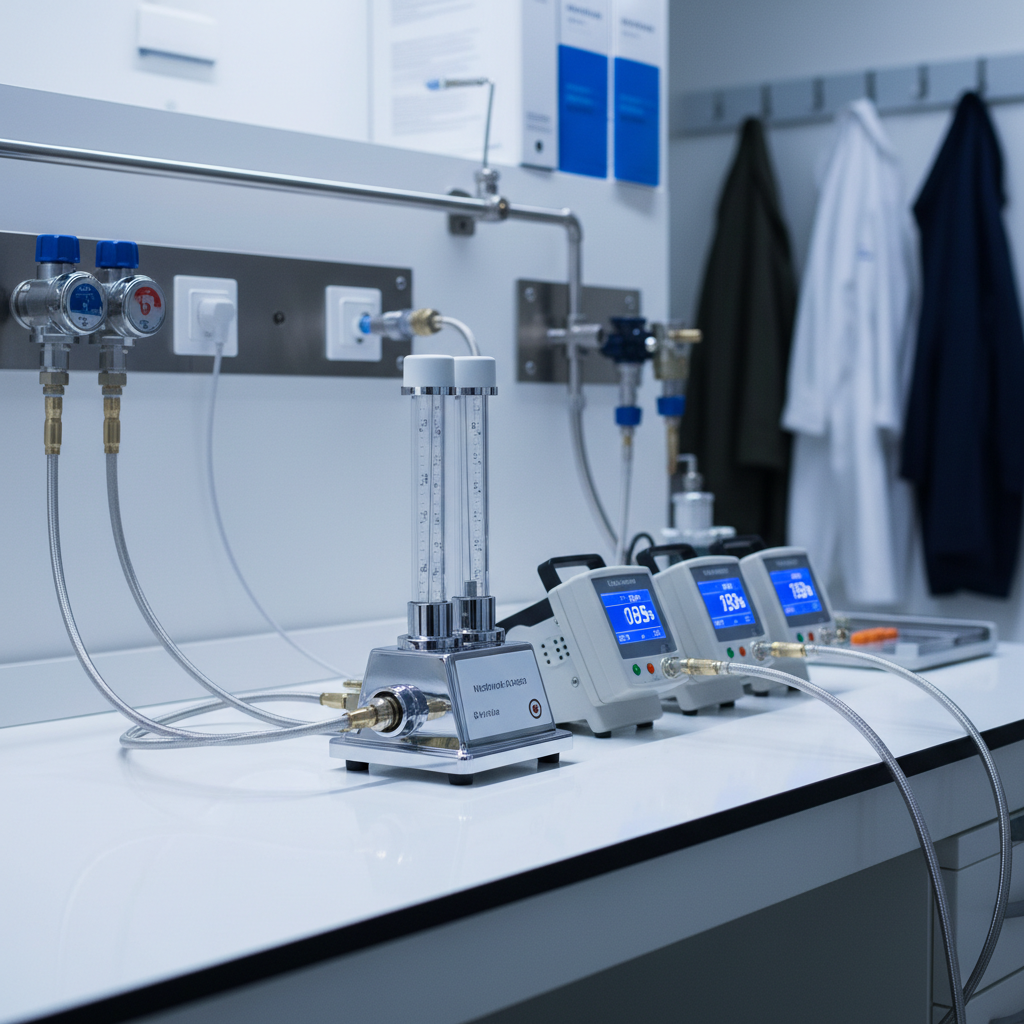
Dental Flowmeter Calibration Tucson AZ: Precision Compliance
Dental practices across Tucson, from Casas Adobes and Catalina Foothills to Downtown and Rita Ranch, rely on nitrous oxide sedation systems to deliver safe, low-stress patient care. However, routine usage, environmental cycling, and internal wear drift flowmeter accuracy over time. To ensure clinical safety and strict regulatory alignment, routine dental flowmeter calibration in Tucson, AZ is essential.
Medical Testing Solutions (MTS) provides precision-bench, NIST-traceable calibration and testing for dental analgesia units throughout Southern Arizona. At a transparent $450 flat bench rate per unit with a guaranteed 5-day turnaround, we eliminate lengthy clinic downtime while restoring equipment to original manufacturer tolerances.
In this comprehensive guide, Tucson dental directors, practice managers, and pediatric specialists will learn the clinical mechanics of nitrous flowmeters, critical NFPA 99 and ASSE compliance mandates, legal liability considerations in Arizona, and our step-by-step factory-grade calibration procedure.
The Critical Role of Nitrous Oxide Flowmeter Accuracy
Nitrous oxide conscious sedation represents one of the most reliable modalities in modern operative and pediatric dentistry. Inhaled nitrous oxide-oxygen ($N_2O/O_2$) sedation safely elevates pain thresholds and alleviates dental anxiety without requiring deeper general anesthesia.
However, sedation safety hinges completely on mechanical or digital flowmeter reliability. The flowmeter serves as the primary mixing and delivery barrier between medical gases and the patient's airway.
When an office utilizes uncalibrated units, internal diaphragms stretch, proportional valves experience stiction, and micro-debris shifts glass tube floats. This introduces dangerous compounding variables:
- Hypoxic Delivery Risks: An uncalibrated flowmeter can misread oxygen flow rates. If a unit displays a 50/50 mixture but delivers an oxygen-depleted blend below 30% $O_2$, the patient faces rapid desaturation, nausea, and potentially catastrophic hypoxic brain injury.
- Sub-Therapeutic Under-Sedation: If nitrous flow is restricted or floats stick, patients experience inadequate sedation, resulting in sudden behavioral escalations, broken appointments, and procedural distress.
- Occupational Overexposure: Leaking flowmeter blocks or improperly seated proportioning valves exhaust $N_2O$ directly into the operatory breathing zone, elevating ambient concentrations far beyond safe thresholds.
To safeguard patients and staff, discover our comprehensive dental flowmeter repair and calibration services, built to address these exact clinical risks.
Regulatory and Code Standards: NFPA 99, ASSE, and ADA
In Arizona, dental practices providing nitrous oxide conscious sedation are governed by a network of mechanical, health, and fire life safety codes. Flowmeters are not plug-and-play appliances exempt from life safety oversight; they are categorized medical delivery devices.
NFPA 99 Health Care Facilities Code (2021/2024 Editions)
NFPA 99 classifies dental nitrous sedation systems under Category 3 or Category 2 medical gas systems, depending on whether loss of the gas stream compromises patient safety or terminates the procedure.
- Section 15.5 / Chapter 5: Requires all medical gas delivery, terminal units, and administration equipment to undergo routine inspection and preventive maintenance.
- Proportioning Fail-Safe Mandates: NFPA 99 and standard dental codes dictate that gas mixing equipment must mechanically prevent an oxygen delivery percentage below 30% (nominal 3 L/min baseline). If the oxygen supply drops, an internal safety interlock must shut off nitrous oxide delivery entirely. Only precision bench testing verifies that this fail-safe functions at critical pressure drops.
ASSE 6000 Professional Qualifications Standard
The American Society of Sanitary Engineering (ASSE) Series 6000 defines the standard of competence for medical gas personnel. ASSE 6030 (Medical Gas Systems Verifiers) and ASSE 6040 (Medical Gas Maintenance Personnel) ensure equipment evaluations follow rigorous engineering protocols.
Medical Testing Solutions employs ASSE-certified technicians who evaluate both central delivery piping and terminal delivery flowmeters, ensuring compliance with medical gas certification requirements across every healthcare jurisdiction.
Occupational Safety and Health Administration (OSHA) & NIOSH
OSHA enforces general duty protections regarding hazardous waste anesthetic gas. NIOSH establishes an 8-hour time-weighted average (TWA) recommended exposure limit (REL) of 25 ppm for nitrous oxide during anesthetic administration. A poorly calibrated or leaking flowmeter is one of the primary vectors for operatory overexposure. Coupling flowmeter calibration with clinical waste anesthetic gas (WAG) monitoring ensures absolute compliance with federal safety baselines.
Why this matters for compliance: State licensing boards, accreditation bodies, and liability underwriters look for documented proof of regular device certification. In the event of an adverse patient event in Tucson, an uncertified flowmeter without a NIST-traceable calibration log exposes your dental practice to indefensible legal liability and professional license sanctions.
Tucson AZ Dental Sedation Landscape: Pima County Realities
Tucson's geographic and climatic environment introduces unique operational challenges for precision medical gas hardware. Located in the Sonoran Desert at an elevation of roughly 2,400 to 2,600 feet above sea level, Tucson practices in neighborhoods like Foothills Reserve, Tanque Verde, and Oro Valley operate under conditions distinct from coastal or sea-level facilities.
- Elevation and Barometric Differential: Rotameter float tubes rely on gas density and hydrodynamic drag. Operating at 2,500 feet changes barometric pressures relative to sea level. Flowmeters calibrated carelessly without precise atmospheric correction or mass flow verification drift out of spec quickly.
- Extreme Dry Heat and Elastomer Aging: Tucson's extreme summer temperatures stress clinic HVAC systems and central storage rooms. Rapid cycling of ambient heat accelerates the degradation of internal neoprene diaphragms, silicone check valves, and fluoroelastomer O-rings inside the flowmeter block, triggering internal inter-stage leaks.
- Pima County Enforcement: Arizona State Board of Dental Examiners (BODEX) inspectors routinely request preventive maintenance documentation, equipment logs, and scavenging validation during standard facility audits. Practice owners who cannot produce current calibration records risk citations or suspension of conscious sedation permits.
Common Flowmeter Issues Diagnosed in Tucson Dental Offices
When dental flowmeters arrive at our testing laboratories, our technicians identify several repeating failure modes across mechanical and electronic platforms:
- Sticking Float Balls (Rotameter Drift): Fine desert dust and desiccated compressor oil bypass aged filtration, forming an invisible film inside the borosilicate glass flow tubes. Float balls stick, displaying 4 L/min when the patient is actually receiving 2.5 L/min or 5.5 L/min.
- Proportioner Gear Slip: On analog mixing dials (such as those in Porter or Accutron units), gear lash or worn internal mechanical cams cause the delivered mixture to decouple from the front dial faceplate. Setting the dial to 50% $N_2O$ can deliver 65% $N_2O$ without warning.
- Fail-Safe Valve Ruptures: The internal fail-safe mechanism isolates nitrous flow whenever oxygen pressure drops below 35–40 PSI. Weakened internal springs or stiff diaphragms can fail open, allowing nitrous to flow even when oxygen cylinders are depleted.
- Degraded Scavenging Cones and Relief Valves: The vacuum scavenging line and pressure relief valves crack under dry desert conditions, dumping waste gas directly into the dentist’s breathing field.
Factory-Grade Calibration vs. Field Testing
Many dental supply sales reps offer quick "in-office checkups." It is vital to understand the difference between a superficial field check and full factory-grade bench calibration.
| Evaluation Metric | Quick Field "Wand" Check | MTS NIST-Traceable Bench Calibration |
|---|---|---|
| Testing Standard | Visual check / hand-held flow sensor | NIST-Traceable Mass Flow Primary Standard |
| Internal Pressure Proofing | Not tested; cannot isolate sub-assemblies | 50 PSI proof testing & 100 PSI static hold |
| Leak-Down Testing | Rarely performed | High-sensitivity decay analysis (<0.5 PSI/hr) |
| Fail-Safe Integrity | Rough depressurization test | Precise micro-switch & cut-off threshold verification |
| O-Ring & Filter Service | None | Full teardown, ultrasonic wash, seal replacement |
| Documentation Provided | Generic generic service receipt | Formal Certificate of Calibration with serial data |
| Warranty / Guarantee | None | Workmanship & calibration guarantee |
Field checks cannot measure the internal spring tension of ratio-limiting valves or accurately calculate mass gas flow independent of ambient temperature. True compliance requires precision bench testing.