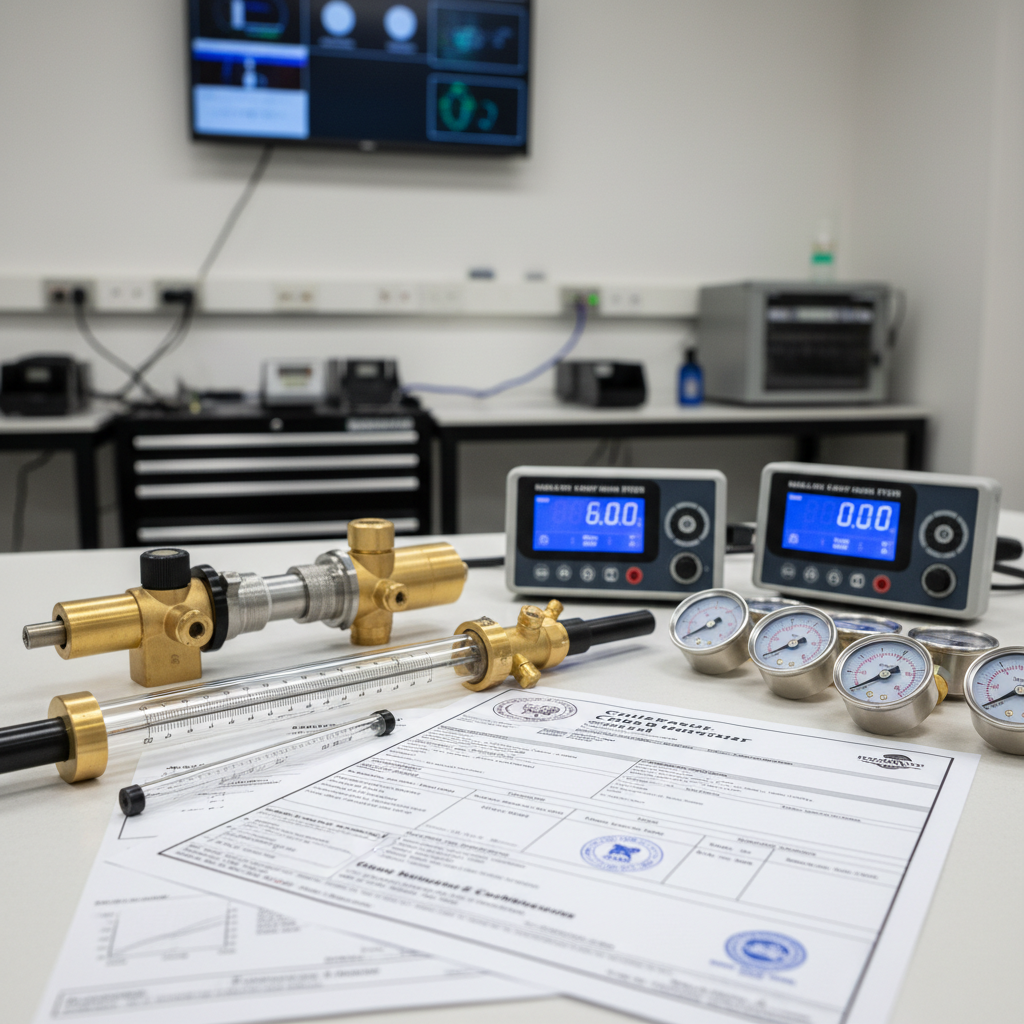
Accurate sedation delivery protects patients and insulates your dental practice from severe regulatory liabilities. If your practice operates in Allegheny County or the greater Pittsburgh metropolitan area, keeping your nitrous oxide delivery heads within manufacturer tolerances is an active legal and clinical duty. Medical Testing Solutions provides certified, NIST-traceable dental flowmeter calibration for Pittsburgh, PA dental offices at a flat rate of $450 with an industry-leading 5-day depot turnaround.
Whether you operate a pediatric clinic in Shadyside, an oral surgery operatory in Cranberry Township, or a general dental practice in Downtown Pittsburgh, sedation equipment drift happens silently over time. This guide covers technical standards under NFPA 99 and CGA, state inspection expectations from the Pennsylvania State Board of Dentistry, mechanical failure indicators, and how our professional dental flowmeter repair and calibration workflow restores your equipment to factory precision.
The Clinical and Legal Stakes of Flowmeter Drift
Nitrous oxide/oxygen ($N_2O/O_2$) conscious sedation relies on exact gas mixture ratios. Dental flowmeters are engineered to deliver a minimum concentration of 30% oxygen ($O_2$) and a maximum concentration of 70% nitrous oxide ($N_2O$). This built-in fail-safe protects the patient from hypoxic mixtures.
However, mechanical flowmeters, utilizing glass rotameter tubes and precision needle valves, suffer from internal component fatigue. Over thousands of clinical cycles, several degrading factors emerge:
- Elastomeric O-rings shrink, dry out, or crack.
- Particulate matter from central medical gas lines accumulates on needle valve seats.
- Spring tensions within internal fail-safe proportioning diaphragms drift out of manufacturer tolerance.
When internal drift occurs, the percentage dial on your mixing head may indicate a 50/50 mixture while delivering an uncalibrated 65% $N_2O$ and 35% $O_2$, or conversely, inadequate analgesia that causes patient distress mid-procedure.
Why this matters for compliance: Under NFPA 99 (Health Care Facilities Code) Section 5.1.14.2.3.1, all medical gas delivery equipment, including dental analgesia units, must be maintained according to manufacturer specifications and verified for correct gas concentration, fail-safe operation, and flow accuracy. Failing an inspection can result in immediate suspension of sedation permits by state licensing authorities.
Regulatory Standards: NFPA 99, CGA, and Pennsylvania Board Rules
Dental practices administering nitrous oxide in Pennsylvania operate under overlapping regulatory oversight. Many practitioners mistakenly believe that routine facility checks exempt their operatory flow heads from bench testing. Regulatory authorities and professional accreditation bodies mandate documented proof of annual calibration.
| Diagram text |
|, |
| REGULATORY HIERARCHY OVERVIEW |
| [ NFPA 99 (2021/2024) ] -- → Physical Plant, Piping, & Head Standards |
| [ CGA Pamphlet G-4.1/V-1 ] -> Cleanliness, Gas Safety & Connections |
| [ PA State Board (Title 49) ] Compliance Audits & Operatory Permits |
| [ OSHA 29 CFR 1910.1000 ] → Trace Gas Scavenging (< 25 ppm TWA) |
NFPA 99 Health Care Facilities Code (Dental Gas Systems)
NFPA 99 classifies dental nitrous oxide delivery under Category 3 or Category 2 medical gas systems depending on the level of sedation administered (minimal sedation vs. moderate/deep sedation). Chapter 15 specifically addresses Dental Gas and Vacuum Systems, requiring:
- Operational testing of the $O_2$ fail-safe mechanism, ensuring that if the oxygen line pressure drops below 30–35 psig, the nitrous oxide supply shuts off automatically.
- Verification of non-interchangeable gas connections (DISS or quick-connect pin indexing) per CGA V-1.
- Flow delivery accuracy within ±5% to ±10% of full-scale reading (depending on manufacturer specifications such as Porter, Accutron, or Matrx).
Pennsylvania State Board of Dentistry Requirements
Under Pennsylvania Code Title 49 (Professional and Vocational Standards), Chapter 33, dentists possessing an unrestricted permit, restricted permit I, or nitrous oxide permit must ensure that their equipment has an operational fail-safe system that prevents delivery of less than 30% oxygen. Routine state inspections require documentation showing that flowmeters have been calibrated and tested using standards traceable to the National Institute of Standards and Technology (NIST).
Practices that undergo an annual medical gas inspection must integrate flowmeter accuracy testing alongside pipeline pressure switch verifications, zone valve tests, and manifold operation.
Why Choose Depot Service: The $450 Flat-Rate Advantage
On-site third-party medical gas technicians often charge high trip fees, zone charges, and emergency hourly rates simply to set foot in a Pittsburgh operatory. When they evaluate a flowmeter in an operatory, their diagnostic tools are frequently limited to qualitative handheld analyzers.
Medical Testing Solutions provides a structured depot calibration and refurbishment model designed specifically for Pittsburgh dental practices:
- Flat-Rate Pricing: $450 per standard mechanical or digital flowmeter head.
- Rapid 5-Day Turnaround: Your device is received, checked into our clean calibration lab, overhauled, calibrated, run through quality assurance, and shipped back within 5 business days.
- NIST Traceability: Calibrated with precision mass-flow standards, complete with a signed Certificate of Calibration matching your unit's serial number.
- Minimizing Practice Downtime: Operatories can cycle backup units or schedule depot calibration around planned office closures.
On-Site Field Calibration vs. Depot Lab Calibration
| Feature / Metric | On-Site Field Service | MTS Bench Depot Calibration |
|---|
| Average Cost | $650 – $1,100 (incl. travel fees) | $450 Flat Rate |
| Environmental Control | Variable operatory temperature/pressure | Class-controlled ambient lab conditions |
| Test Equipment | Portable rotameters / handheld sensors | NIST-traceable mass flow controllers |
| Internal Rebuild | Rarely done on-site (surface cleaning only) | Total internal seal & O-ring replacement |
| Pressure Drop Leak Testing | Basic bubble test | Digital pressure decay transducer test |
| Documentation Provided | Basic check-off sheet | Formal NIST-traceable certificate |
| Turnaround Time | Scheduled weeks out | 5 business days in lab |
Mechanical vs. Digital Dental Flowmeters: What Gets Calibrated
Both mechanical (analog glass tube) and digital flowmeters require calibration, but their points of failure differ significantly.
| Diagram text |
|, |
| [ Glass Flow Tubes ] [ LED / LCD Readout ] |
| (Float friction, dirt) (Sensor calibration) |
| [ Mechanical Gears ] [ Solenoid Valves ] |
| (Wear, backlash) (Sticking, lag time) |
| [ Elastomeric Seals ] [ Circuit Board Drift] |
| (Drying, micro-leaks) (Voltage bias shifts) |
Mechanical Units (e.g., Porter MXR, Matrx MDM, Accutron Newport)
Mechanical units utilize physical floats within tapered borosilicate glass tubes.
- Float Friction: Over time, static electricity and microscopic pipeline oils cause floats to stick, giving a false visual indication of flow.
- Gear Train Backlash: The mechanical proportioning knob uses internal gears to simultaneously advance $N_2O$ while retracting $O_2$. Gear teeth wear causes deadband play, delivering inaccurate ratios despite correct knob positioning.
- Elastomer Hardening: Internal check valves and O-rings dry out, leading to internal cross-leakage where nitrous oxide can back-feed into the oxygen supply chamber.
Digital Units (e.g., Accutron Digital Ultra, Porter Digital MDM)
Digital units utilize electronic proportioning valves and pressure sensors to regulate flow.
- Sensor Calibration Drift: Pressure transducers and thermistor-based flow sensors drift over operational cycles due to ambient temperature swings and continuous line pressurization.
- Solenoid Wear: Electromechanical pulse-width modulated valves can develop micro-deposits, causing delayed response or erratic gas delivery.
- Software/Hardware Mismatch: Digital heads must be validated against physical flow meters to ensure that the digital readout matches actual volumetric gas output down to 0.1 standard liters per minute (SLPM).
Regardless of whether your Pittsburgh operatory utilizes analog workhorses or modern digital systems, Medical Testing Solutions recalibrates both types to exact factory tolerances.
The MTS 7-Step NIST-Traceable Calibration Process
When your dental flowmeter arrives at the Medical Testing Solutions laboratory, it undergoes a rigorous, ISO-aligned verification and refurbishment sequence. We do not simply wipe down the faceplate and apply a calibration sticker. Every unit undergoes complete mechanical and pneumatic restoration.
| Diagram text |
|, |
| THE MTS 7-STEP FLOWMETER RECALIBRATION PROCESS |
| [Step 1] Inbound Inspection & Decontamination |
| ↓ |
| [Step 2] Static & Dynamic Pressure Decay Leak Testing |
| ↓ |
| [Step 3] Disassembly & Internal Seal Replacement |
| ↓ |
| [Step 4] Minimum Oxygen Safety Verification (30% Limit Stop) |
| ↓ |
| [Step 5] Dual-Gas NIST-Traceable Volumetric Flow Calibration |
| ↓ |
| [Step 6] Oxygen Flush (Purge) High-Flow Discharge Validation |
| ↓ |
| [Step 7] Final Quality Assurance, Labeling & Return Shipping |
Step 1: Inbound Inspection & Decontamination
The unit is inspected for exterior casing damage, cracked glass flow tubes, damaged inlet connection threads (DISS or quick-connect), and damaged proportioning knobs. The unit is cleaned and decontaminated to ensure no operatory bio-burden enters the testing loop.
Step 2: Static & Dynamic Leak Testing
The flowmeter is connected to high-precision pressure transducers. We pressurize the oxygen and nitrous oxide lines independently to 55 psig and measure pressure decay over a 10-minute hold period. Allowable pressure drop must not exceed 0.5 psig, identifying both exterior seal failure and internal cross-gas leakage.
Step 3: Disassembly & Seal Overhaul
Our technicians disassemble the internal gas blocks. Factory-spec fluorocarbon or Viton O-rings (oxygen-compatible, non-hydrocarbon lubricated) replace aged, compressed seals. Needle valve seats are inspected under magnification and cleared of all micro-particulates.
Step 4: Minimum 30% Oxygen Fail-Safe Verification
The unit's fail-safe system is tested under varied supply pressures:
- We lower oxygen inlet pressure from 50 psig down to zero while maintaining nitrous oxide pressure at 50 psig.
- The fail-safe must proportionally reduce, and entirely shut off, nitrous oxide flow before oxygen drops below 30 psig.
- We mechanically verify that the manual mixing adjustment cannot be set lower than 30% oxygen at any operational flow rate.
Step 5: Dual-Gas Volumetric Flow Calibration
Using dry, medical-grade nitrogen (as a surrogate) and pure oxygen connected to primary NIST-traceable mass flow standards, we test delivery across multiple flow rates:
- Low Flow: 1 to 3 LPM (pediatric settings)
- Mid Flow: 4 to 7 LPM (standard adult settings)
- High Flow: 8 to 10+ LPM (high minute-volume settings)
Gas concentration ratios are tested at 10% increments from 30% to 100% $O_2$. Flow tubes and digital readouts are calibrated until output gas matches baseline standards within ±2% of scale.
Step 6: Oxygen Flush Testing
NFPA 99 mandates that the emergency oxygen flush delivers between 30 and 50 LPM of pure oxygen at 50 psig to rapidly clear nitrous oxide from a patient's breathing circuit. We measure the instantaneous burst flow and release action of the flush button to guarantee it does not stick open or throttle the delivery.
Step 7: Certification & Protective Packaging
The unit receives a tamper-evident calibration label noting the date of service, technician ID, calibration certificate number, and expiration date (12 months). A full, signed NIST-Traceable Calibration Certificate is generated for your facility's safety records. The unit is double-boxed in high-density anti-shock foam to prevent mechanical shock during transit back to Pittsburgh.
Supported Brands and Models
Medical Testing Solutions services, repairs, and calibrates all major makes and models of dental sedation flowmeters used across Pennsylvania operatory suites:
| Diagram text |
|, |
| POPULAR FLOWMETER PLATFORMS SERVICED |
| PORTER / PARKER MATRX / MIDMARK ACCUTRON / HU-FRIEDY |
| - MXR-1 / MXR - MDM / Digital MDM - Digital Ultra |
| - Sentinel - Quantiflex (MDM) - Ultra PC% Cabinet |
| - 3400 Series - Digital Flow Head - Newport Flowmeter |
| BELMED CHETEC LEGACY UNITS |
| - 5100 Series - Micro-Flow Models - Coastal / MDT |
| - 5200 Series - Exacto Flow - McKesson Analog |
If your clinic uses an older flowmeter that is no longer supported by the original equipment manufacturer (OEM), Medical Testing Solutions maintains an extensive inventory of hard-to-find components and assemblies within our medical gas products inventory, allowing us to rebuild and certify legacy equipment that other service companies condemn.
Calibrating your flowmeter is only one half of the clinical safety equation. The other half is ensuring that the gas exiting the operatory does not contaminate clinical staff breathing zones.
OSHA enforces trace nitrous oxide limits under the General Duty Clause (Section 5(a)(1)), relying on the NIOSH Recommended Exposure Limit (REL) of no more than 25 ppm time-weighted average (TWA) during administration.
Flowmeters with worn, dried-out internal valve packings or degraded block seals release continuous micro-leaks of pure nitrous oxide directly behind the operatory chair, often right at the dentist's or hygienist's breathing level.
Integrating Calibration with Gas Scavenging Checks
When you ship your flowmeter for depot calibration, our pressure decay testing identifies micro-leaks that standard operatory soap-bubble tests cannot detect. To guarantee comprehensive facility compliance, Pittsburgh dental practices should pair annual flowmeter calibration with:
- Scavenger Vacuum Flow Verification: Ensuring your central dental vacuum draws 45 LPM of scavenging flow per NIOSH guidelines.
- Badge or Real-Time Monitoring: Conducting routine WAG chemical vapor monitoring to measure ambient nitrous levels during active patient sedation.
- Trace Gas Surveys: Evaluating operatory air exchange rates and identifying loose gas slip-joints or worn breathing bag mounts.
How Pittsburgh Practices Ship to MTS (5-Day Turnaround)
We have streamlined our depot calibration process to make it faster, simpler, and more reliable than waiting on an itinerant field technician. Here is how your practice can complete its annual calibration with minimal administrative overhead:
Step-by-Step Dispatch Workflow
- Initiate Your Request: Contact our service desk at (754) 315-1078 or submit our online calibration intake form at our request a quote page. Mention your flowmeter make, model, and physical count.
- Receive Pre-Addressed Inbound Shipping Documents: We provide packaging instructions and an intake manifest with your assigned service ticket number.
- De-install the Flowmeter Head: Turn off the local $O_2$ and $N_2O$ zone valves or disconnect the quick-connect hoses from the wall outlets. Depressurize the unit by depressing the oxygen flush button. Loosen the universal mounting bracket (wall arm, cabinet slide-mount, or mobile cart).
- Pack Securely: Wrap the flow head in at least 3 inches of bubble wrap around all control knobs and glass tubes. Pack into a sturdy corrugated cardboard box.
- Lab Service (5 Days): Upon receipt at our facility, our ASSE-certified technicians execute the 7-step calibration protocol, test all internal seals, replace standard O-rings, and generate your NIST documentation.
- Return Delivery: Your fully certified, recalibrated flowmeter is shipped back to your Pittsburgh office via expedited carrier, ready to be mounted and returned to patient care immediately.
Comprehensive Medical Gas Compliance Beyond the Flowmeter
Medical Testing Solutions is an ASSE 6000-certified medical gas service provider. While flowmeter bench calibration solves your immediate operatory delivery needs, pipeline health determines how clean and stable your gas remains.
| Diagram text |
|, |
| [ Nitrous Oxide Manifold ] [ High-Pressure O2 Manifold ] |
| [ Copper Medical Gas Distribution Piping ] |
| Verified under ASSE 6010 / ASSE 6030 Standards |
| [ Operatory 1 Flowhead] [ Operatory 2 Flowhead |
| Bench Calibrated $450 Bench Calibrated $450 |
If your facility operates surgical suites, dental surgery centers, or multiple operatories fed by a centralized manifold, you must manage total infrastructure integrity:
- New Construction & Renovations: Any altered or expanded pipeline requires formal medical gas verification under ASSE 6030 before patient use.
- Contractor Support: If your clinical space is adding new gas drops or altering existing copper piping, ensure your mechanical contractors meet medical gas installation credentials governed by ASSE 6010.
- Routine Maintenance: Preventative service on manifold regulators, line relief valves, and emergency low-pressure alarms should be handled under structured medical gas maintenance services.
- Annual Operatory Inspections: Comprehensive annual reviews verify pipeline purity, cross-connection prevention, terminal outlet tension, and line pressure stabilization under peak demand.
By partnering with Medical Testing Solutions, Pittsburgh dental practices secure an authoritative, certified partner for every tier of the medical gas infrastructure, from central supply to the operatory delivery head.
Schedule Your Pittsburgh Dental Flowmeter Calibration Today
Do not risk patient safety, inaccurate gas delivery, or regulatory citations from state inspectors. Ensure your operatory delivers exact, NIST-traceable conscious sedation with Medical Testing Solutions.
- Flat Rate: $450 per unit
- Turnaround: 5 Business Days in Lab
- Traceability: Full NIST Certification Included
Call our medical gas service department directly at (754) 315-1078 to speak with a technician, or submit your unit information through our online contact us portal to receive an immediate shipping packet. Keep your Pittsburgh operatory safe, compliant, and operating at peak clinical precision.