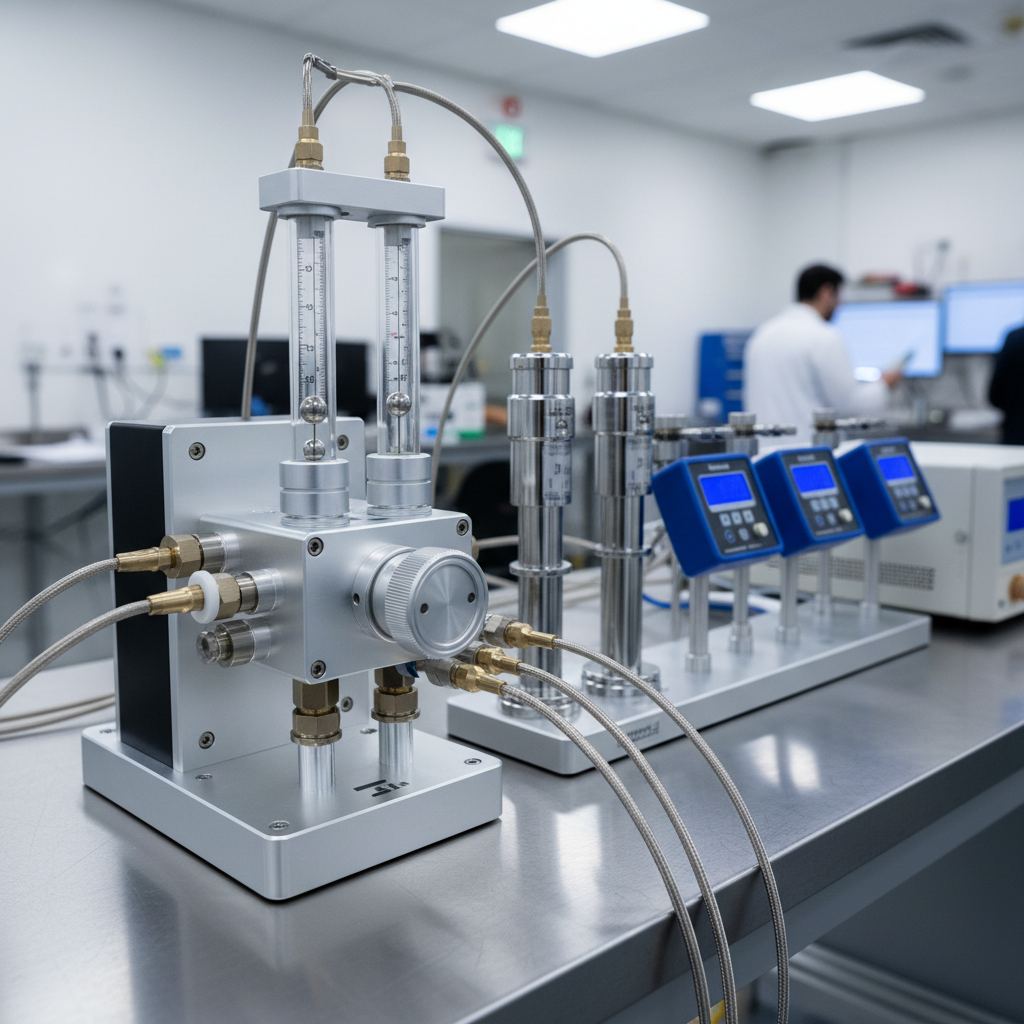
Nitrous oxide conscious sedation is one of the most reliable modalities for minimizing patient anxiety and discomfort in modern dentistry. However, the safety of your patients and clinical staff depends entirely on the mechanical accuracy of your sedation delivery system. If you operate a practice in Shelby County or the greater Mid-South area, securing dependable dental flowmeter calibration in Memphis TN is critical for patient outcomes, OSHA limits, and regulatory compliance.
In this complete technical guide, you will learn the regulatory standards governing inhalation sedation systems (including NFPA 99 Chapter 15 and ASSE guidelines), the precise clinical risks of mechanical flowmeter drift, what takes place during a factory-grade recalibration, and how Medical Testing Solutions delivers NIST-traceable calibration with a guaranteed 5-day turnaround for a flat rate of $450. Whether you manage a pediatric clinic in East Memphis or an oral surgery suite in Germantown, maintaining calibrated flow delivery protects your license and your patients.
The Clinical and Mechanical Realities of Dental Flowmeter Drift
Analgesia flowmeters, whether modern digital systems or classic dual-tube analog units, are precision-metered pneumatic devices. Over months of routine clinical operation, internal components inevitably degrade. Mechanical flow control relies on needle valves, neoprene diaphragms, glass flow tubes, floats, and precise gas blenders.
Every time high-pressure cylinder gas or centralized pipeline gas (typically delivered at 50 to 55 psig) enters the manifold, minute pressure cycles, ambient temperature shifts, airborne particulates, and dry elastomer seals act upon the flow assembly. Over time, these variables cause calibration drift.
Drift manifests in two distinct ways:
- Flow Volume Discrepancy: The flowmeter indicates a total volume delivery of 6 Liters Per Minute (LPM), but actual output is 4.8 LPM or 7.2 LPM.
- Mixture Percentage Inaccuracy: The flowmeter indicates a 70/30 O₂ to N₂O ratio (30% nitrous oxide), but mechanical balance drift delivers 42% nitrous oxide to the patient circuit.
When flow volume or gas concentration drifts, clinicians lose predictable titration. Patients may become hyper-responsive, slip into unintended deep sedation, or experience hypoxia if the minimum oxygen fail-safe falls out of tolerance.
Regulatory and Compliance Standards: NFPA 99, TDA, and OSHA
Dental facilities administering nitrous oxide do not operate under loose guidelines; they must adhere to rigorous fire protection, life safety, and occupational health codes.
NFPA 99 Health Care Facilities Code (Chapter 15)
NFPA 99 classifies medical gas and vacuum systems into Category 1 through Category 4 risk levels based on the potential impact of equipment failure on patient safety. Most general dental practices with conscious sedation fall under Category 3 or Category 2 systems:
- NFPA 99 Section 15.5.3: Mandates that patient delivery equipment, including analgesia units, must be maintained and verified in accordance with manufacturer instructions and established engineering standards.
- Fail-Safe Operation: Standards require that every nitrous oxide delivery device incorporates an automatic oxygen fail-safe mechanism designed to terminate N₂O delivery if oxygen pipeline pressure drops below 30 psig, while guaranteeing a non-defeatable minimum oxygen concentration (never dropping below 30% O₂).
- Facilities requiring pipeline source verifications or piping audits should coordinate with certified medical gas testing and inspection services to ensure end-to-end code conformity across delivery outlets and manifolds.
Why this matters for compliance: The Tennessee Board of Dentistry (TDA) specifically regulates conscious sedation permits under Tenn. Comp. R. & Regs. 0460-02-.07. Equipment used for inhalation sedation must feature a fail-safe system that stops N₂O flow if oxygen fails, alongside documentation confirming equipment is inspected and maintained according to factory specifications. An uncalibrated flowmeter jeopardizes your sedation permit during board audits.
NIOSH established a Recommended Exposure Limit (REL) of 25 ppm for nitrous oxide as a time-weighted average (TWA) during anesthetic administration. Worn O-rings, deteriorated internal valve packings, or cracked flowmeter manifolds vent high concentrations of waste gas directly into the operatory breathing zone. Regular calibration coupled with facility-wide WAG chemical vapor monitoring prevents chronic operator exposure linked to reproductive and hematological complications.
Top Dental Flowmeter Brands: Architecture and Vulnerabilities
Different flowmeter architectures present unique mechanical points of failure. At Medical Testing Solutions, our bench technicians recalibrate all major manufacturers serving the Tennessee dental market:
1. Porter Instrument (e.g., MXR-1, MXR-D, Silhouette)
Porter units use a dual proportioning control block with gear-driven precision cams. While renowned for ruggedness, mechanical backlash in the control knob gear teeth and micro-wear on the proportioning sleeve cause gas ratio shifts. The analog glass indicator tubes can collect aerosolized particulates, causing float friction that leads to false flow readings.
2. Matrx by Midmark (e.g., Digital MDM, Analog MDM)
Matrx analog units utilize dual flow control valves with mechanical mixer plates. Common failure points include internal micro-tubing degradation and ball float sticking. Matrx Digital MDM units depend on flow-sensor arrays and internal solenoid manifolds that require electronic re-indexing using factory diagnostic software.
3. Accutron (e.g., Ultra PC%, Digital Ultra)
Accutron units feature single-knob total flow adjustments with percentage mixers. The internal mixer assembly relies on spring-tensioned diaphragm regulators. If these springs experience fatigue, the set ratio drifts toward higher N₂O concentrations.
4. Belmed (e.g., PC-7, 5100 Series)
Belmed units feature straightforward mechanical flow blocks. However, dry-rotted internal check valves frequently allow cross-gas contamination between the oxygen and nitrous lines within the head assembly if pipeline pressures fluctuate.
Comparing Calibration Approaches: Bench Testing vs. Mobile "Spot-Checks"
Dental practices in Memphis often weigh having a mobile technician walk into the office for a field check against shipping the head to an ASSE-certified calibration facility. Understanding the stark technical differences between these services is critical:
| Metric / Feature | MTS Depot NIST Calibration ($450) | Typical Mobile Service Van | Uncalibrated / Run-to-Failure |
|---|
| Pricing | Flat $450 (Transparent) | $350–$650 + Travel Trip Fees | $0 upfront; Extreme liability |
| Turnaround | 5 Business Days | Scheduled weeks in advance | None |
| Calibration Standard | NIST-Traceable Mass Flow Meters | Handheld uncalibrated rotameter | None |
| Pressure Bench | Controlled 50.0 PSIG Dynamic Supply | Variable operatory pipeline gas | Unknown clinical pressure |
| Leak-Down Testing | Multi-point static pressure decay test | Bubble solution or quick sniff | None |
| Fail-Safe Verification | Dynamic 30 PSIG drop-out threshold | Basic gas shut-off check | Never verified |
| Documentation | Certificate of Calibration (NIST-traceable) | Basic handwritten service ticket | Incomplete logs |
| Compliance Level | NFPA 99, TDA, ASSE 6000 standards | Often fails regulatory review | Immediate citation risk |
Mobile field spot-checks often rely on unverified test tools and use the clinic's own pipeline, which may have fluctuating pressure, to evaluate equipment. High-precision calibration requires controlled testing manifolds, clean gas streams, and secondary reference standards traceable to the National Institute of Standards and Technology (NIST).
Step-by-Step NIST-Traceable Calibration Protocol
When you send a dental flowmeter from Memphis to Medical Testing Solutions for our specialized $450 dental flowmeter repair and calibration service, your device moves through an ASSE-certified, factory-grade workflow:
Step 1: Inbound Physical Inspection and Intake
Technicians inspect the unit for external damage, dial play, cracked viewing windows, control-knob backlash, and particulate accumulation at the DISS (Diameter Index Safety System) inlet connections.
Step 2: Static Pressure Decay and Internal Leak Testing
The flowmeter head is pressurized to 55 psig on both oxygen and nitrous lines using pure dry nitrogen. We perform high-resolution pressure transducer monitoring to measure internal decay across a set time envelope. Any pressure drop greater than 0.5 psig over 10 minutes indicates valve stem or manifold seal leakage, requiring seal replacement.
Step 3: Dynamic Mass Flow Metering Across Clinical Ranges
The unit is plumbed to calibrated NIST-traceable mass flow controllers. Technicians meter gas outputs across the entire range of flow rates:
- Low flow: 1.0 to 3.0 LPM
- Mid-range: 4.0 to 7.0 LPM
- High flow: 8.0 to 10.0+ LPM
We measure the accuracy of each flow indicator tube or digital transducer against our reference standard, adjusting mechanical needle seats or digital gain values until readings fall within ±2% of scale.
Step 4: Gas Blending Ratio and Proportioning Analysis
Using an electrochemical medical-grade oxygen analyzer (accurate to within ±0.1% O₂), the technician sets mixture selections at 10% increments from 100% O₂ down to 30% O₂ / 70% N₂O. Actual gas delivery is recorded at each step. Discrepancies between indicated and delivered percentages are eliminated through precision mechanical or digital adjustment.
Step 5: Fail-Safe and Emergency Flush Verification
- Low O₂ Pressure Shut-Off: Oxygen supply pressure is dropped incrementally from 50 psig down to 0 psig. Nitrous oxide flow must automatically shut off before oxygen supply drops below 25–30 psig.
- Minimum Oxygen Delivery: With gas mixing set to maximum N₂O concentration, technicians verify the system maintains a minimum 30% oxygen delivery (never letting the patient receive 100% N₂O).
- Emergency Oxygen Flush: Technicians test the O₂ flush button to confirm it delivers an instantaneous, unrestricted stream of 100% oxygen at a flow rate between 30 and 50 LPM.
Step 6: Certification and Secure Return Shipping
Once verification is complete, a signed, serialized Certificate of Calibration documenting pre- and post-calibration values, reference standard serial numbers, test dates, and technician credentials is generated. The unit is cleaned, packaged with protective foam inserts, and shipped back to your Memphis clinic.
Logistical Guide for Memphis Dental Practices: 5-Day Turnaround
Memphis-area dental offices, from Midtown and Downtown to Bartlett, Collierville, and Southaven, benefit from fast, predictable logistics:
Safe Packaging and De-installation Checklist
- Shut Off Central Gas Supply: Close operatory zone valves or shut cylinder valves at the local tank manifold. Bleed lines via the flowmeter until all gauges read 0 psig.
- Disconnect Inlets: Unscrew the color-coded, gas-specific DISS female nut fittings (Green for O₂, Blue for N₂O) from the back or bottom of the flowmeter head.
- Remove from Mounting: Detach the head from the telescoping mobile stand, wall arm, or cabinet slide mount. Keep mounting hardware safely stored at your office.
- Wrap and Box: Wrap the flowmeter in heavy-duty bubble wrap (at least 3 inches of cushioning on all sides). Do not use packing peanuts alone, as shifting during transit can damage flow tubes.
- Include Office Contact Info: Place your practice details, contact person, and email inside the box so tracking information and calibration certificates can be issued immediately.
If your facility requires loaner equipment or needs assistance auditing overall medical gas infrastructure, our team coordinates with practices nationwide on complete medical gas maintenance services and equipment repairs.
Complete Dental Operatory Medical Gas Safety Audits
A calibrated flowmeter is only one link in your dental operatory's gas delivery chain. For complete regulatory protection and patient safety, review these related infrastructure elements:
1. High-Pressure Manifolds and Cylinders
Your nitrous oxide and oxygen cylinders must be anchored using durable cylinder brackets or safety chains. NFPA 99 (Section 11.3) requires dedicated storage enclosures for non-flammable gas cylinders that separate gases properly and incorporate adequate ventilation. Ensure your dual-cylinder automatic crossover manifolds operate without line regulator freeze-up or cross-leakage.
2. Emergency Zone Shut-Off Valves and Alarms
Medical gas zone valve boxes must remain unobstructed in clear operatory pathways. If an emergency occurs in an operatory, staff must be able to shut down gas flow instantly without searching for hidden valves. Medical Testing Solutions provides on-site medical gas verification and installation inspections according to ASSE 6030 guidelines for expanding surgical dental practices.
3. Evacuation and Scavenging Systems
A functioning flowmeter must be matched with an active nitrous oxide scavenging system. Passive scavenging is inadequate. Scavenging interfaces must connect to a high-volume dental vacuum system operating at an evacuation rate of 45 LPM. Check your scavenger relief valves and vacuum tubing for cracks or kinked lines during every calibration cycle.
The Legal and Financial Risks of Skipped Calibrations
Some dental practices delay equipment calibration until a knob binds or a glass tube cracks. Operating unverified inhalation sedation equipment creates significant clinical and legal vulnerabilities:
1. Malpractice and Sedation Complications
If a patient suffers hypoxemia, intraoperative nausea, severe agitation, or respiratory arrest, state licensing boards and malpractice attorneys will immediately subpoena maintenance records. A dated, NIST-traceable Certificate of Calibration issued by an ASSE-certified authority provides objective evidence that your practice met its mechanical standard of care.
2. State Dental Board Disciplinary Action
During routine sedation inspections, the Tennessee Board of Dentistry reviews emergency equipment, drug logs, gas delivery fail-safes, and flowmeter maintenance logs. Uncalibrated equipment can lead to sedation permit suspension or costly conditional fines.
3. Occupational Liability
Chronic workplace complaints from hygienists or dental assistants, such as recurring headaches, fatigue, or spontaneous nausea, often stem from leaking flowmeter manifolds or poor scavenging. If an employee files an OSHA complaint, the absence of leak-check documentation significantly undermines the practice's safety record.
Why Memphis Dentists Trust Medical Testing Solutions
Medical Testing Solutions (MTS) is a nationally recognized medical gas service company headquartered in Fort Lauderdale, Florida, serving clinics, surgical centers, and dental suites across the United States. We maintain an elite technical team holding credentials under the ASSE 6000 Professional Qualifications Standard, including:
- ASSE 6010 Medical Gas System Installers
- ASSE 6030 Medical Gas System Verifiers
- ASSE 6040 Medical Gas System Maintenance Personnel
We do not treat dental flowmeter calibration as a casual side job. We operate a dedicated calibration laboratory equipped with modern volumetric reference equipment, gas mass flow meters, and analytical test benches. From standalone private practices on Poplar Avenue to multi-specialty dental health systems across Tennessee, we deliver transparent flat-rate pricing, thorough documentation, and rapid turnaround times.
When planning new operatories, our engineering division supports clinical teams with complete medical gas installation services, verified medical gas pipeline equipment from our products catalog, and nationwide medical gas certification.
Schedule Your NIST-Traceable Calibration Today
Do not wait for a sticky control knob, patient oversedation, or an unannounced state board audit to address your nitrous oxide delivery equipment. Protect your practice with certified, NIST-traceable calibration from Medical Testing Solutions.
- Cost: $450 flat-rate per flowmeter head
- Turnaround: 5 business days in-house
- Documentation: NIST-traceable Certificate of Calibration
- Direct Phone: (754) 315-1078
To start your calibration order or speak with an ASSE-certified technician, contact us online or request a service quote today. Our team is ready to service your Memphis dental practice with fast, dependable, code-compliant calibration.