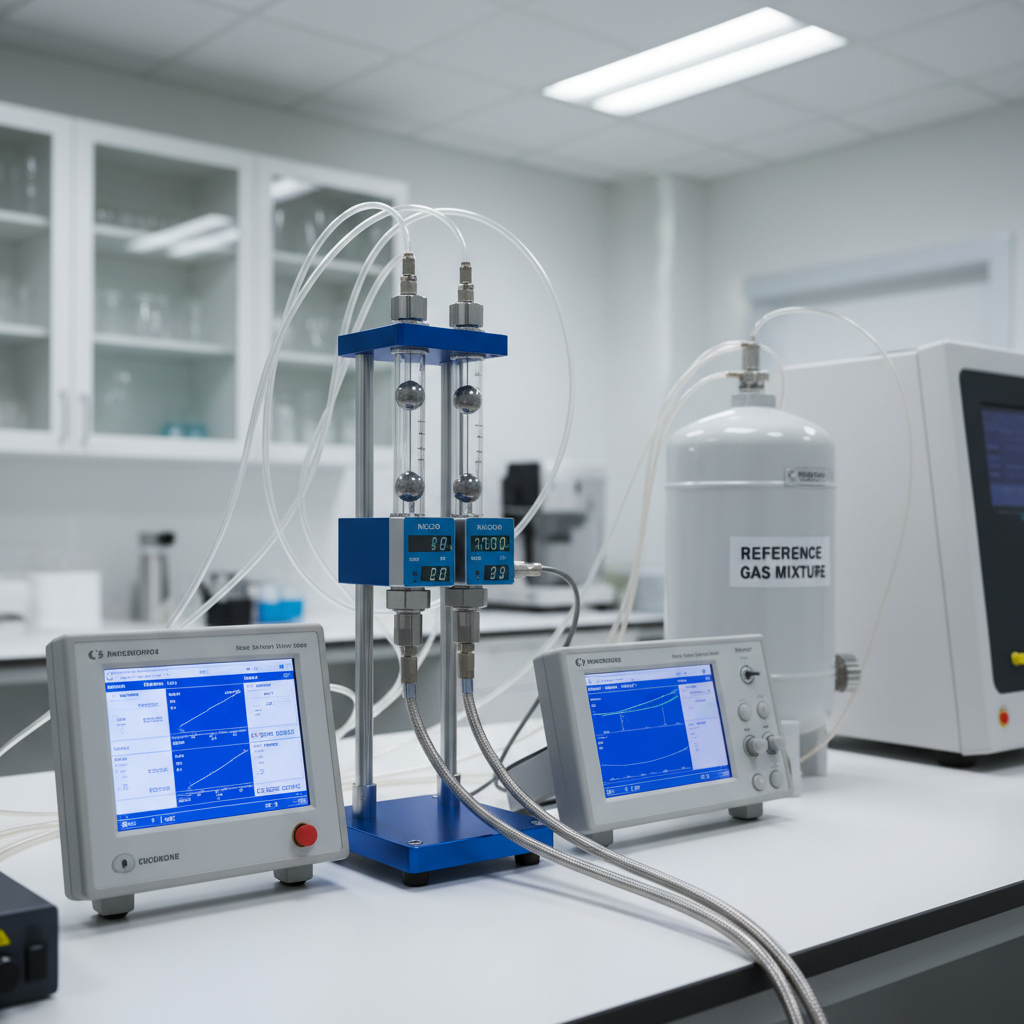
Nitrous oxide conscious sedation remains one of the safest and most effective tools in modern dental practices throughout the Kansas City metropolitan area. However, maintaining patient safety and regulatory compliance requires regular, precise equipment verification. For dental practices across Jackson, Clay, Platte, and Cass counties, securing an accredited dental flowmeter calibration in Kansas City MO ensures that your analog or digital delivery heads provide accurate, life-saving gas ratios at the operatory chair.
Medical Testing Solutions (MTS) provides certified, NIST-traceable testing, repair, and recertification for all major dental sedation flowmeter brands. Priced at a straightforward $450 with an industry-leading 5-day bench turnaround, our program keeps your operatory fully compliant without prolonged clinical downtime. In this complete guide, you will learn Kansas City and Missouri dental board safety mandates, NFPA 99 healthcare facility codes, technical calibration steps, and how our mail-in service protocol safeguards your staff, practice, and patients.
1. Regulatory Standards and Codes Governing Nitrous Oxide Flowmeters
Providing nitrous oxide and oxygen inhalation sedation is not merely a clinical procedure, it is an engineered medical gas delivery process subject to strict state, local, and national safety standards.
NFPA 99 Health Care Facilities Code
The National Fire Protection Association (NFPA) establishes criteria for levels of medical gas piping and terminal delivery units under NFPA 99 (Health Care Facilities Code). Under Chapter 5 (Gas and Vacuum Systems) and Chapter 15 (Dental Gas and Vacuum Systems), dental facilities classified as Category 3 or Category 2 systems must have operational safety mechanisms that prevent delivering hypoxic mixtures to patients. Flowmeter heads are the final control point of these systems.
Why this matters for compliance: NFPA 99 mandates that sedation equipment undergo routine preventive maintenance and performance testing. An uncalibrated flowmeter risks mechanical drift, failing to guarantee the mandatory 30% minimum oxygen concentration, which can void facility liability protections during a malpractice or OSHA audit.
ASSE 6000 Series Standards
The American Society of Sanitary Engineering (ASSE) sets the benchmark for medical gas professionals under the ASSE 6000 Series. Equipment servicing and pipeline integrations should align with ASSE 6040 (Medical Gas Maintenance Personnel) and ASSE 6030 (Medical Gas Verifiers). Medical Testing Solutions maintains ASSE-certified technicians who evaluate flowmeter performance against exact pneumatic flow and pressure delivery curves. For broader clinic compliance, practices often combine flowmeter service with our scheduled annual medical gas inspections.
Missouri Dental Board Mandates
The Missouri Dental Board requires dentists utilizing conscious sedation or nitrous oxide inhalation analgesia to ensure that all equipment is maintained in safe operating condition. Facilities must possess functional fail-safe mechanisms capable of delivering at least 30% oxygen (with a maximum of 70% nitrous oxide) and an immediate oxygen flush control delivering at least 30 liters per minute (LPM). Without documented, NIST-traceable calibration certificates on file, practices risk disciplinary citations or license suspension during state board clinical inspections.
2. The Dangers of Mechanical Drift and Uncalibrated Sedation Heads
Analog rotameter tubes and digital flow heads operate in demanding dental clinic environments. Over months of clinical operation, several factors degrade flowmeter accuracy:
Elastomer Degradation: Internal O-rings, check valves, and diaphragm seals dry out, crack, or become fouled by pipeline particulates, introducing minute internal gas cross-leaks.
Pneumatic Float Sticking: Analog glass rotameter tubes can accumulate static charges or microscopic debris from clinic air or central piping, causing the float balls to stick or register false volumetric flow.
Internal Pressure Imbalances: Central medical gas piping systems deliver oxygen and nitrous oxide at nominal pressures between 50 and 55 psig. If a flowmeter's internal secondary balance regulators fail, differential pressure between lines alters the intended N₂O/O₂ ratio.
Scavenging and Environmental Exposure: If flowmeter heads leak around the manifold or control valves, ambient nitrous oxide builds up in the operatory. Chronic occupational exposure to un-scavenged N₂O is linked to neurological impairments, hematological issues, and reproductive complications among dental hygienists and assistants. Integrating routine flowmeter verification with proactive waste anesthetic gas (WAG) monitoring protects your staff from silent pipeline or delivery-head leaks.
| Diagram text |
|, |
| CLINICAL RISK FACTORS OF DRIFT |
| [Uncalibrated Unit] - → Hypoxic Delivery Risk (< 30% O2) |
| - → Sub-therapeutic Sedation (Prolonged Appts) |
| - → Ambient N2O Leakage (Staff Health Exposure) |
| - → Failed Safety Flush (< 30 LPM Emergency O2) |
3. The MTS $450 Calibration Solution: Transparent, NIST-Traceable, 5-Day Turnaround
Dental practices in Kansas City, from Downtown and the Country Club Plaza to Overland Park, Lee's Summit, and North Kansas City, cannot afford operatory downtime lasting weeks. Traditional local supply distributors often act as middle-tier brokers, routing equipment through third-party depots that take 4 to 6 weeks while charging excessive surcharges.
Standard Flat Rate: $450 per head calibration and testing service.
Rapid Bench Turnaround: 5 business days from receipt at our calibration laboratory.
NIST Traceability: Calibration test equipment is certified directly traceable to the National Institute of Standards and Technology (NIST), supplying ironclad documentation for inspectors and insurers.
Direct ASSE Authority: Work is performed under medical gas quality systems overseen by ASSE-certified specialists, not general dental chair repairmen.
If a unit demonstrates physical damage, broken glass rotameter tubes, torn diaphragms, or failed fail-safe logic requiring overhaul, MTS provides transparent, pre-authorized estimates before conducting advanced rebuilds.
4. Technical Comparison: Popular Dental Flowmeter Brands Serviced
Whether your clinic operates modern digital touch-screen consoles or reliable mechanical analog heads, MTS calibrates, reseals, and tests the full spectrum of market-leading equipment:
Regardless of brand, every device must pass absolute cut-off tolerances: if the oxygen supply pressure drops below 35 psig, the nitrous oxide flow must shut off completely.
5. Step-by-Step: The NIST-Traceable Calibration and Bench Testing Protocol
When a dental clinic in Kansas City sends a sedation flowmeter head to Medical Testing Solutions, it undergoes an exhaustive 8-step technical evaluation that meets CGA (Compressed Gas Association) and NFPA safety standards.
| Diagram text |
|, |
| MTS 8-POINT CALIBRATION WORKFLOW |
| [1. Visual/Decon] → [2. Pressure Decay] → [3. Secondary Regulators] |
| [4. Fail-Safe Cut] → [5. Flow Accuracy] → [6. Emergency O2 Flush] |
| [7. Reseal & Clean] → [8. NIST Certificate Documentation Issued] |
Step 1: Receiving, Decontamination, and Physical Inspection
The flowmeter head is received, logged into our laboratory tracking database, and decontaminated. Technicians perform an external mechanical inspection of inlet DISS (Diameter Index Safety System) fittings, flow adjustment knobs, glass scale readouts, and bag tee outlets.
Step 2: High-Pressure Static and Dynamic Leak (Pressure Decay) Testing
The unit is connected to pure gas manifolds at 50 psig. Technicians perform a static pressure decay test to detect internal micro-leaks across the manifold block. A flowmeter must hold static line pressure without measurable drop over the test duration.
Step 3: Secondary Pressure Regulator Balancing
Sedation units utilize internal balancing regulators to equalize fluctuations coming from central piping lines. MTS technicians calibrate these diaphragms so that dynamic pressures match exact design tolerances before reaching the control needle valves.
Step 4: Oxygen Fail-Safe Activation Verification
NFPA 99 and dental safety guidelines require that the nitrous oxide line shuts down immediately if oxygen pressure falls. Technicians slowly bleed down the oxygen supply pressure:
The N₂O flow must proportionally decrease.
At approximately 30 psig (or manufacturer cut-off threshold), the N₂O flow must terminate completely.
At no point during pressure loss may the delivered oxygen concentration drop below 30%.
Step 5: Gas Proportioning and NIST Flowmeter Calibration
Using primary NIST-calibrated mass flowmeters (calibrated under standard temperature and pressure conditions):
Technicians verify total flow rates (LPM) from 1 to 10 LPM (or unit maximum).
Technicians verify gas concentration mixtures across standard clinical ratios: 100% O₂, 70% O₂ / 30% N₂O, 50% O₂ / 50% N₂O, and the clinical limit of 30% O₂ / 70% N₂O.
Deviations exceeding ± 5% of full scale require precision needle valve adjustment or digital sensor recalibration.
Step 6: Emergency Oxygen Flush Volumetric Testing
The emergency O₂ flush button must deliver a high-volume surge of pure oxygen to purge the reservoir bag and patient circuit during an adverse event. Technicians measure flush volume to guarantee output between 30 and 60 LPM at standard pipeline operating pressures.
Step 7: Final Internal Cleaning and Reassembly
The device is blown down with dry, oil-free medical nitrogen, preventing any hydrocarbon or particulate contamination within oxygen-wetted chambers. Control knobs and lock rings are torqued to manufacturer specifications.
Step 8: NIST-Traceable Certification and Tagging
A tamper-evident calibration label is affixed directly to the housing, displaying the service date, recalibration due date, technician ID, and certificate number. A formal Certificate of Calibration is issued, detailing pre- and post-test data, serial numbers, and calibration standard references.
6. Logistics Guide: Preparing and Shipping Your Flowmeter from Kansas City, MO
Shipping delicate clinical instrumentation across states requires deliberate packaging to prevent shock damage or misalignment of precision glass rotameters. Follow this protocol when dispatching units from your Kansas City operatory:
| Diagram text |
|, |
Depressurize and Disconnect: Shut off local zone valves or operatory shut-offs. Disconnect the oxygen and nitrous oxide DISS fittings or quick-connect hoses from the rear of the unit. Press the oxygen flush button and open both flow valves until all stored pressure vents completely.
Remove Accessories: Detach the reservoir bag tee, breathing circuit tubing, scavenging adapters, and pole-mount arms. Ship only the flowmeter head assembly unless troubleshooting an integrated mount issue.
Immobilize Analog Floats: For mechanical units (such as Porter MXR or Belmed PC-7), turn both flow control knobs clockwise until fully seated. Do not overtighten, as this can gall the needle valve seats.
Cushion and Box: Wrap the flowmeter in heavy-gauge bubble wrap (minimum 3 inches thick on all sides). Place the unit inside a rigid corrugated box. Do not use loose packing peanuts, which allow heavy cast-metal heads to migrate to the box walls during transit.
Enclose Paperwork: Include your clinic name, shipping address, contact phone number, doctor's email, and any specific behavioral symptoms (e.g., "float sticking at 4 LPM" or "fail-safe alarm buzzing").
Ship Directly to MTS: Dispatch the package via UPS, FedEx, or priority courier to our testing laboratory. Within 5 business days of receipt, your fully certified, NIST-calibrated flowmeter will be tested, tagged, and on its way back to Kansas City.
For clinics planning facility expansions or pipeline relocations, Medical Testing Solutions also provides comprehensive medical gas installation guidance and complete medical gas certification to NFPA 99 criteria.
7. Operational Best Practices: Daily and Weekly Operatory Checks
While an annual $450 bench calibration fulfills statutory inspection requirements, regular in-house operatory checks catch pneumatic anomalies before they affect procedures:
Daily Pre-Use Flush Test: Before seating the day's first sedation patient, press the emergency O₂ flush button. Listen for an immediate, unimpeded burst of gas, and confirm the reservoir bag inflates rapidly without hesitation.
Weekly Scavenger Line Vacuum Verification: Ensure your central evacuation or dedicated nitrous scavenging line pulls between 45 and 50 LPM of vacuum (or within the green zone on your scavenger flow gauge). A calibrated flowmeter head cannot protect staff if the operatory scavenger lacks suction.
Monthly Soap Bubble Leak Checks on Connections: Apply an oxygen-approved, non-oil leak detection solution to the rear inlet DISS fittings and quick-connect points. Bubbling indicates degraded O-rings requiring replacement.
Rotameter Float Inspection: On analog units, run the knobs from minimum to maximum flow while observing the glass tubes. Floats should rise and fall smoothly without sticking, vibrating, or tilting.
Annual Pipeline Medical Gas Verification: Do not forget the gas source feeding your flowmeter. Central manifolds, alarms, and zone valves require annual verification under NFPA guidelines. Review our full spectrum of medical gas maintenance services to ensure complete clinic compliance.
Secure Your Kansas City Dental Flowmeter Calibration Today
Do not let unverified sedation equipment compromise patient safety or invite state board violations. Medical Testing Solutions delivers professional, NIST-traceable dental flowmeter calibration for Kansas City, Missouri dental practices at a transparent $450 rate with a fast 5-day bench turnaround.
Contact our ASSE-certified medical gas specialists today to schedule your service or request shipping materials:
Headquarters: Medical Testing Solutions, 501 E Las Olas Blvd, Ste 300, Fort Lauderdale, FL 33301
Frequently Asked Questions
NFPA 99 (Health Care Facilities Code) and equipment manufacturers recommend that dental nitrous oxide flowmeter heads undergo functional performance testing and calibration annually (every 12 months). Routine annual calibration proves compliance to the Missouri Dental Board, reduces malpractice liability, and confirms that internal fail-safes function correctly.
No. Valid flowmeter calibration requires precision mass flow analyzers, backpressure test rigs, and dynamic leak-rate instrumentation that are certified directly traceable to the National Institute of Standards and Technology (NIST). In-house personnel lack the ASSE credentials and certified reference tools required to issue a legally defensible Certificate of Calibration.
The $450 flat-rate service covers comprehensive receiving inspection, dynamic and static pressure decay leak testing, secondary regulator balancing, fail-safe shutdown testing, gas proportioning accuracy verification across all clinical ratios, emergency O2 flush flow testing, NIST-traceable certification, and operatory service record labeling.
If a flowmeter demonstrates mechanical failure—such as cracked rotameter tubes, un-resealable internal cross-leaks, or worn proportioning valves—our technicians will immediately pause work and contact you with a transparent quote detailing necessary replacement parts and labor. We never perform billable repairs without prior authorization.
The 5-day bench turnaround begins the day your flowmeter arrives at the Medical Testing Solutions testing facility. Our technicians complete the full diagnostic, calibration, and documentation protocol within 5 business days, after which the unit is securely packed and shipped back to your Kansas City clinic.
MTS services and calibrates all major analog and digital dental flowmeters, including Accutron (Digital Ultra, Newport), Porter Instrument (MXR, 2400, 3400 series), Matrx by Midmark (Digital MD, RA series), and Belmed (PC-7, Classic Flow), among others.
Request a quote for your facility
Talk with Medical Testing Solutions about your next inspection, repair or equipment request.