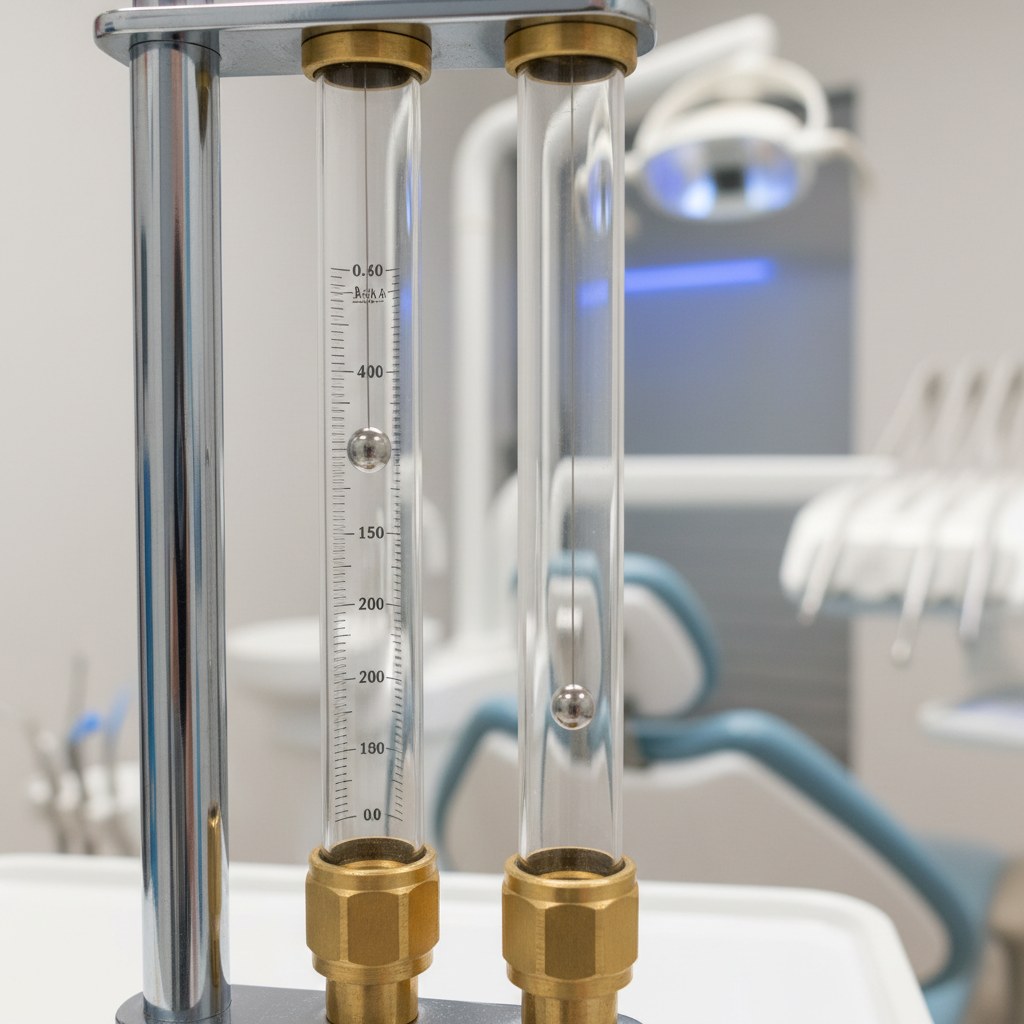
What is Dental Flowmeter Calibration and Why is it Necessary?
A dental flowmeter, also known as a nitrous oxide (N2O) sedation unit, is a critical piece of equipment in any dental practice that offers conscious sedation. This device precisely blends oxygen and nitrous oxide, ensuring patient safety and comfort. Calibration is the process of verifying and adjusting the flowmeter's accuracy against a known standard. Over time, due to mechanical wear, aging of components, and environmental factors, these devices can drift from their original settings. Inaccurate readings can lead to delivering incorrect, and potentially unsafe, concentrations of medical gases to your patients.
Regular calibration is not just a best practice; it's a cornerstone of patient safety and regulatory compliance. For dental offices in Boynton Beach and throughout Florida, adhering to standards set by the National Fire Protection Association (NFPA) and the American Society of Sanitary Engineering (ASSE) is mandatory. This article explains the process, importance, and requirements for NIST-traceable dental flowmeter calibration, ensuring your practice remains safe, compliant, and efficient.
The Critical Role of Accuracy in Nitrous Oxide Sedation
In dentistry, the goal of conscious sedation is to achieve a safe and effective level of analgesia and anxiolysis. The ratio of nitrous oxide to oxygen must be precise. A flowmeter that reads inaccurately could lead to either under-sedation, causing patient anxiety, or over-sedation, which carries significant health risks. An oxygen-starved mixture, for instance, can have severe consequences. Modern flowmeters have a fail-safe mechanism that prevents the delivery of less than 30% oxygen, but the accuracy of the overall mixture depends entirely on the unit's calibration.
Understanding NIST-Traceable Standards
When we talk about calibration, the gold standard is "NIST-traceable." This means that the calibration equipment used by the service provider has been certified against standards maintained by the National Institute of Standards and Technology (NIST). This unbroken chain of certification ensures the highest degree of accuracy, providing documented proof that your equipment is performing to a verifiable national standard. For dental practices, this documentation is crucial during audits or inspections.
NFPA 99 and ASSE 6000: Compliance Requirements
Several codes and standards govern the use and maintenance of medical gas systems, including dental flowmeters.
NFPA 99 (Health Care Facilities Code): While NFPA 99 primarily focuses on the building's piped gas system, Section 5.1.14.2.2.8 requires that any new or modified system be verified by an ASSE 6030 certified verifier. The performance of terminal units (like your flowmeter connects to) is part of this verification. More importantly, the general clauses on equipment maintenance imply that all medical devices must be maintained according to the manufacturer's instructions, which universally specify periodic calibration.
ASSE 6000 Series (Professional Qualifications Standard for Medical Gas Systems Personnel): This standard ensures that the individuals working on your medical gas systems are qualified. When you get your system serviced, you should ensure the technician is ASSE 6010 certified for installation, 6030 certified for verification, and 6040 certified for maintenance. At Medical Testing Solutions, our technicians hold these critical certifications.
Why this matters for compliance: Regulatory bodies and insurance providers expect dental practices to maintain equipment according to established safety standards. Failure to provide documentation of proper maintenance, like NIST-traceable calibration, can result in citations, fines, and potential liability issues in the event of an adverse patient incident.
The Flowmeter Calibration Process: Step-by-Step
When you send your flowmeter for calibration, a certified technician will perform a series of tests. While our service offers a convenient mail-in option, the core process remains the same.
- Initial Inspection: The unit is visually inspected for any signs of external damage, such as cracked knobs, a damaged float tube, or worn-out hoses.
- Leak Testing: The entire unit is pressurized to check for any gas leaks, both internal and external. Leaks are a major safety hazard and also waste expensive medical gas.
- Flow Verification: This is the core of the calibration. The technician connects the flowmeter to a certified testing device (a digital or analog calibrator that is NIST-traceable). They then test the flow of both oxygen and nitrous oxide at multiple set points across the unit's entire range (e.g., 1L/min, 2L/min, 5L/min, etc.).
- Concentration Verification: The technician verifies that the mixture percentage controls are accurate. For instance, when set to a 50% N2O / 50% O2 mix, they confirm the output is within the manufacturer's specified tolerance.
- Fail-Safe Test: The oxygen fail-safe mechanism is tested to ensure it activates correctly, shutting off the N2O flow if the oxygen supply is lost.
- Adjustment & Repair: If any readings are outside the acceptable tolerance, the technician will adjust the internal components. If parts are worn or broken, our dental flowmeter repair service can replace them.
- Final Certification: Once the unit is confirmed to be accurate across all tests, a calibration certificate is issued. This sticker is placed on the device, showing the date of calibration and the next due date.