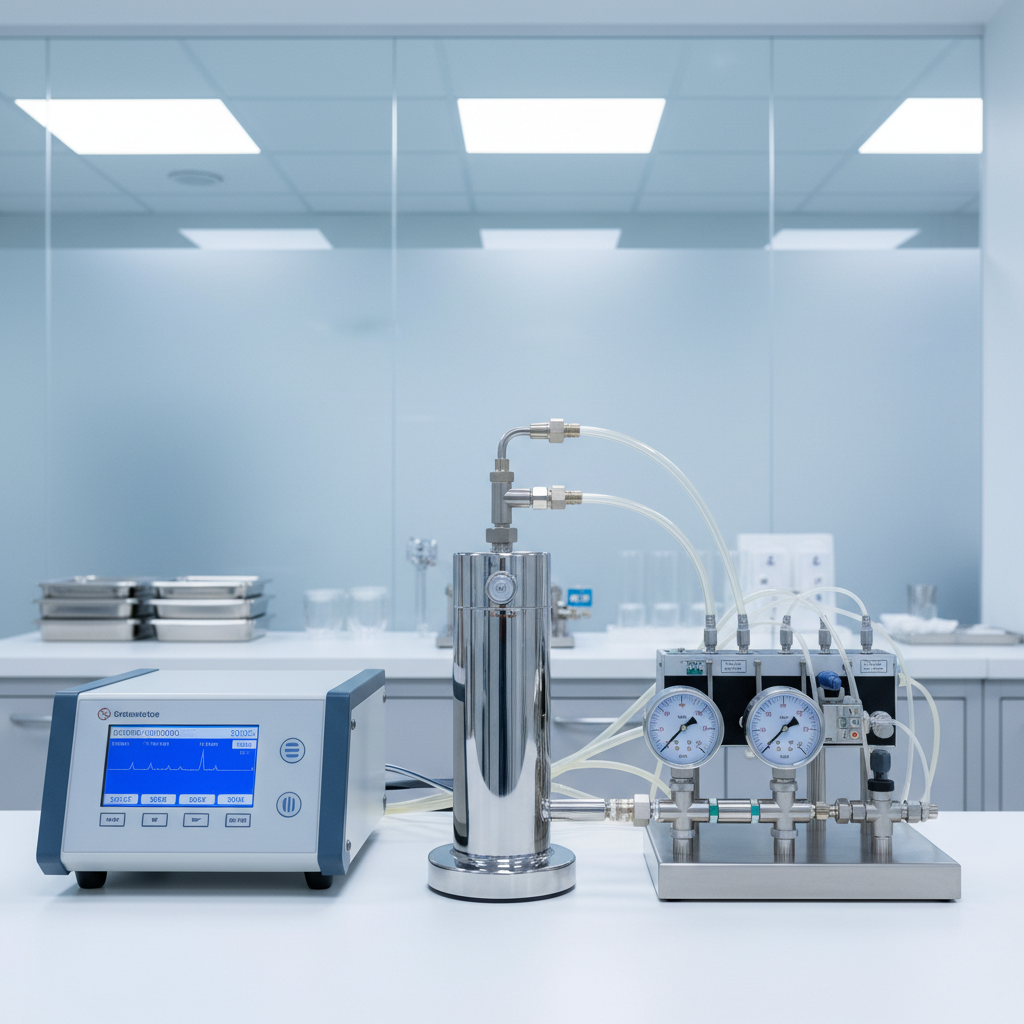
Dental practices across the Birmingham, Alabama metropolitan area rely heavily on nitrous oxide and oxygen delivery systems to provide safe, predictable conscious sedation. Whether your clinic operates in downtown Birmingham, Hoover, Vestavia Hills, or Trussville, the accuracy of your nitrous oxide flowmeter is critical. A flowmeter that drifts out of tolerance can compromise patient safety, expose clinicians to chronic waste gas, and trigger non-compliance citations from regulatory boards.
Medical Testing Solutions (MTS) provides certified, NIST-traceable dental flowmeter calibration for Birmingham, AL practices with a standard $450 flat rate and a fast 5-day turnaround. Our ASSE-certified technicians ensure your sedation delivery equipment meets strict NFPA 99, CGA, and manufacturer tolerances.
In this guide, you will learn the regulatory standards governing nitrous oxide sedation equipment, common signs of flowmeter mechanical failure, how NIST-traceable calibration works, and why Birmingham dental practices trust MTS for turnkey compliance.
The Regulatory Framework: NFPA 99, ADA, and State Regulations
Administering inhalation conscious sedation in an ambulatory or dental setting carries strict equipment performance obligations. In Alabama, the Board of Dental Examiners oversees sedation permitting and safety compliance, expecting all sedation armamentarium to operate strictly within manufacturer specifications and nationally recognized life-safety codes.
The National Fire Protection Association sets the operational baseline via NFPA 99: Health Care Facilities Code. Chapter 15 of NFPA 99 specifically details Dental Gas and Vacuum Systems, categorizing dental operatory gas delivery into Category 1, 2, or 3 facilities based on the level of patient risk:
- Category 1 & 2 Spaces: Involve deep sedation, moderate sedation, or general anesthesia, mandating strict annual pipeline verifications, fail-safe testing, and calibrated sedation units.
- Category 3 Spaces: Apply to minimal sedation procedures (such as standard nitrous oxide analgesia). Even under Category 3 provisions, medical gas delivery equipment must undergo scheduled preventive maintenance, leak detection, and mechanical verification.
| Diagram text |
|, |
| NFPA 99 § 15.3.3.4 Compliance Requirement: |
| Nitrous oxide sedation units must feature mechanical fail-safes ensuring |
| a minimum oxygen delivery concentration of not less than 30% and an |
| automatic nitrous oxide shutoff if the oxygen supply pressure drops. |
When was the last time your practice verified those tolerances with calibrated mass flow meters? Routine preventive maintenance requires dedicated dental flowmeter repair and calibration to certify that your visual analog glass tubes or digital sensors reflect true delivered gas volumes.
Why this matters for compliance: Regulatory surveyors (including OSHA and dental board inspectors) do not accept visual guesswork. If a dental incident occurs and an operatory flowmeter has no documentation proving NIST-traceable calibration within the past 12 months, the practice faces immediate liability, civil penalties, and potential license suspension.
How Nitrous Oxide Flowmeters Drift and Fail
A dental flowmeter is a precision mechanical or electro-pneumatic instrument. Over months of clinical use, several environmental and physical factors alter the flow characteristics of both oxygen ($O_2$) and nitrous oxide ($N_2O$):
1. O-Ring Degradation and Internal Gas Leaks
Flowmeters contain internal elastomeric O-rings, neoprene seals, and check valves. Constant exposure to pressurized gas, temperature fluctuations, and cyclic mechanical strain cause these seals to dry out, flatten, or micro-crack. This creates internal cross-leaks between the $O_2$ and $N_2O$ blocks or external leaks into the operatory breathing zone.
2. Contaminants and Particulate Accumulation
Even with inline pipeline filters, particulate matter from copper brazing, copper oxide dust, or cylinder valve cycling can bypass basic mesh and deposit onto internal needle valves and glass rotameter tubes. This friction alters the float position, giving the hygienist or dentist a false reading.
3. Fail-Safe Valve Fatigue
Every modern dental flowmeter is engineered with an $O_2$ fail-safe proportioning mechanism. If oxygen pressure drops below roughly 30 to 35 psig, the nitrous oxide flow must shut off completely to prevent delivering pure, hypoxic gas mixtures. Over time, internal springs and diaphragms lose tension, either failing to shut off nitrous oxide quickly enough or cutting it off prematurely at normal working pressures.
4. Nitrous Ratio Drift
Digital and analog mixer heads are designed to maintain a hard limit of 70% maximum $N_2O$ delivery and a guaranteed minimum of 30% $O_2$. When mixing gears, proportioning cams, or digital solenoids slip out of alignment, the delivered percentage can shift 5% to 15% away from the indicated dial setting.
Analog vs. Digital Flowmeters: Calibration Differences
Birmingham dental clinics utilize both analog rotameter heads (such as the classic Matrx by Parker Hannifin or Porter brown-box units) and modern digital touch-pad mixers (such as Accutron or Belmed systems). Both require specialized calibration procedures.
| Parameter / Feature | Analog Glass Rotameter Units | Digital Electronic Flowmeters |
|---|
| Common Brands | Porter MXR, Matrx MDM, Belmed PC-7 | Accutron Digital Ultra, Porter Silhouette, Matrix Digital |
| Flow Indication | Glass tubes with stainless or sapphire floats | Digital LED/LCD flow and percentage readouts |
| Primary Drift Source | Float friction, needle valve wear, cam slippage | Pressure transducer drift, solenoid valve micro-sticking |
| Minimum $O_2$ Mechanism | Mechanical linkage stops and proportional cams | Microprocessor sensor loops and bypass valves |
| Leak Vulnerability | Tube top/bottom neoprene gaskets and seals | Internal solenoid manifold blocks and quick-connect fittings |
| MTS Calibration Method | Calibrated thermal mass flow reference bench | Electronic sensor multi-point span and zero alignment |
| Turnaround Time | 5 Business Days | 5 Business Days |
| MTS Cost | $450 Flat Rate | $450 Flat Rate |
Regardless of brand or design, Medical Testing Solutions handles complete teardown inspection, cleaning, component rebuilding, dynamic testing, and multi-point NIST calibration for both analog and digital flowmeter platforms.
The MTS $450 NIST-Traceable Calibration Procedure
To provide Birmingham dental practices with transparent, dependable compliance, Medical Testing Solutions maintains an ASSE-certified testing facility operating under controlled temperature, barometric pressure, and humidity conditions.
Our $450 flat-rate service covers complete end-to-end recalibration:
| Diagram text |
|, |
1. Intake and Pre-Calibration Baselines
Upon arrival from your Birmingham office, your unit undergoes an intake inspection. We record the baseline "As-Found" delivery metrics using certified reference standards to document any clinical deviations your patients may have experienced.
2. Static and Dynamic Pneumatic Pressure Testing
The flowmeter block is subjected to 55 psig static gas pressure to isolate external housing leaks. We verify that supply inlet connections (DISS or quick-connect) seal reliably without gas loss.
3. Complete Disassembly, Cleaning, and Seal Renewal
Our technicians disassemble the gas manifold, clean the optical glass tubes or electronic sensor pathways, and replace worn internal O-rings, poppet valves, and filter discs with factory-authorized parts.
4. NIST-Traceable Precision Calibration
Using digital mass flow standards calibrated against National Institute of Standards and Technology (NIST) primary reference benches, we calibrate:
- The 100% $O_2$ Baseline Flow: Verifying precise flow output across the entire scale (1 to 10 LPM).
- The Proportioning Ratio: Testing gas blends across 10%, 30%, 50%, and 70% $N_2O$ delivery setpoints.
- The Minimum 30% $O_2$ Safety Stop: Verifying that mechanical or electronic interlocks prevent setting oxygen concentration below 30%.
5. Oxygen Flush and Emergency Fail-Safe Verification
We verify that the emergency $O_2$ flush delivers a minimum of 30 to 50 LPM instantaneous flow at 50 psig supply pressure. We then simulate an oxygen supply failure to confirm immediate, total shutoff of the nitrous oxide circuit within milliseconds.
6. Certificate of Calibration and Tamper-Evident Labeling
Your flowmeter is tagged with a tamper-evident calibration label noting the date of service, certificate number, technician ID, and next due date. You receive an official, audit-ready NIST-traceable Certificate of Calibration for your compliance binder.
Protecting Birmingham Clinical Staff: WAG Monitoring and OSHA Safety
Proper flowmeter calibration is only half of the sedation safety equation; the other half is waste anesthetic gas (WAG) management.
OSHA enforces general safety requirements under Section 5(a)(1) (the General Duty Clause) to protect dental healthcare workers from excessive nitrous oxide exposure. The National Institute for Occupational Safety and Health (NIOSH) recommends an exposure limit of no more than 25 ppm as a time-weighted average (TWA) during administration.
| Diagram text |
|, |
| NIOSH Recommended Exposure Limit (REL): |
| Nitrous Oxide: 25 ppm TWA during periods of administration. |
| Uncalibrated flowmeters and leaky manifold seals are primary contributors |
| to operatory atmospheric contamination exceeding 200+ ppm. |
When a flowmeter’s internal seals degrade, it leaks raw $N_2O$ directly into the dental operatory, exposing dentists, dental assistants, and hygienists to chronic anesthetic vapors. Chronic occupational exposure has been linked to neurological impairments, spontaneous abortions, and liver/kidney disorders.
Pairing annual flowmeter calibration with structured waste anesthetic gas (WAG) chemical vapor monitoring provides clear documentation that your operatory ambient air meets NIOSH thresholds. In addition, routine environmental monitoring solutions allow Birmingham clinics to systematically pinpoint ventilation weaknesses, scavenging failures, and operatory air exchange rates.
Dental Gas Pipeline Infrastructure: Beyond the Operatory Head
While the flowmeter controls the gas mixture delivered to the patient, its performance depends entirely on the integrity of your practice's centralized medical gas pipeline. If supply pressure drops below 50 psig or fluctuates wildly when multiple operatories are running, the flowmeter's calibrated proportioning valve cannot function correctly.
| Diagram text |
|, |
NFPA 99 establishes clear guidelines for dental gas and vacuum infrastructure:
Central Supply Manifolds and Alarms
Dental practices utilizing Category 1 or 2 sedation setups must have centralized source equipment fitted with automatic changeover manifolds and operational alarms. If your high-pressure gas cylinder bank empties, master and area alarm panels must notify clinical personnel before operating pressures drop below critical fail-safe limits.
Source Equipment Maintenance
Central medical air compressors, medical vacuum pumps, and nitrous oxide manifolds require scheduled operational checks. Medical Testing Solutions provides comprehensive medical gas maintenance services to ensure that check valves, dual-stage line regulators, and master alarm panels perform within NFPA guidelines.
Verifying Renovations and Expansions
If your Birmingham dental practice expands operatory suites, relocates gas drops, or renovates pipeline delivery lines, NFPA 99 § 5.1.12 mandates independent third-party verification before clinical use. MTS provides certified ASSE 6030 medical gas verification and ASSE 6010 medical gas installation auditing to test pressure integrity, cross-connection prevention, and gas concentration purity.
5-Step Mail-In Calibration Process for Birmingham Dental Offices
Medical Testing Solutions streamlines nitrous oxide flowmeter calibration so your practice avoids extended downtime. With our dedicated 5-day in-lab turnaround, Birmingham dental practices can plan routine calibration during clinic downtimes or rotate spare flowmeter heads without disrupting patient schedules.
- Request Your Calibration RGA: Call our service line at (754) 315-1078 or submit a request online to receive a service order number and shipping instructions.
- Safe Packaging: Disconnect your flowmeter head from the wall mount, cabinet arm, or mobile cart. Secure the unit in heavy bubble wrap inside a sturdy cardboard shipping carton.
- 5-Day In-House Calibration: Upon arrival at our laboratory, our ASSE-certified technicians execute our multi-point NIST testing, seal renewal, and safety verifications within five business days.
- Insured Return Shipping: Your calibrated unit is securely packaged and shipped directly back to your Birmingham office, complete with fresh tamper-evident calibration seals.
- Immediate Compliance Documentation: Your NIST-traceable Certificate of Calibration is delivered digitally and physically with the unit, ready for immediate inclusion in your clinical compliance documentation.
If your facility requires a complete facility-wide inspection of manifolds, operatory outlets, and vacuum scavenging lines, MTS also schedules on-site annual medical gas inspections throughout the state of Alabama.
Secure Your Birmingham Dental Flowmeter Calibration Today
Don't wait for a patient emergency, an equipment malfunction, or a surprise state inspection to find out your sedation equipment is out of tolerance. Medical Testing Solutions delivers professional, NIST-traceable dental flowmeter calibration for Birmingham, AL practices for a transparent flat fee of $450 with an industry-leading 5-day turnaround.
Whether you operate a pediatric practice in Hoover, an oral surgery clinic in downtown Birmingham, or a general family dental office in Mountain Brook, MTS is your trusted partner for medical gas safety, equipment, and compliance.