How Much Does Annual Line Isolation Monitor Testing Cost?
Medical Testing SolutionsJune 20, 20267 min read
Share
For hospital facility managers and clinical engineering directors, budgeting for compliance is a constant challenge. Among the many required annual inspections, Line Isolation Monitor (LIM) testing is a critical safety task that often raises questions about cost and scope. You know it's mandatory for your operating rooms and other wet procedure locations, but the invoices can vary. What are you actually paying for, and what's a fair price?
This definitive guide provides a transparent look at the real-world costs of annual line isolation monitor testing. We'll break down the service, explain the key factors that drive pricing, and provide average cost benchmarks based on facility size. By the end, you'll understand the full scope of a compliant LIM inspection and be equipped to budget effectively and confidently select a qualified service provider.
What is a Line Isolation Monitor (LIM)? A Quick Refresher
A Line Isolation Monitor is the central safety device of an isolated power system. These systems are required by NFPA 99 in all "wet procedure locations" within a healthcare facility, such as operating rooms, cardiac catheterization labs, and dialysis suites. Their purpose is to protect patients and staff from electric shock.
Unlike standard grounded power, an isolated power system isolates both sides of the power line from the ground. The LIM continuously monitors the "leakage current" from this isolated system to the ground. If the total leakage current from all connected equipment exceeds a predetermined threshold, typically 5 milliamperes (mA) as specified in NFPA 99, the LIM will trigger audible and visual alarms. This alarm does not cut power; it simply warns staff of a potential fault, allowing them to manage the situation without abruptly interrupting a critical procedure.
NFPA 99 Requirements for Annual LIM Testing
The mandate for testing these systems isn't a suggestion; it's a code requirement for safety and compliance. NFPA 99, Health Care Facilities Code (2024 edition), Section 6.3.3.3.2, states that Line Isolation Monitors must be tested and documented at regular intervals.
Specifically, the code requires that:
Each LIM circuit be tested after installation or any modification.
Each LIM circuit be tested at least annually to verify it alarms at the specified trip level.
A permanent record of these tests be maintained for auditing purposes.
These tests must be performed by a "qualified person," a term that NFPA defines as someone who has demonstrated the skills and knowledge related to the construction, operation, and hazards of the equipment. This is why most facilities rely on technicians certified to ASSE 6030, Medical Gas Systems Verifiers, who are trained on the intricacies of these systems and the applicable codes.
Why this matters for compliance: Failure to perform and document annual LIM testing is a common finding during surveys by The Joint Commission, DNV, and the Centers for Medicare & Medicaid Services (CMS). A deficiency can jeopardize a facility's accreditation, lead to costly remediation, and, most importantly, compromise patient safety.
The Core Scope of a Compliant Annual LIM Inspection
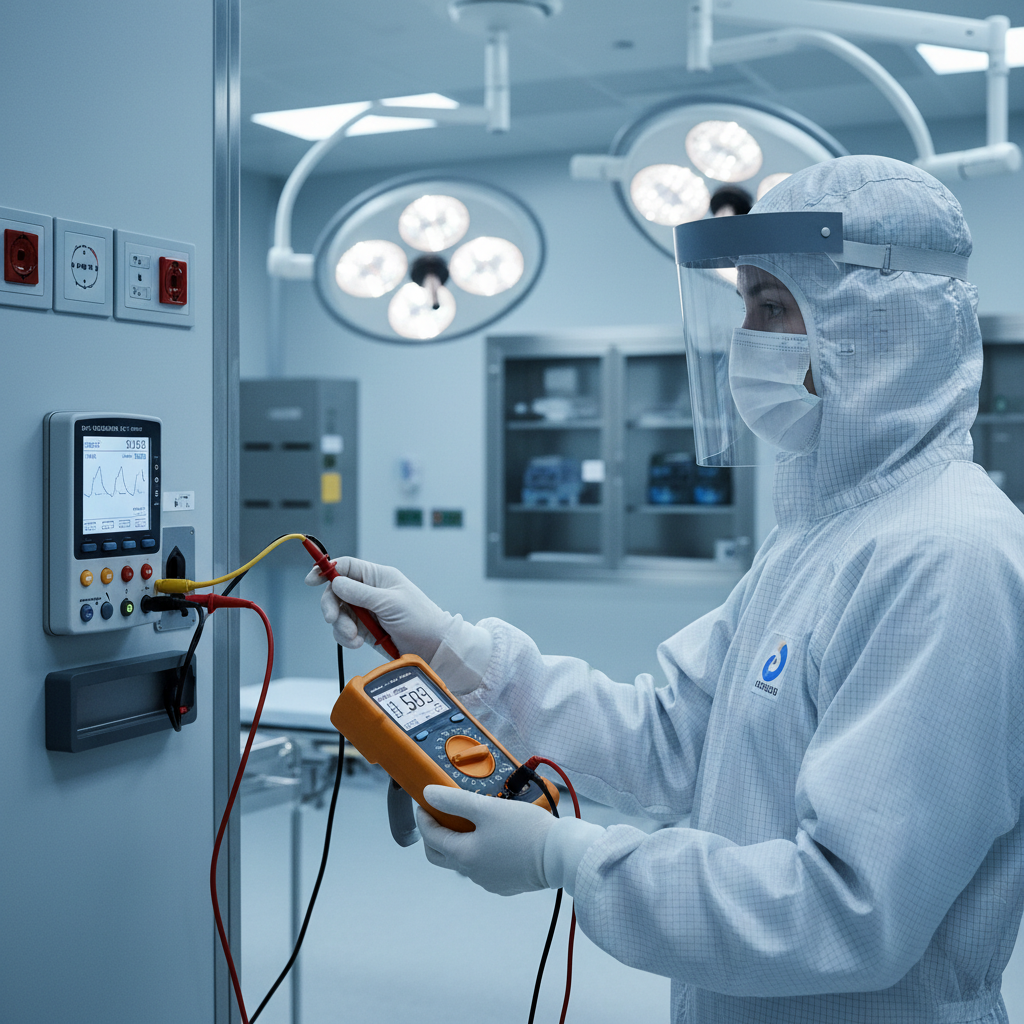
So, what does a technician actually do during an annual test? A proper inspection is more than just pushing a "test" button. It involves a detailed, multi-step process to ensure the entire system functions as designed. The work performed by a certified provider like Medical Testing Solutions includes:
Visual Inspection: Checking the physical condition of the LIM unit, remote indicators, and any associated components for damage or wear.
Functional Test: Using specialized test equipment to simulate leakage current and precisely verify that the LIM alarms at the correct milliamp (mA) threshold (e.g., 5.0 mA).
Alarm Verification: Confirming that both the audible and visual alarms on the main LIM panel and any remote annunciators (e.g., at the nurses' station or outside the OR) activate correctly.
Meter Accuracy Check: Verifying that the LIM's own monitoring gauge is providing an accurate reading.
Documentation: Recording the test results for each individual LIM, including its location, serial number, and pass/fail status.
Labeling: Affixing a dated certification label to each tested device, providing a clear visual indicator that it is compliant for the next 12 months.
This meticulous process is a cornerstone of our comprehensive line isolation monitor testing service, ensuring your facility meets all regulatory requirements.
Key Factors That Drive Annual LIM Testing Costs
The primary driver of cost is labor. The final price on your quote will depend on how much time a technician needs to complete the work compliantly. Here are the main variables.
Number of Line Isolation Monitors
This is the most significant factor. Most service providers price their service on a "per LIM" basis. A small ambulatory surgery center with 5 LIMs will have a much lower total cost than a large urban hospital with 75 LIMs. The "per LIM" rate often decreases as the quantity increases due to economies of scale.
Facility Size and Accessibility
Technician time isn't just spent testing; it's also spent navigating your facility. A large, sprawling campus with LIMs located in different wings, floors, or even separate buildings will require more labor time than a compact, single-building clinic. Difficult-to-access panels or the need for special clearance and check-in procedures can also add to the overall time required.
Scheduling and Off-Hours Work
LIMs are located in active procedure rooms. Testing cannot happen while a surgery is in progress. To avoid disrupting patient care, most LIM testing is scheduled during evenings, nights, or weekends. While this is a standard practice, some providers may charge a premium for off-hours work, which can affect the final cost.
Bundling with Other Annual Inspections
One of the most effective ways to manage costs is to bundle services. If the technician is already on-site, adding other inspections is highly efficient. Facilities can often secure a lower overall price by scheduling LIM testing along with their annual medical gas inspections, WAGD testing, or other required preventative maintenance. At Medical Testing Solutions, we specialize in creating customized, bundled service plans to maximize compliance and value.
Average Cost for Annual Line Isolation Monitor Testing
While a custom quote is always necessary for an exact price, we can provide typical market ranges. In 2024, the average cost for annual LIM testing falls between $125 to $225 per LIM. The price per unit depends heavily on the factors described above, especially the total quantity.
Here is a table illustrating how the total cost can vary by facility size:
Number of LIMs
Estimated Cost per LIM
Estimated Total Cost (Low End)
Estimated Total Cost (High End)
Notes
1-10
$175 - $225
$1,750
$2,250
Typical for small surgery centers and clinics.
11-25
$150 - $200
$1,650
$5,000
Mid-sized community hospital.
26-50
$135 - $185
$3,510
$9,250
Large hospital or medical center.
51+
$125 - $170
$6,375+
$8,670+
Very large facilities; best per-unit pricing.
Disclaimer: These prices are estimates for informational purposes only. They do not include potential travel costs for remote locations or repairs for failed units. Always request a quote for an accurate price.
Choosing a Qualified Testing Provider
When it comes to compliance and safety, the cheapest option is not always the best. It is crucial to select a service provider whose technicians are properly certified. The "gold standard" certification for this work is ASSE 6030 Medical Gas Systems Verifier. Certified verifiers have undergone rigorous training and passed a comprehensive exam covering all aspects of medical gas and vacuum systems, including the isolated power systems that LIMs protect.
Using an ASSE 6030 certified technician ensures that the person testing your equipment understands the complex requirements of NFPA 99. The team at Medical Testing Solutions is fully certified, providing peace of mind that your facility is not only compliant but truly safe. This expertise is also vital for broader projects like a full medical gas verification after construction or renovation.
Get a Clear Quote for Your Facility
Understanding the cost of annual line isolation monitor testing is the first step toward building a reliable compliance budget. The key takeaways are clear: costs are primarily driven by the number of devices and the logistics of accessing them, bundling services can lead to significant savings, and using an ASSE-certified provider is non-negotiable for ensuring safety and compliance.
Ready to get a firm price for your facility's annual LIM testing? Contact the certified experts at Medical Testing Solutions. We provide clear, comprehensive quotes based on your specific equipment inventory and facility layout.
Call us today at +1 (754) 315-1078 or request a quote online to ensure your facility is safe, compliant, and prepared for your next survey.
'''
Frequently Asked Questions
Annually, according to NFPA 99 standards, to ensure the ongoing safety and compliance of wet procedure locations.
Only if they are "qualified persons" as defined by NFPA 99, which typically involves specific training and certification like ASSE 6030. Using a certified third-party vendor is the most common and reliable approach to ensure unbiased, compliant testing.
A failed LIM indicates a potential safety hazard in the isolated power system. The device must be immediately serviced, repaired, or replaced by a qualified technician. The affected area should not be used for patient procedures until the system is fully compliant.
Professional testing companies like Medical Testing Solutions work with you to schedule service during off-peak hours, such as nights or weekends, to avoid interrupting critical patient care schedules.
Request a quote for your facility
Talk with Medical Testing Solutions about your next inspection, repair or equipment request.