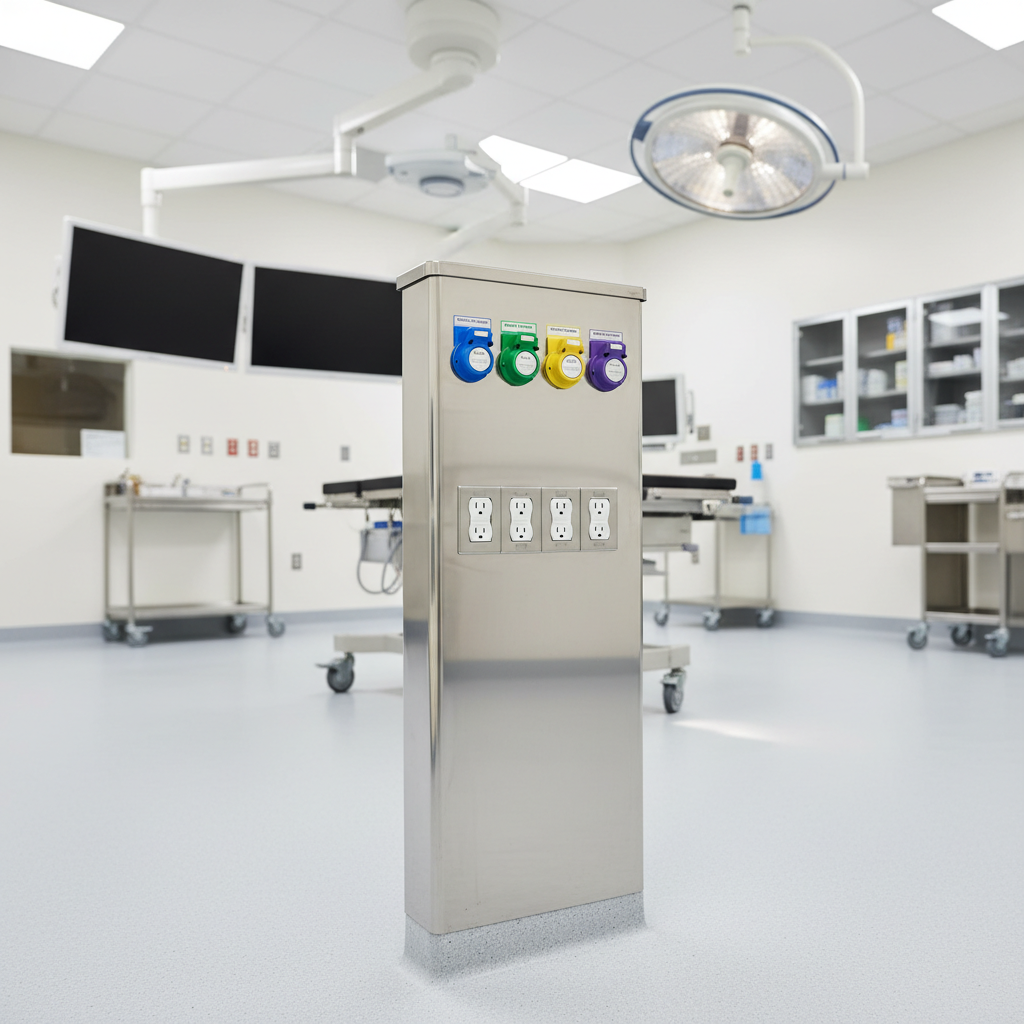
Amico Floor Pedestal: The Definitive Buyer's Guide
Medical Testing SolutionsOctober 10, 20267 min read
Share
Amico Floor Pedestal: The Definitive Buyer's Guide for Hospital ORs and ASCs
In the modern operating room or ambulatory surgery center (ASC), efficient and safe access to medical gases, vacuum, and electrical power is paramount. While ceiling-mounted booms and columns are common, they aren't always the ideal solution. Space constraints, structural limitations, or specific procedural workflows often demand a different approach. This is where the Amico floor pedestal comes in, a robust, stationary, and highly configurable solution for delivering critical services from the floor up. This buyer's guide explores the key considerations for specifying an Amico floor pedestal, from choosing the right shell size and gas outlets to ensuring a compliant installation from day one.
This post will walk you through the technical specifications and choices you need to make. We will cover when to choose a pedestal over a ceiling column, detail the five available Amico shell sizes, explain the different gas outlet options, and provide a step-by-step guide to correctly filling out the essential Device & Accessory Chart. We will also touch on the relevant compliance standards, including NFPA 99 and the ASSE 6000 series, to ensure your facility's infrastructure is safe, certified, and ready for patient care.
When to Choose a Floor Pedestal Over a Ceiling Column
Deciding between a floor-mounted pedestal and a ceiling-mounted service column or boom is a critical early decision in OR design. While both deliver essential medical gases and electrical services, their applications differ significantly.
Choose a floor pedestal when:
Low Ceilings or Structural Limits: The most common reason. Older buildings or facilities with extensive HVAC or imaging equipment in the ceiling plenum may not have the structural capacity to support a heavy ceiling-mounted boom.
Fixed Procedure Locations: Pedestals are ideal for rooms where the patient table and equipment layout are fixed and don't require the repositioning flexibility that booms offer. This is common in specialized procedure rooms or smaller ORs.
Budget Constraints: Floor pedestals can be a more cost-effective solution compared to complex articulated boom systems, both in terms of the equipment itself and the installation process.
Simplified Installation: Installing a pedestal is often less complex than a ceiling column, which requires extensive work above the ceiling and precise structural engineering. The medical gas installation for a pedestal is typically more straightforward.
Conversely, a ceiling column or boom is preferable when you need maximum flexibility to reposition services around the patient, have a larger operating room with a high ceiling, and the budget to accommodate a more complex system.
The 5 Amico Pedestal Shell Sizes Explained
Amico offers five distinct shell sizes for their floor pedestals, allowing for a tailored fit based on the required capacity of gas and electrical outlets. The primary difference is the size of the flat mounting surface on each face of the pedestal, which dictates how many outlets can be accommodated.
Shell Size
Number of Faces
Key Characteristics
A Shell
4
Smallest profile, for minimal service requirements.
B Shell
4
Taller than A Shell, allowing for more vertical separation.
C Shell
4
Wider faces than A/B, accommodating more outlets per side.
D Shell
4
Largest 4-sided option, for high-density requirements.
E Shell
2
A unique two-sided "wall" configuration for specific layouts.
Choosing the right shell is a matter of calculating the total number of required gas outlets, WAGD drops, vacuum inlets, and electrical receptacles. It's always wise to plan for future expansion; selecting a slightly larger shell than currently needed can save significant costs down the line.
Medical Gas Outlet Options: DISS vs. Quick-Connect
Amico pedestals can be factory-equipped with a variety of medical gas outlet styles to match your facility's existing wall outlets and equipment. Each outlet type is gas-specific to prevent accidental cross-connection, a cornerstone of NFPA 99.
DISS (Diameter Index Safety System): These are threaded connections, standardized by the CGA. They are valued for their robust and secure connection, minimizing the risk of leaks. Each gas has a unique diameter and thread pattern. You will typically find DISS outlets for Oxygen, Medical Air, and Nitrous Oxide.
Quick-Connect (Chemetron/Ohmeda): These outlets allow for rapid, one-handed connection and disconnection of gas hoses. They are proprietary designs, so it is critical to match the manufacturer to your facility's standard.
Ohmeda (Diamond Style): Characterized by a diamond-shaped faceplate.
Chemetron (Latch-Valve Style): Uses a circular ring that is pushed to connect.
Your choice will be dictated by your facility's existing infrastructure. Medical Testing Solutions can help you identify your current outlet types and ensure the Amico pedestal is specified correctly for seamless integration.
Why this matters for compliance: NFPA 99 (2021 ed.), Section 5.1.4.1, explicitly requires that "Each gas-specific station outlet...shall be legibly identified with the name or chemical symbol for the gas or vacuum system." The use of indexed connectors like DISS, Ohmeda, and Chemetron is the primary method of preventing hazardous cross-connections, a critical life safety issue verified during an ASSE 6030 medical gas verification.
How to Complete the Device & Accessory Chart
Specifying the exact configuration of your Amico floor pedestal happens on the Device & Accessory Chart found in the official Amico spec sheet. This is the most critical step in the process. Here's how to approach it:
Select Your Shell: Based on your outlet needs, choose Shell A, B, C, D, or E.
Assign Devices to Faces: The chart shows the four faces (1, 2, 3, 4). You must map out where each specific outlet will be located. Think about workflow. Which side will face the anesthesia machine? Which side faces the wall?
Specify Gas Outlets: For each gas outlet, you must specify:
Gas Service: e.g., Oxygen (OXY), Medical Air (AIR), Vacuum (VAC), Nitrous Oxide (N2O), WAGD.
Specify Electrical Outlets: Define the quantity and type of electrical receptacles needed.
Voltage/Amperage: e.g., 120V/20A.
Grade: Hospital-grade is required.
Power Type: Specify if it's for the normal branch or emergency/critical branch (often designated by red receptacles).
Add Communication Ports: Include any low-voltage provisions needed, like data (RJ45) or phone (RJ11) jacks.
Careful planning here is essential. A mistake on this chart can lead to a pedestal that doesn't meet procedural needs or requires costly on-site modification. The team at Medical Testing Solutions frequently assists facilities in completing these charts to ensure they are correct before ordering.
Installation and Certification Requirements
Once your Amico pedestal arrives, it must be installed and verified according to strict industry standards. This is not a task for a general plumber or electrician.
Installation (ASSE 6010): The pedestal must be anchored securely to the floor, and all medical gas piping must be brazed by an ASSE 6010 certified installer. This ensures the integrity and cleanliness of the medical gas lines.
Verification (ASSE 6030): Before the pedestal can be used for patient care, an ASSE 6030 certified verifier must perform a series of tests. This includes checking for cross-connections, ensuring correct gas identity at each outlet, testing dynamic flow and pressure, and verifying alarm functionality. Medical Testing Solutions provides comprehensive ASSE 6010 installation and ASSE 6030 verification services to ensure your new equipment is compliant from day one.
Get a Quote for Your Amico Floor Pedestal
The Amico floor pedestal is a reliable and highly configurable solution for any operating room or surgery center with fixed service needs or structural ceiling constraints. By carefully selecting the shell size, outlet types, and overall configuration, you can create a safe, efficient, and compliant workspace.
Medical Testing Solutions lists the Amico 12" and 18" floor pedestals in our online catalog and provides expert-guided quotes to ensure you get the exact configuration you need. Our ASSE-certified team can help you design, install, and verify your new pedestal system.
Ready to equip your facility? Contact our team today for a comprehensive quote and to discuss your project requirements. Call us at (754) 315-1078 or request a quote online to get started.
Frequently Asked Questions
The primary advantage is for rooms with low ceilings or where the overhead structure cannot support the weight of a ceiling-mounted service column or boom.
Yes, they can be factory-configured with DISS, Ohmeda, or Chemetron quick-connect outlets to match your facility's existing standard.
Installation of the medical gas piping must be performed by an ASSE 6010 certified installer to ensure compliance with NFPA 99 standards.
Absolutely. A full medical gas system verification, performed by an ASSE 6030 certified verifier, is required before the pedestal can be used for patient care.
It can be difficult and costly. It's best to anticipate future needs and choose a slightly larger shell size from the start to accommodate additional services later on.
You can contact a medical gas equipment supplier like Medical Testing Solutions. We can provide a detailed quote based on your specific configuration needs. Contact us to begin the process.
Request a quote for your facility
Talk with Medical Testing Solutions about your next inspection, repair or equipment request.