AHCA Medical Air Dew Point Audit Tampa: Fixing Dryer Alarms
Medical Testing SolutionsNovember 11, 202610 min read
Share
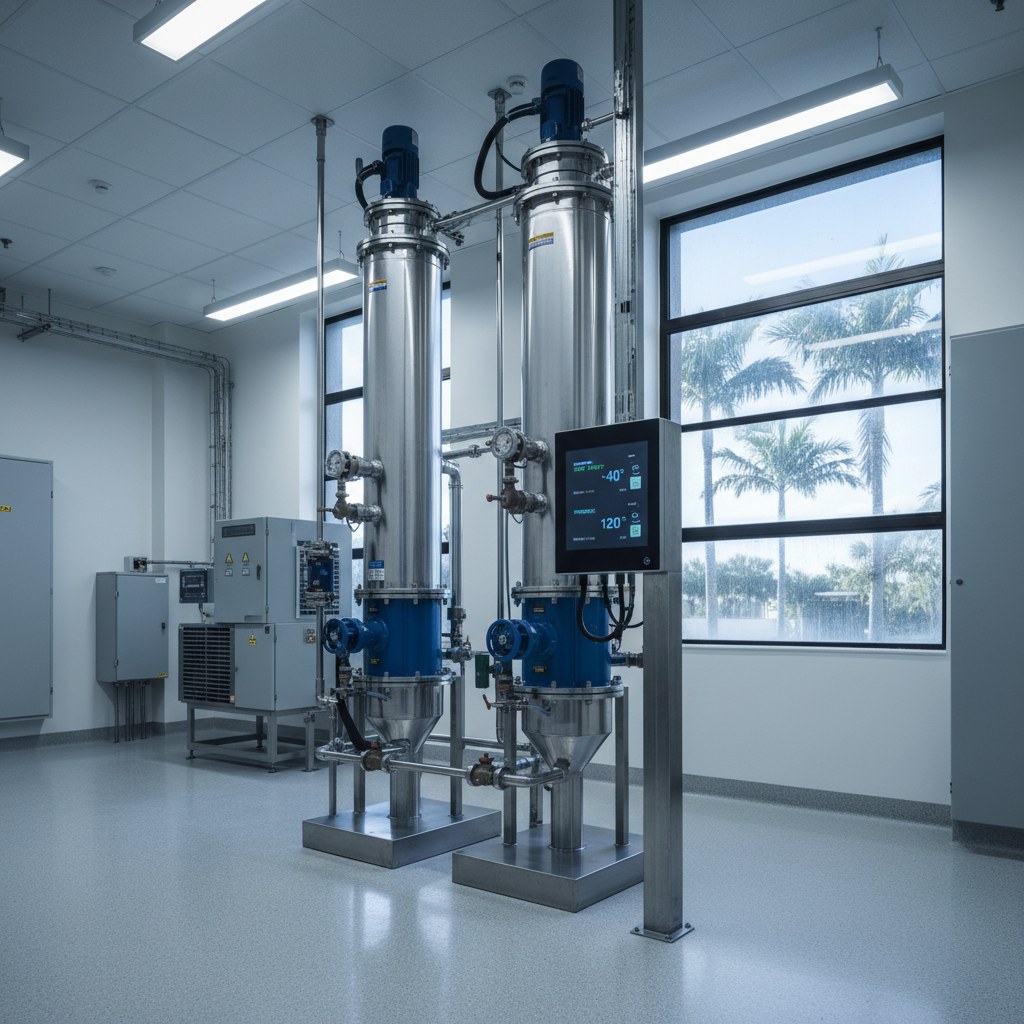
Walk into a mechanical room along the Hillsborough River in July, and you will hear the purge exhaust valve on a twin-tower desiccant dryer hissing into 90-percent relative humidity. When the master alarm panel at the nurses' station trips a "Medical Air High Dew Point" fault right before an unannounced state physical plant survey, you have hours, not weeks, to prove your central supply system is not pushing moisture into patient ventilators. Preparing for an AHCA medical air dew point audit Tampa requires more than silencing the annunciator panel or swapping a desiccant cartridge without testing the sensor loop.
Acute care facilities across Hillsborough and Pinellas counties face relentless moisture loads that chew through heatless regenerative desiccant beds faster than manufacturer intervals predict. If an inspector from the Florida Agency for Health Care Administration (AHCA) walks into your central utility plant and sees a dew point display reading +38°F (+3.3°C) or a faulted hygrometer bypassed with a jumper, your facility faces an immediate deficiency citation.
NFPA 99 Dew Point Thresholds and Sensor Calibration Mandates
Under NFPA 99 (Health Care Facilities Code) Section 5.1.3.6.1, medical air must meet the quality standards of Medical Air USP and stay completely free of liquid water or hydrocarbon carryover. Specifically, NFPA 99 Section 5.1.3.6.3.14 requires the medical air dryer and monitoring system to activate a local alarm and all master alarm panels when the line pressure dew point exceeds +35°F (+2°C) at 50 to 55 psig.
Many facility engineers confuse the old NFPA 99 editions (which referenced +39°F frost point in older legacy texts) with the current +35°F (+2°C) alarm activation limit, or they confuse the alarm set point with the dryer's actual design performance. A healthy heatless twin-tower desiccant dryer typically operates between -20°F and -40°F (-29°C to -40°C) pressure dew point. By the time your hygrometer creeps up to +32°F, your desiccant beds are already saturated or channeling. When it hits +36°F, the alarm fires, and liquid condensate is hours away from pooling in low points of your copper distribution risers.
Parameter
NFPA 99 Code Requirement
Typical Healthy Desiccant Dryer Reading
Immediate Action Trigger
High Dew Point Alarm Set Point
+35°F (+2°C) at line pressure
-40°F to -10°F (-40°C to -23°C)
+20°F (-6.7°C) upward trend
Carbon Monoxide (CO) Alarm
10 ppm threshold
< 2 ppm
> 5 ppm
System Operating Pressure
50–55 psig standard
52–54 psig
< 45 psig or > 60 psig
Dew Point Monitor Location
Downstream of final line regulators
Dedicated sample port with flow indicator
Zero sample flow through block
Calibration / Verification Frequency
At least annually (or per manufacturer)
Verified every 6–12 months in FL
Drift > 3°F against NIST reference
Why this matters for compliance: During a physical plant survey under Chapter 59A-3 of the Florida Administrative Code and AHCA Office of Plans and Construction (OPS) guidelines, surveyors do not just look at the digital readout on the compressor control cabinet. They ask for your documented annual medical gas inspections showing that the dew point sensor and CO monitor were challenged with traceable calibration standards, and that the master alarm actually triggers at +35°F.
Why Gulf Coast Humidity Accelerates Desiccant Failure in Tampa Bay
A medical air compressor intake located on a hospital roof near Tampa General, St. Joseph's, or AdventHealth Tampa ingests air with a summer dew point hovering between 75°F and 78°F. That warm, wet air contains roughly double the water vapor by weight compared to standard 68°F indoor design conditions used in generic compressor sizing catalogs.
When your oil-less scroll or reciprocating compressor pressurizes that air to 100 psig, the aftercooler knocks out the bulk liquid water, assuming your automatic receiver tank drains and coalescing filter drains aren't clogged with rust scale or biofilm. If a single motorized ball drain on the receiver sticks closed for two shifts during a Tampa afternoon thunderstorm, gallons of warm liquid water bypass the separator and slam directly into the bottom of the desiccant towers.
Activated alumina desiccant beads are designed to adsorb water vapor, not liquid water. When liquid water hits activated alumina, the beads fracture violently from thermal and mechanical stress, turning into a chalky white mud at the bottom of the tower. That mud plugs the stainless steel diffuser screens, increases pressure drop across the dryer, and forces wet air through narrow "channels" in the bed without drying it. Even after the drain is cleared, those pulverized beads will never regenerate properly.
If your plant team is fighting recurring moisture faults ahead of a state or Joint Commission inspection, schedule medical gas maintenance services to strip the purge mufflers, test the switching valves, and replace degraded desiccant before liquid water enters the pipeline.
Diagnosing High Dew Point Alarms: Sensor Drift vs. Wet Air
When a high dew point alarm triggers on a BeaconMedæs, Amico, or Powerex medical air package, facility technicians usually make one of two mistakes: they either assume the ceramic sensor is bad and ignore the wet air, or they spend $4,000 repacking both desiccant towers when the air is actually bone dry and the sensor has drifted out of calibration.
Step 1: Measure Actual Pipeline Dew Point with a Reference Hygrometer
Before touching a wrench to the dryer towers, connect a calibrated, NIST-traceable chilled mirror or polymer capacitance reference hygrometer to the sample port immediately downstream of the main line pressure regulators. Let the sample gas purge the test block for 10 to 15 minutes, hygrometers respond fast when going from dry to wet, but take several minutes to dry down to -30°F. If your independent reference instrument reads -25°F while the wall-mounted cabinet display reads +41°F in alarm, your desiccant dryer is doing its job and your inline aluminum oxide or polymer sensor has drifted out of tolerance.
Step 2: Check Sample Block Flow and Isolation Valves
NFPA 99 requires the dew point sensor to monitor air downstream of the line pressure regulators. On most multiplexing cabinets, a 1/4-inch copper or PTFE sample line feeds a small acrylic rotameter or bleed orifice housing the probe. If a technician bumped the needle valve closed, or if desiccant dust plugged the sintered bronze filter upstream of the sensor block, stagnant air gets trapped around the probe. Ambient moisture slowly diffuses backward through the atmospheric vent port into the stagnant chamber, driving the reading above +35°F even though the main medical air header is dry.
Step 3: Inspect the Switching Valves and Purge Exhaust Mufflers
Heatless desiccant dryers rely on a 10-minute cycle (5 minutes drying on Tower A while Tower B regenerates using roughly 15 percent dry purge air expanded to atmospheric pressure). Put on hearing protection and watch the dryer through a complete 10-minute cycle.
Verify tower depressurization: When Tower B shifts to regeneration, the purge exhaust valve must snap open and vent the tower pressure down to 0 psig on the tower gauge within seconds.
Check purge muffler backpressure: Spin off the cylindrical exhaust mufflers. If desiccant dust has caked the felt baffle elements, the regenerating tower stays pressurized at 20 or 30 psig instead of dropping to 0 psig. Pressurized purge air cannot strip moisture off the alumina beads, causing both towers to saturate within 48 hours.
Listen for shuttle valve blow-by: If the switching valve elastomer seals are scarred by desiccant fines, high-pressure wet air leaks directly into the regenerating tower or straight into the dry outlet header.
Satisfying AHCA OPS Form 3110 and Joint Commission EC.02.05.09
Whether you manage a surgery center in Westshore or an acute care campus under BayCare or AdventHealth, your documentation has to survive two distinct regulatory lenses: the Florida Agency for Health Care Administration (AHCA) and The Joint Commission (TJC).
When you replace a medical air dryer, swap out a dew point monitor assembly, or breach the pipeline to clean plugged aftercooler piping, Florida regulations require strict adherence to Chapter 59A-3 of the Florida Administrative Code. For construction, renovation, or major source equipment replacements, AHCA Office of Plans and Construction (OPS) reviewers look for an ASSE 6030 verifier's signature matching the requirements of AHCA OPS Form 3110 (the standard healthcare facility construction and engineering compliance documentation framework). Meanwhile, Joint Commission surveyors auditing under Element of Performance EC.02.05.09 check that every medical gas master alarm, area alarm, and air quality monitor (both CO and dew point) has been tested at its specific actuation threshold within the past 12 months.
As-found and as-left pressure dew point readings verified against a NIST-traceable reference standard.
Electronic or wet-gas challenge verification proving the local and master alarms trigger at >+35°F (+2°C).
Carbon monoxide monitor span calibration at 10 ppm using certified calibration gas cylinders.
Tank receiver automatic drain operation, coalescing filter differential pressure, and purge exhaust backpressure metrics.
Post-Hurricane Re-Verification Along the Tampa Bay Coastline
Hospital facilities sitting near flood zones on Davis Islands, across Pinellas County, or near MacDill AFB face a unique threat during tropical storms and hurricanes. When storm surge or feeder-line failures force a hospital onto emergency generator power, cooling water loops and HVAC chiller plants in the mechanical penthouse often drop offline or load-shed. Mechanical room ambient temperatures spike past 105°F, overloading air-cooled medical air aftercoolers and flooding desiccant dryers within hours.
Furthermore, NFPA 99 Section 5.1.12 mandates re-verification and testing of medical gas systems whenever the pipeline system is breached, modified, or experiences a loss of source pressure or suspected contamination from storm damage. If floodwater compromises a grade-level intake or a dryer dumps liquid water into the main riser during a generator transfer failure, you cannot simply turn the breakers back on and resume surgeries. You must purge the contaminated zone and perform particulate, hydrocarbon, dew point, and purity verification across the affected terminals.
Because Medical Testing Solutions is headquartered in Florida at 501 East Las Olas Blvd, Fort Lauderdale, FL 33301, our ASSE 6010 installers, ASSE 6020 inspectors, and ASSE 6030 verifiers mobilize across the state immediately after a storm passes. While out-of-state testing outfits are waiting on commercial flights into Tampa International, our local field trucks are already on I-75 with calibration gases, replacement hygrometer transmitters, and purge manifolds.
The Florida Cost Advantage: Zero Travel or Per-Diem Markups
Hiring an out-of-state medical gas testing contractor for an emergency dew point repair or an annual AHCA compliance audit quietly inflates your facility maintenance budget. Out-of-state verifiers routinely pad their quotes with round-trip airfare, three nights of hotel lodging, rental cars, and daily per-diem charges, often burying those costs inside a single lump-sum line item.
Medical Testing Solutions operates across the entire state through our Florida medical gas services network, supporting major hospital systems from Jackson Memorial, Baptist Health, Broward Health, and Cleveland Clinic Florida on the Atlantic coast to BayCare, AdventHealth, and UF Health across Central and West Florida. Whether your facility is serviced through our Fort Lauderdale medical gas services headquarters, our Miami medical gas services team, or our West Palm Beach medical gas services and Gulf Coast technicians, we charge NO travel fees, NO lodging, and NO per-diem anywhere in Florida. Most hospital engineering departments and ambulatory surgery centers save 10% to 25% compared to out-of-state ASSE 6030 verifiers while getting faster response times when a dryer alarm hits at 6:00 AM on survey day.
We also stock replacement ceramic and polymer dew point sensors, exchange calibrator blocks, coalescing elements, and desiccant kits in our medical gas products catalog, so our technicians don't show up empty-handed only to tell you a sensor has a four-week factory lead time.
Need same-day dispatch in South Florida or rapid mobilization to Tampa Bay before your next AHCA survey? Call our Fort Lauderdale office at (754) 315-1078 or request a quote to schedule your medical air dew point audit and ASSE 6030 verification today.
Frequently Asked Questions
NFPA 99 Section 5.1.3.6.3.14 requires the medical air dew point monitor to activate a local alarm at the compressor cabinet and at all master alarm panels when the pressure dew point exceeds +35°F (+2°C) at 50 to 55 psig line pressure.
When an automatic receiver drain sticks closed or an aftercooler overheats during high Tampa summer humidity, liquid water bypasses the moisture separator and enters the desiccant towers. Activated alumina is engineered for water vapor, not liquid water; liquid water shatters the beads into a chalky paste that plugs diffuser screens and causes air channeling.
Connect an independent, NIST-traceable reference hygrometer to the sample port downstream of the final line pressure regulators and allow it to purge for 10 to 15 minutes. If the reference instrument reads below -20°F while the cabinet display is in alarm above +35°F, verify sample flow through the sensor block and replace or recalibrate the inline probe.
AHCA surveyors and Joint Commission auditors look for annual medical gas inspection records compiled by ASSE 6020 or ASSE 6030 certified personnel. The documentation must show as-found and as-left dew point temperatures, NIST-traceable calibration verification of both the dew point and CO monitors, and confirmed alarm actuation at the +35°F threshold.
Yes. Under NFPA 99 Section 5.1.12, any medical gas system that experiences a loss of source pressure, pipeline breach, or suspected moisture/particulate contamination during a hurricane or power outage must undergo ASSE 6030 re-verification before being returned to patient use.
Request a quote for your facility
Talk with Medical Testing Solutions about your next inspection, repair or equipment request.