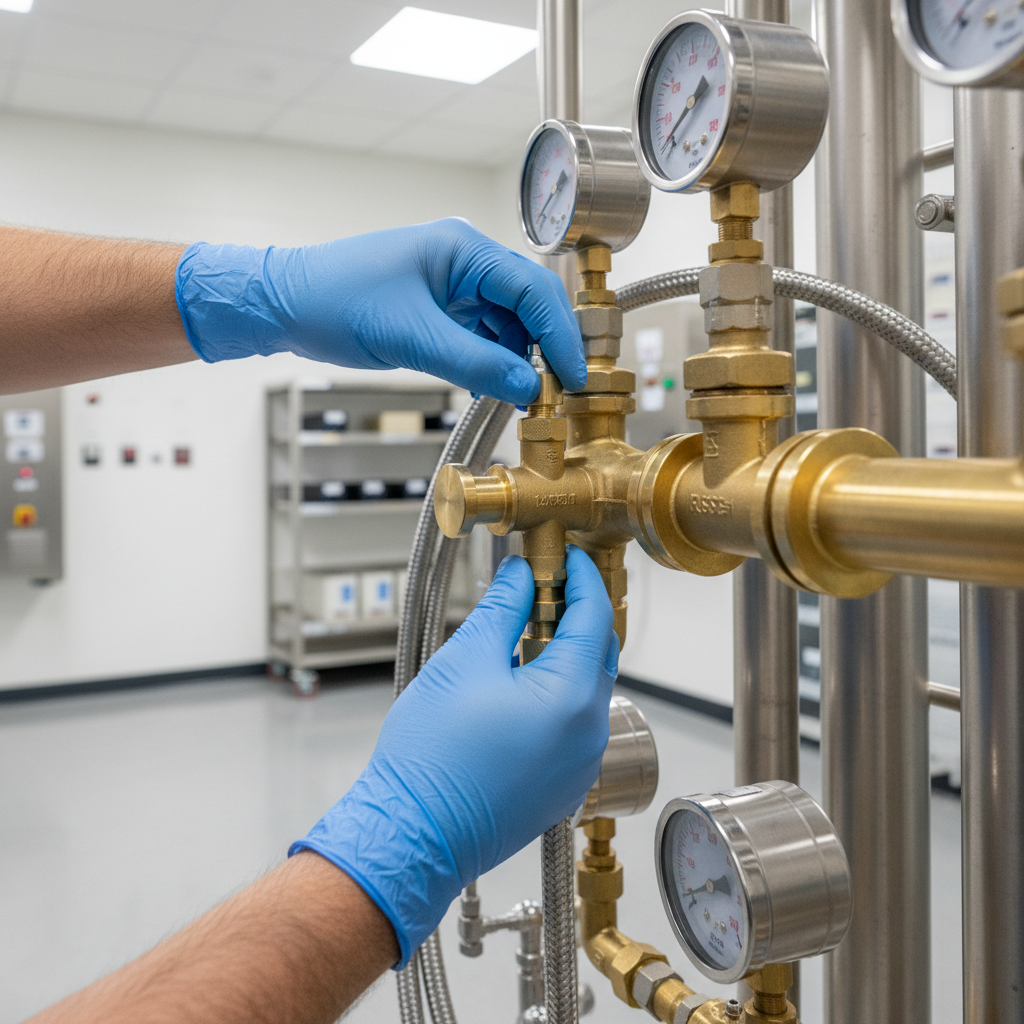
Medical Gas Maintenance in Sunrise, FL: A Guide to NFPA 99 Compliance
Medical Testing SolutionsJune 24, 20268 min read
Share
For a healthcare facility in Sunrise, Florida, the consistent and pure supply of medical gases is not a luxury, it's a fundamental requirement for patient care. From operating rooms to patient bedsides, systems delivering oxygen, medical air, and nitrous oxide must function flawlessly. However, these complex systems are not "set and forget." They require rigorous, scheduled, and documented care. This is the realm of medical gas maintenance, a critical function that ensures patient safety, maintains system integrity, and guarantees compliance with stringent national standards.
This comprehensive guide explores the essential facets of medical gas maintenance for facilities in the Sunrise area. We will delve into the "why" and "how," as dictated by codes like NFPA 99, and detail the specific tasks involved in a robust preventive maintenance program. You will learn about the key components that demand regular attention, the differences between preventive and emergency service, and how to select a certified provider to protect your facility and your patients.
The Critical Role of Medical Gas Systems in Healthcare
Medical gas systems are the lifeblood of a modern hospital or clinic. These specially engineered networks deliver therapeutic gases and operate surgical tools. A typical system includes:
Source Equipment: Bulk oxygen tanks, medical air compressors, vacuum pumps, and manifold systems that control the gas supply.
Distribution Network: A dedicated web of piping, typically copper, that runs from the source to various points of use throughout the facility.
Control Components: Zone valves that can isolate specific areas (like a single OR or an entire floor) for maintenance or in an emergency.
Terminal Units: Wall-mounted outlets and ceiling-mounted drops where staff connect equipment, such as flowmeters and ventilators.
Warning Systems: Master and area alarm panels that provide audible and visual alerts for changes in pressure, supply, or other critical parameters.
Any failure within this chain can have immediate and severe consequences. That's why organizations like The Joint Commission and CMS scrutinize a facility's maintenance records as a key indicator of its commitment to safety.
Understanding Medical Gas Maintenance: An ASSE 6040 Perspective
True medical gas maintenance goes far beyond simply reacting to problems. It involves a proactive, preventive approach performed by specifically qualified personnel. The guiding credential for this work is the ASSE 6040 Medical Gas Maintenance Personnel certification. An ASSE 6040 certified technician has demonstrated expertise in the maintenance of medical gas systems as required by NFPA 99, Health Care Facilities Code.
They are trained to understand the intricate workings of a wide range of equipment from various manufacturers and to perform tasks such as:
Inspecting and testing pumps, compressors, and manifolds.
Calibrating and verifying alarm systems.
Checking for leaks and ensuring system pressure integrity.
Replacing wear-and-tear components like gaskets, filters, and belts before they fail.
Maintaining detailed logs and records for compliance purposes.
At Medical Testing Solutions, our team consists of ASSE-certified professionals who provide comprehensive medical gas maintenance services throughout South Florida, ensuring your systems operate safely and efficiently.
Why This Matters for Compliance: NFPA 99 (Section 5.1.14.2.2.1) mandates that "A routine maintenance program shall be established... for the medical gas and vacuum systems." It further states that maintenance shall be conducted by "qualified individuals." Citing your use of an ASSE 6040 certified provider is the most direct way to demonstrate compliance with this crucial requirement during an audit.
NFPA 99 Requirements for Medical Gas System Maintenance
NFPA 99 is the cornerstone standard for medical gas systems in the United States. Chapter 5, "Gas and Vacuum Systems," outlines the minimum criteria for performance, installation, and, critically, maintenance. While a full system verification to ASSE 6030 standards is required after any new installation or modification, ongoing maintenance ensures the system remains in that compliant state.
Key maintenance requirements stipulated or informed by NFPA 99 include:
Source Equipment: Regular inspection of medical air compressor intakes, filter changes, and functionality checks for automatic changeover manifolds.
Alarms (5.1.9): Periodic testing of all master and area alarm panels to ensure they accurately report system status (e.g., high/low pressure, changeover). This is one of the most critical aspects of annual medical gas inspections.
Valves (5.1.4.6): All source and main line valves must be accessible and clearly labeled. A maintenance program ensures they are periodically checked for operation and accessibility.
Outlets/Inlets (5.1.5): Terminal units should be tested for flow, pressure, and gas specificity to prevent dangerous cross-connections.
Key Components of a Medical Gas Maintenance Program
A robust preventive maintenance contract is tailored to a facility's specific systems and usage patterns. However, several core components are universally essential.
Medical Air Compressors and Vacuum Pumps
These are the mechanical hearts of their respective systems. They are complex machines with motors, bearings, and filters that require regular attention.
Routine Tasks: Oil and filter changes, belt tension checks, vibration analysis, draining of condensate traps, and electrical component inspection.
Goal: Prevent unexpected shutdowns that could halt surgical procedures or compromise patient respiratory support.
Manifold Systems
Manifolds ensure an uninterrupted gas supply by automatically switching from the primary bank of cylinders to the secondary bank.
Routine Tasks: Testing the automatic changeover function, checking for leaks at high-pressure connections, verifying pressure readings on regulators, and ensuring changeover alarm signals are sent and received correctly.
Goal: Guarantee a seamless gas supply, especially after hours when a manual switch might be delayed.
Alarms and Monitoring Systems
Your alarm panels are your first line of defense, providing advance warning of a developing issue.
Routine Tasks: Simulating fault conditions (e.g., low pressure) to verify that every required alarm panel activates correctly, both audibly and visually. This includes master alarms at a monitored location (like engineering or security) and area alarms in specific zones (like an ICU or OR corridor).
Goal: Ensure staff are always aware of system status and can react appropriately to any deviation.
Outlets, Inlets, and Zone Valves
These are the most hands-on parts of the system, used daily by clinical staff.
Routine Tasks: Checking outlets for leaks, damage, and proper latching. Verifying zone valve boxes are accessible, their handles operate smoothly, and the gauge (if present) is accurate.
Goal: Maintain patient safety at the point of care and ensure emergency isolation capabilities function as intended.
Preventive Maintenance vs. Emergency Repairs: A Comparison
Facilities that view maintenance as an avoidable cost rather than a necessary investment often pay a much higher price in the long run. Emergency repairs are not only more expensive but also introduce significant operational and patient safety risks.
Feature
Preventive Maintenance Contract
Emergency Repair Call
Cost
Fixed, predictable annual or quarterly fee.
High, unpredictable costs for labor, parts, and rush shipping.
Timing
Scheduled during off-peak hours to minimize disruption.
Occurs at the worst possible time, causing maximum disruption.
Patient Care Impact
Minimal to none.
Can lead to canceled procedures and patient relocation.
Compliance
Creates a clear, documented record of proactive care.
Creates a record of failure and reactive crisis management.
Technician
A certified technician familiar with your specific system.
Whoever is available, may not know your system's history.
Outcome
Increased system reliability, longer equipment life, safety.
Quick fix that may not address the underlying cause of failure.
Choosing a Qualified Medical Gas Maintenance Provider in Sunrise, FL
When selecting a vendor, their qualifications and experience are paramount. The safety of your patients and the compliance of your facility are at stake. Here are the key criteria to consider:
ASSE 6040 Certification: This is non-negotiable. Ask to see the credentials of the specific technicians who will be servicing your account. An individual's medical gas certification is the best proof of their qualification.
Experience and Reputation: Look for a company with a long track record in the South Florida region. A provider like Medical Testing Solutions has deep experience working with hospitals, surgery centers, and dental clinics in Sunrise and the surrounding communities. We understand the local environment and the expectations of regulatory bodies.
Comprehensiveness: The ideal partner can handle all your medical gas needs, from ongoing maintenance to new medical gas installation (ASSE 6010) and system verification. This ensures a holistic understanding of your systems.
Documentation: A professional vendor will provide clear, detailed, and timely documentation suitable for a Joint Commission or AHCA survey. Reports should detail what was tested, the results, and any corrective actions taken.
Take Control of Your Medical Gas Systems
Ensuring your medical gas systems are safe, reliable, and compliant is a continuous process that demands expertise and diligence. A preventive maintenance program with a qualified provider like Medical Testing Solutions is the most effective way to manage risk, control costs, and uphold the highest standards of patient safety in your Sunrise, FL facility.
Don't wait for an alarm to sound or a system to fail. Proactively manage your facility's life support systems.
To protect your patients and your facility, contact Medical Testing Solutions today at +1 (754) 315-1078 or request a quote for a comprehensive medical gas maintenance plan.
Frequently Asked Questions
The frequency is determined by NFPA 99 guidelines, the manufacturer's recommendations for each piece of equipment, and the system's usage. A typical preventive maintenance schedule involves quarterly or semi-annual visits, with certain checks performed annually. A custom plan should be developed with a certified provider.
According to NFPA 99, only "qualified individuals" can perform this work. The industry standard for this qualification is the ASSE 6040 Medical Gas Maintenance Personnel certification. Always insist on seeing this credential.
The risks are significant and include unexpected system failures leading to procedure cancellations, potential harm to patients, costly emergency repairs, and negative findings during regulatory surveys by bodies like The Joint Commission, which can jeopardize accreditation and reimbursement.
While we are proud to be a leading provider of medical gas maintenance in Sunrise, FL, we serve the entire South Florida region and beyond. Our headquarters are in Fort Lauderdale, and our team of certified technicians assists healthcare facilities throughout the state.
Yes. Our ASSE 6040 certified technicians are trained on the principles and practices of medical gas maintenance that apply to all major brands of equipment, including BeaconMedaes, Powerex, Amico, and more. We have extensive experience with the full range of systems found in healthcare facilities.
Request a quote for your facility
Talk with Medical Testing Solutions about your next inspection, repair or equipment request.