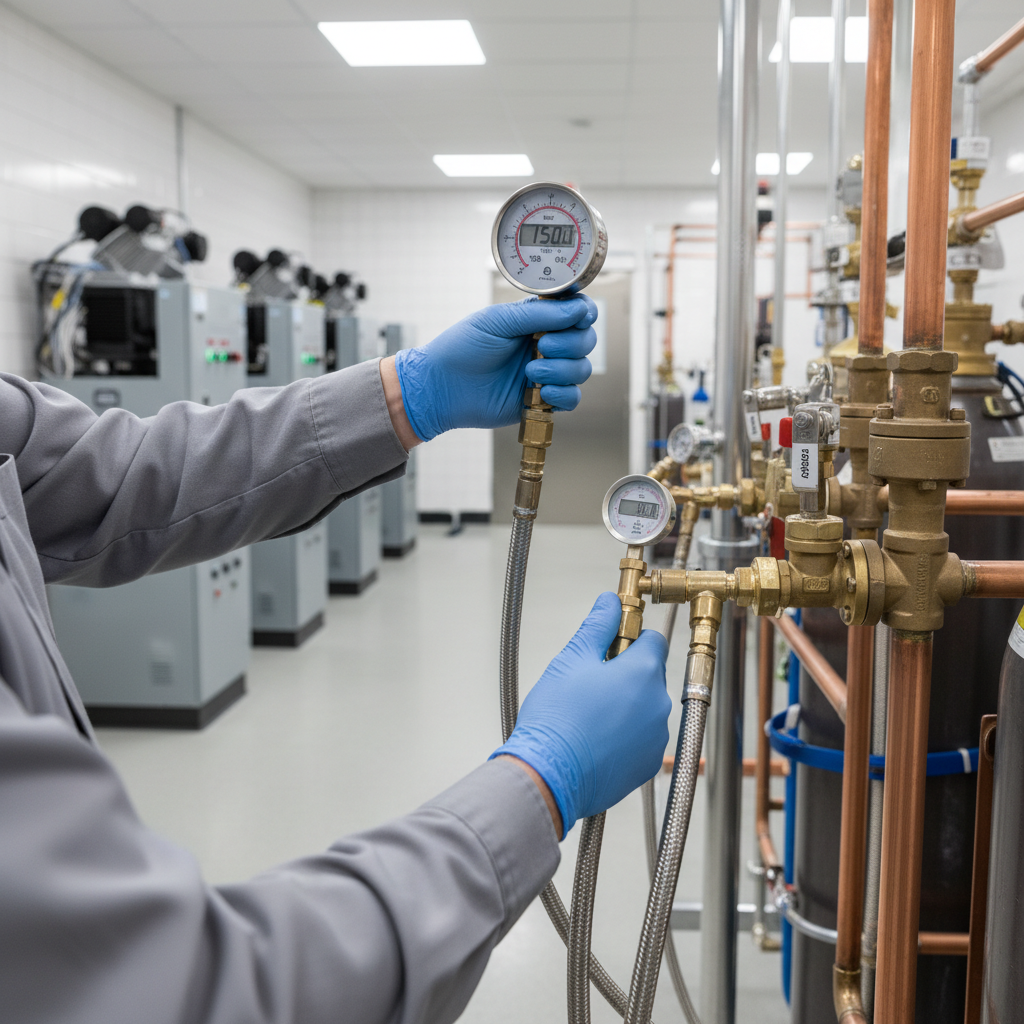
Medical Gas Maintenance St Petersburg FL: A Complete Guide
Medical Testing SolutionsJune 24, 20265 min read
Share
Medical gas systems are the lifeblood of a healthcare facility. From the operating room to the patient bedside, a reliable supply of oxygen, medical air, and vacuum is non-negotiable. For hospitals and clinics in St. Petersburg, Florida, ensuring these systems function flawlessly isn't just a best practice, it's a critical component of patient safety and regulatory compliance. However, these complex systems require specialized, ongoing attention to prevent failures.
This guide provides a definitive overview of a preventive medical gas maintenance program. We will explore the essential requirements mandated by NFPA 99, detail the core components that demand regular service, like pumps, alarms, and manifolds, and outline what to look for in a qualified maintenance provider. Proper maintenance ensures you pass inspections, protect your patients, and avoid costly emergency repairs.
The Critical Role of Preventive Maintenance
Adopting a reactive, "if it isn't broken, don't fix it" approach to medical gas systems is a high-stakes gamble. The potential consequences of a system failure, from a malfunctioning vacuum pump to a silent alarm, are severe. A structured, preventive maintenance plan is essential for three primary reasons:
Patient Safety: The foremost priority. A sudden loss of medical vacuum or oxygen can have catastrophic outcomes during surgical procedures or for patients on respiratory support.
Regulatory Compliance: The Joint Commission (TJC), Centers for Medicare & Medicaid Services (CMS), and other Authorities Having Jurisdiction (AHJs) mandate compliance with the National Fire Protection Association (NFPA) 99, Health Care Facilities Code. Documented, regular maintenance is a key item on any inspector's checklist.
Financial Prudence: Emergency repairs are significantly more expensive than planned maintenance. A failing pump or a contaminated pipeline can lead to operational shutdowns, patient transfers, and costly fixes. Proactive maintenance extends the life of your equipment and prevents these budget-breaking events.
Understanding NFPA 99 Requirements for Medical Gas Maintenance
NFPA 99 is the foundational code governing medical gas and vacuum systems. Chapter 5, "Gas and Vacuum Systems," outlines the specific requirements for their maintenance, which must be performed by qualified individuals. A robust maintenance program is built around these standards.
Why this matters for compliance: Failure to adhere to the maintenance schedules outlined in NFPA 99 can result in failed inspections, loss of accreditation, and significant patient safety risks. Surveyors will specifically request and scrutinize your maintenance logs and technician certifications.
Key Maintenance Schedules and Components
The code specifies minimum frequencies for inspecting and servicing different parts of the system. While some tasks are annual, others require quarterly or semi-annual attention. A partnership with a certified provider like Medical Testing Solutions ensures these schedules are strictly followed.
Here’s a simplified breakdown of typical maintenance tasks as guided by NFPA 99:
Component
Task
Typical Frequency
Source Equipment (Pumps/Compressors)
Check oil levels, belts, filters, and overall performance.
Quarterly / Semi-Annually
Manifolds
Test for leaks, verify changeover function, check pressure settings.
Annually
Alarms (Master & Area)
Test all alarm signals (visual and audible) and sensor functions.
Annually
Outlets & Inlets
Check for leaks, physical damage, and proper latching.
Annually
Zone Valves
Verify correct operation and ensure they are accessible.
Annually
The Role of the ASSE 6040 Certified Technician
NFPA 99 requires that medical gas system maintenance be performed by individuals who are qualified and experienced. The industry standard for this qualification is the ASSE 6040 Medical Gas Maintenance Personnel certification. An ASSE 6040 certified technician has demonstrated expertise in the maintenance of medical gas systems, components, and equipment. When choosing a partner for medical gas maintenance in St Petersburg FL, ensuring their team holds this credential is non-negotiable.
Core Components of Your Maintenance Contract
A comprehensive maintenance contract should focus on the most critical and failure-prone components of your medical gas system.
Medical Air & Vacuum Pumps
The "heart and lungs" of your system, these powerful machines run constantly. Our maintenance protocols include:
Inspecting belts for wear and proper tension.
Checking oil levels and quality in lubricated pumps.
Replacing inlet filters and exhaust filters to ensure purity and performance.
Monitoring for unusual vibrations or noises that indicate impending failure.
Master and Area Alarm Panels
Alarms are your first line of defense, providing immediate notification of a problem. They are useless if they don't work. Maintenance involves simulating fault conditions to ensure every alarm, from a pressure drop to a manifold changeover, triggers the correct audible and visual signal at the panel. This regular testing is a key part of our [annual medical gas inspections](/medical-gas-testing-and-service/annual-medical-gas-inspections).
Manifold Systems
Whether automatic or manual, your manifold system must reliably switch from the primary to the secondary cylinder bank. We test this changeover function, check for leaks at all connections, and verify that the final line pressure regulators are set correctly and holding steady. A failing manifold is a silent risk that our [comprehensive maintenance services](/medical-gas-testing-and-service/medical-gas-maintenance-services) are designed to eliminate.
Choosing a Medical Gas Maintenance Provider in St. Petersburg
Not all service providers are created equal. When vetting a company, prioritize expertise, certification, and scope of service.
Look for ASSE Certifications: The provider must employ technicians with ASSE 6040 credentials for maintenance and, ideally, ASSE 6030 credentials for system verification. This proves their competence and adherence to national standards.
Verify Local Presence and Experience: A provider with a strong presence in Florida, like Medical Testing Solutions, can offer faster response times for both scheduled maintenance and emergency calls in the St. Petersburg area.
Evaluate their Full Scope of Services: A partner who can handle everything from routine maintenance to new [medical gas installation](/medical-gas-installation) and [system verification](/medical-gas-verification) provides seamless, long-term value. Medical Testing Solutions is a single-source provider for all these needs.
Secure Your St. Petersburg Facility with Expert Maintenance
Don't wait for an alarm to sound or a system to fail. Proactive medical gas maintenance is a direct investment in patient safety and operational stability. For healthcare facilities in the St. Petersburg, FL area, Medical Testing Solutions offers comprehensive, ASSE-certified maintenance contracts to ensure you remain compliant and your systems are always reliable.
Our certified technicians have the experience and expertise to manage every aspect of your medical gas systems. Contact our team today to protect your patients and your facility. Call us at +1 (754) 315-1078 or [request a quote online](/request-a-quote) for a no-obligation consultation.
'''
Frequently Asked Questions
According to NFPA 99, different components have different schedules. Key activities like testing alarms and inspecting source equipment are required at least annually, with some pump maintenance needed quarterly or semi-annually.
Only qualified individuals with technical competence in medical gas systems should perform maintenance. The industry standard credential is the ASSE 6040 Medical Gas Maintenance Personnel certification.
Maintenance (ASSE 6040) is the ongoing, scheduled work to keep an existing system operating correctly. Verification (ASSE 6030) is a comprehensive series of tests performed on a new, modified, or repaired system to ensure it is safe for patient use before being put into service.
Unless your in-house staff holds current ASSE 6040 certifications and has the specialized, calibrated equipment required for the work, it is strongly recommended to use a certified third-party provider. This ensures compliance and removes liability from the facility.
Skipping maintenance can lead to catastrophic equipment failure, patient harm, non-compliance with Joint Commission standards, loss of accreditation, and expensive emergency repairs that far exceed the cost of a planned maintenance contract.
Request a quote for your facility
Talk with Medical Testing Solutions about your next inspection, repair or equipment request.