Healthcare facilities in St. Augustine, from outpatient surgery centers to major hospitals, rely on a complex network of medical gas systems to deliver life-sustaining gases to patients. The consistent, pure, and correct delivery of oxygen, medical air, nitrous oxide, and nitrogen is not just a utility, it's a critical component of patient care. Ensuring this system functions flawlessly requires a rigorous, proactive approach: preventive medical gas maintenance. This guide explains why a comprehensive maintenance plan is essential for facilities in the St. Augustine area, what NFPA 99 requires, and how to partner with a certified provider to ensure uninterrupted safety and compliance.
Medical Gas Service
A Definitive Guide to Medical Gas Maintenance in St. Augustine, FL
Medical Testing SolutionsJune 24, 20263 min read
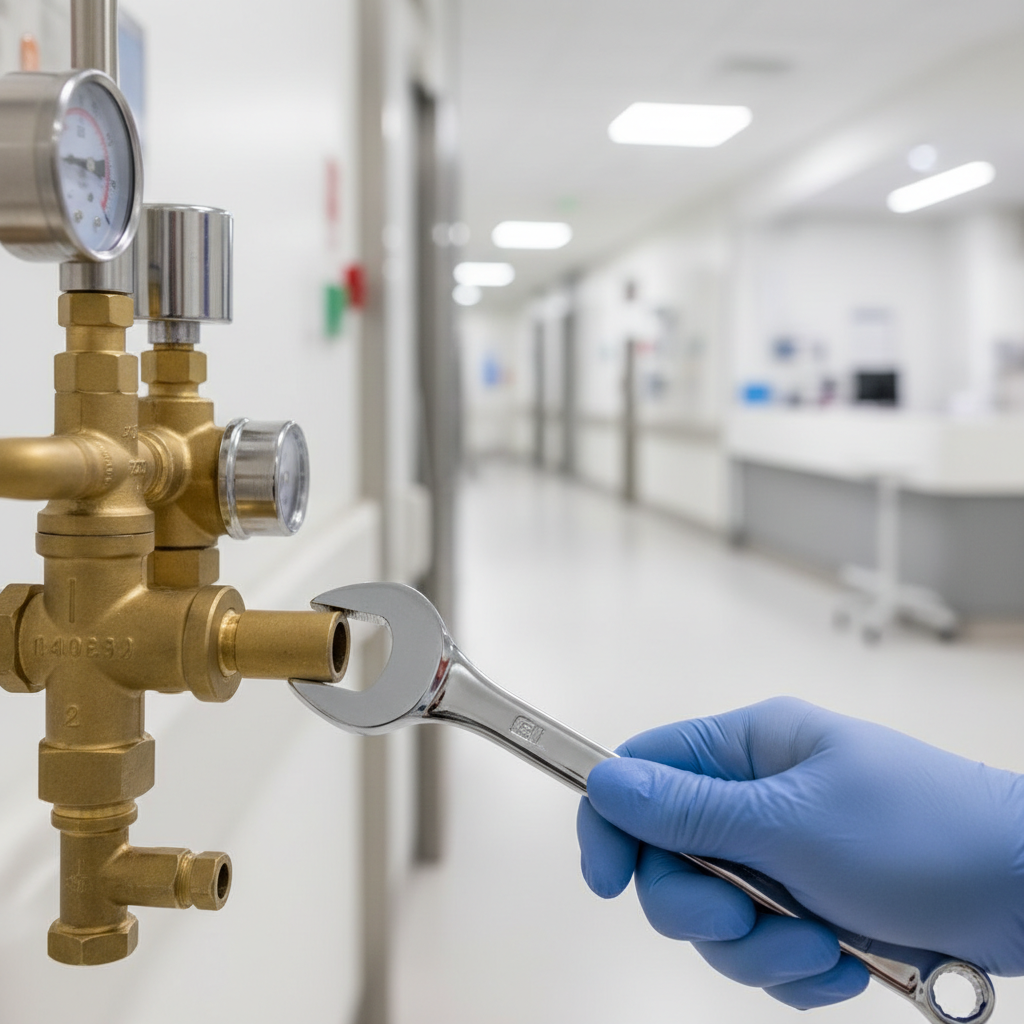
Why a Preventive Maintenance Plan is Critical
Reactive maintenance, fixing components only when they fail, is a dangerous and costly strategy for medical gas systems. An unexpected failure of a vacuum pump, a malfunctioning master alarm panel, or a depleted manifold can have catastrophic consequences for patient safety. A scheduled, preventive approach ensures system reliability, extends equipment lifespan, and keeps your facility compliant with regulatory standards. Regular service minimizes unexpected downtime, preventing canceled procedures and the associated revenue loss. For facilities in St. Augustine, establishing a preventive medical gas maintenance service contract is the gold standard for risk management and patient safety.
Core System Components Requiring Regular Maintenance
A medical gas system is more than just pipes and outlets. It's a complex assembly of sources, monitoring equipment, and distribution networks. Our ASSE 6040 certified technicians focus on these critical areas.
Medical Gas Source Equipment (Pumps & Compressors)
The heart of your system includes vacuum pumps and medical air compressors. These are heavy-duty machines that run frequently, leading to wear and tear.
- Maintenance tasks: Oil changes, filter replacements, belt tensioning, and checking for leaks or unusual vibrations.
- Impact of Failure: A failed vacuum pump can compromise surgical procedures, while a failed compressor can halt the supply of medical air, a critical life support gas.
Medical Gas Manifolds
Manifolds are the switchboards for your gas supply, automatically changing from the primary cylinder bank to the secondary bank when pressure drops.
- Maintenance tasks: Checking regulator pressures, ensuring leak-free connections, testing automatic changeover function, and verifying cylinder pressure readings.
- Impact of Failure: A manifold that fails to switch over can lead to a complete loss of a specific gas to the entire facility.
Medical Gas Alarms
Master and area alarm panels are your facility's early warning system. They monitor pressures, levels, and operational status across the entire network.
- Maintenance tasks: Verifying all alarm signals (high/low pressure, changeover), testing sensors, and ensuring the panel communicates correctly with source equipment.
- Impact of Failure: A non-functional alarm means your clinical staff are blind to a developing problem until it becomes critical.
NFPA 99 Maintenance Requirements for Medical Gas Systems
The National Fire Protection Association's standard, NFPA 99 (Health Care Facilities Code), is the primary document governing medical gas systems in the United States. It outlines specific inspection, testing, and maintenance requirements.
Why this matters for compliance: Failure to adhere to NFPA 99 can result in citations from accrediting bodies like The Joint Commission (TJC), loss of certification, and potential legal liability in the event of an incident. It is the foundational standard for patient safety regarding facility infrastructure.
Here’s a simplified breakdown of some key maintenance tasks mandated by NFPA 99:
| Component | NFPA 99 (2024) Reference | Task | Recommended Frequency |
|---|---|---|---|
| Master & Area Alarms | 5.1.9.2 | Test function by actuating a sensor | Annually |
| Medical Air Compressors | 5.1.10.7 | Calibrate CO and dew point monitors | Per manufacturer, or annually |
| Outlets/Inlets | 5.1.12.2 | Test for flow and pressure | Concurrent with inspections |
| Zone Valves | 5.1.12.3 | Verify function and accessibility | Annually |
| Manifold Systems | 5.1.10.3 | Check changeover function and pressures | Per manufacturer, or annually |
Partnering with a certified company like Medical Testing Solutions ensures that all maintenance activities are performed and documented in accordance with these strict codes. We provide comprehensive documentation for your records, proving compliance during an audit.
What
Frequently Asked Questions
Maintenance frequency is determined by NFPA 99 standards, equipment manufacturer recommendations, and overall system usage. Critical components like alarms, compressors, and manifolds should be professionally serviced at least annually, with some in-house checks performed more frequently.
NFPA 99, the Health Care Facilities Code, is the primary standard in the United States. It provides the minimum requirements for the safe design, installation, inspection, testing, and maintenance of medical gas and vacuum systems.
According to NFPA 99, only qualified individuals can maintain medical gas systems. This is typically interpreted as personnel holding an ASSE 6040 Medical Gas Maintenance Personnel certification, who have the specific training and expertise to work on this critical equipment.
Deferring maintenance significantly increases the risk of equipment failure, which can lead to canceled procedures, compromised patient care, and immediate patient safety hazards. It also leads to non-compliance with TJC and other accrediting agencies, potentially jeopardizing your facility's accreditation and CMS funding.
While facility staff can be trained for routine checks (e.g., reading gauges), comprehensive preventive maintenance and repairs require specialized knowledge and certification (ASSE 6040). Most healthcare facilities in St. Augustine contract with a certified third-party provider like MTS for their maintenance programs.
Request a quote for your facility
Talk with Medical Testing Solutions about your next inspection, repair or equipment request.