Medical gas systems are the silent, life-sustaining arteries of any healthcare facility. From oxygen and medical air to surgical vacuum, these systems are integral to patient care. However, their reliability is not a given; it depends entirely on a robust, proactive maintenance program. For hospitals, surgery centers, and dental clinics in Miramar, Florida, understanding and implementing a compliant maintenance strategy is not just a best practice, it's a requirement for patient safety and regulatory standing. This guide will walk you through the critical components of medical gas maintenance, the specific requirements outlined in NFPA 99, and how to establish a preventive program that protects your patients and your facility.
Medical Gas Service
Compliance & Standards
Medical Gas Maintenance in Miramar, FL: A Guide to NFPA 99 Compliance
Medical Testing SolutionsJune 25, 20266 min read
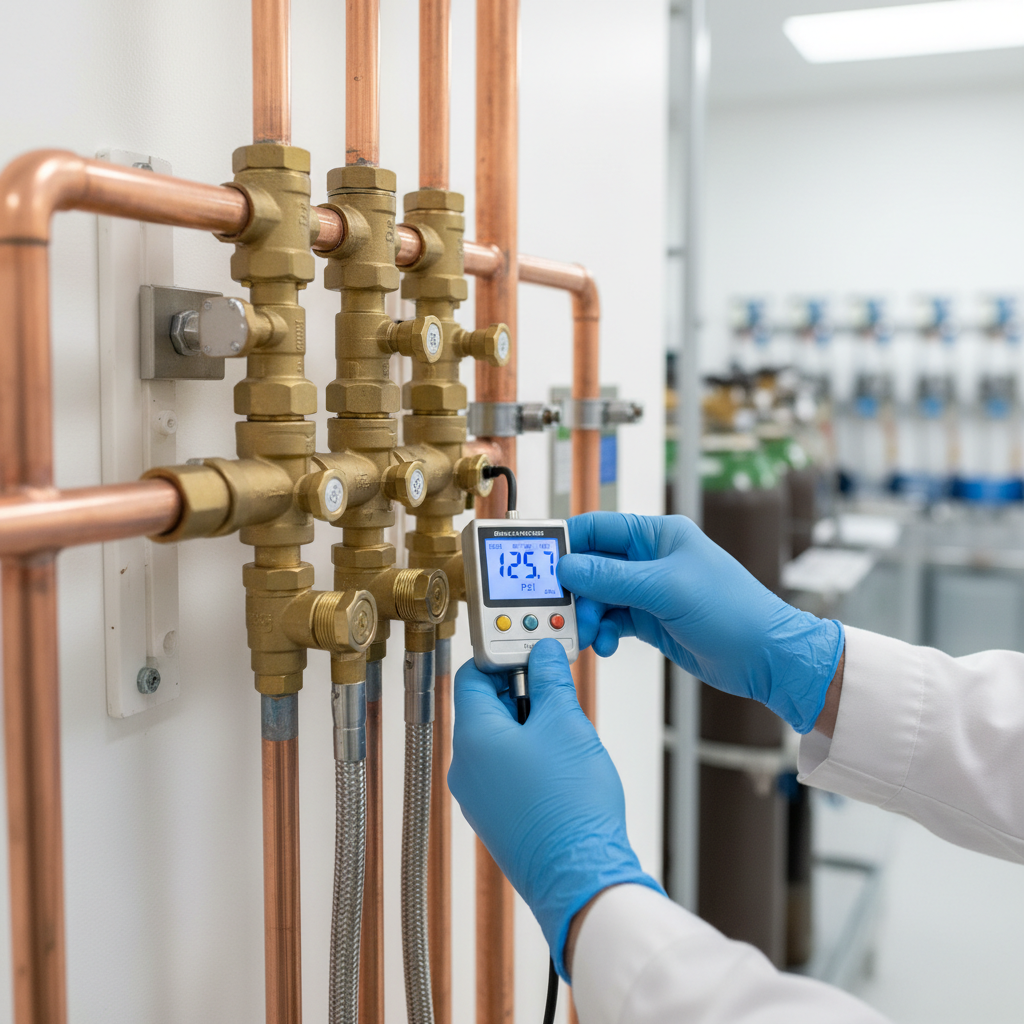
What is a Medical Gas System? The Lifeline of Your Facility
A medical gas pipeline system (MGPS) is a complex network designed to deliver specific gases or provide vacuum safely from a central source to various patient care areas. Understanding its core components is the first step in appreciating the need for meticulous maintenance.
Key Components
- Source Equipment: This is the heart of the system. It includes medical air compressors, vacuum pumps, and high-pressure cylinder manifolds that supply the entire facility.
- Distribution Network: A network of specially cleaned and brazed copper piping transports the gases from the source to their points of use.
- Control and Monitoring: Master alarm panels, area alarm panels, and zone valve boxes are critical safety components that monitor system pressure and allow for sections of the pipeline to be isolated for maintenance or in an emergency.
- Terminal Units: These are the outlets and inlets in patient rooms, operating suites, and procedure areas where medical staff connect equipment. Each outlet is gas-specific to prevent dangerous cross-connections.
The Imperative of Preventive Maintenance vs. Reactive Repairs
Many facilities fall into a reactive maintenance trap, only addressing issues after a component fails. This approach is fraught with risk. An unexpected vacuum pump failure or a drop in oxygen pressure can lead to catastrophic clinical consequences, emergency patient evacuations, and costly system shutdowns. Preventive maintenance, on the other hand, is a proactive strategy involving scheduled inspections, testing, and servicing. By following a consistent schedule, you can identify and correct potential issues before they become critical failures, ensuring system uptime and reliability. A well-structured preventive medical gas maintenance service is an investment in operational stability.
NFPA 99 Requirements for Medical Gas Maintenance
The National Fire Protection Association's NFPA 99, Health Care Facilities Code, is the ultimate authority on medical gas systems. It provides the minimum requirements for their design, installation, testing, and maintenance. Failure to adhere to these standards can have serious consequences.
The Role of the ASSE 6040 Certified Maintenance Specialist
NFPA 99 (Chapter 5) is explicit: inspection and maintenance of medical gas systems must be performed by qualified individuals. The industry standard for this qualification is the ASSE 6040 Medical Gas Systems Maintenance Personnel certification. An ASSE 6040 certified technician has undergone rigorous training and examination, proving their competency in maintaining these life-critical systems according to code.
Why this matters for compliance: Regulatory bodies like The Joint Commission (TJC) and DNV GL conduct audits based on NFPA 99. Failure to provide documentation proving that a compliant maintenance program is in place, and that it's performed by certified personnel, can lead to findings, citations, and potential loss of accreditation.
Key Inspection & Maintenance Frequencies
While a full maintenance program is extensive, NFPA 99 outlines several key frequencies:
- Annual Inspections: A full system inspection by a certified technician to check all components, from source to outlet.
- Quarterly: Testing of alarms and other critical components.
- Periodic: Regular checks of liquid oxygen levels, pump oil, filter conditions, and more, as defined by the manufacturer and a facility-specific risk assessment.
Partnering with a provider like Medical Testing Solutions ensures your facility receives thoroughly documented annual medical gas inspections that satisfy all regulatory requirements.
Core Components of a Medical Gas Maintenance Contract
When evaluating a maintenance provider in the Miramar area, it’s crucial to know what a comprehensive contract should include. Look for a partner who offers a service agreement that covers:
- Scheduled inspections (quarterly, semi-annual, and/or annual) by an ASSE 6040 certified technician.
- Comprehensive testing of all source equipment, including pumps, compressors, and manifolds.
- Functional testing and calibration of all master and area alarm panels.
- Flow, pressure, and leak testing for a representative sample of outlets and inlets.
- Detailed, audit-ready digital reports documenting every test and finding.
- 24/7 availability for emergency service and support.
Maintenance Checklist: A Component-by-Component Guide
A proper maintenance program is systematic and thorough. Here’s a look at what is inspected in key areas of the system.
Source Equipment: Pumps, Compressors, and Manifolds
- Vacuum Pumps: Technicians check oil levels and quality, change oil and filters as needed, test motor function, and verify proper shutdown/startup pressures.
- Medical Air Compressors: This involves checking the dew point and carbon monoxide levels to ensure air quality, replacing filters, inspecting belts, and verifying automatic changeover between compressors.
- Manifolds: For cylinder systems, technicians perform leak checks, test regulator performance, and ensure the automatic changeover from the primary to secondary bank functions correctly.
Alarms and Warning Systems
This is one of the most critical parts of the maintenance program. A certified technician will simulate fault conditions for every alarm point (e.g., high pressure, low pressure, changeover) to ensure the master and area alarm panels activate correctly, both visually and audibly.
Outlets, Inlets, and Terminal Units
Technicians will check a percentage of terminal units throughout the facility to:
- Verify correct gas flow and pressure.
- Conduct standing pressure tests for leaks.
- Confirm the integrity of the gas-specific indexing to prevent cross-connection. This is particularly crucial in areas utilizing sedation, where proper function of nitrous oxide and oxygen delivery is paramount. For specialized equipment like dental flowmeters, specific repair and calibration services may also be required.
Comparing Maintenance Providers: What to Look For
Not all "maintenance" providers are created equal. For a life-support system, the distinction between a basic handyman and a certified expert is critical. Medical Testing Solutions, headquartered right here in South Florida, provides ASSE-certified experts for all our maintenance and verification work.
| Feature | Basic Provider | Certified Partner (like MTS) |
|---|---|---|
| Technician Certification | "Experienced" or unverified | ASSE 6040 Certified Specialists |
| Documentation | Basic checklist or invoice | Detailed, audit-ready digital reports |
| Scope of Work | Limited to specific tasks (e.g., oil change) | Comprehensive system-wide maintenance |
| Compliance Guarantee | Unspecified | Guaranteed NFPA 99, TJC, & DNV compliance |
| Verification Services | None | Offers full ASSE 6030 medical gas verification for new builds |
Secure Your Facility’s Compliance and Safety Today
Proactive medical gas maintenance is not an operational expense; it is a fundamental investment in patient safety and regulatory compliance. Waiting for an alarm to sound or a system to fail is a risk that no healthcare facility in Miramar can afford to take. Ensure your medical gas systems are reliable, safe, and fully compliant with NFPA 99.
Don't wait for an emergency. Contact Medical Testing Solutions today for a comprehensive quote on a preventive medical gas maintenance contract. Call us at +1 (754) 315-1078 or request a quote online to speak with one of our certified specialists. '''
Frequently Asked Questions
Per NFPA 99, maintenance schedules vary by component. While some visual checks can be done daily by facility staff, critical systems require quarterly and annual servicing by an ASSE 6040 certified technician to remain compliant.
Only individuals holding an ASSE 6040 Medical Gas Systems Maintenance Personnel certification are considered qualified by code to maintain this critical equipment. Always ask for credentials.
Maintenance (ASSE 6040) is the ongoing, scheduled upkeep of an existing, operational system. Verification (ASSE 6030) is the one-time, comprehensive testing of a newly installed or modified system *before* it is placed into service to ensure it is safe and built to code.
Yes, Medical Testing Solutions is a leading provider of ASSE-certified medical gas maintenance, testing, and installation services for healthcare facilities throughout Miramar, Fort Lauderdale, and all of South Florida.
While an appropriately trained facility staff member can perform some routine visual checks (e.g., checking pressure gauges on a manifold), all technical, hands-on maintenance and repairs must be performed by a certified ASSE 6040 professional to comply with NFPA 99 and ensure patient safety.
Request a quote for your facility
Talk with Medical Testing Solutions about your next inspection, repair or equipment request.