For any healthcare facility in Lakeland, Florida, a medical gas system is a life-sustaining utility. From oxygen to medical air and vacuum, these systems are critical for patient care. However, like any complex mechanical system, they require regular, skilled attention to ensure they operate safely, reliably, and in compliance with strict national standards. Simply waiting for a problem to occur is not a viable strategy. This post details the essentials of a preventive medical gas maintenance program, outlining what it covers, why it's required by code, and how to choose a certified provider for your facility.
Medical Gas Service
Compliance & Standards
Medical Gas Maintenance Lakeland FL: A Preventive Care Guide
Medical Testing SolutionsJune 24, 20266 min read
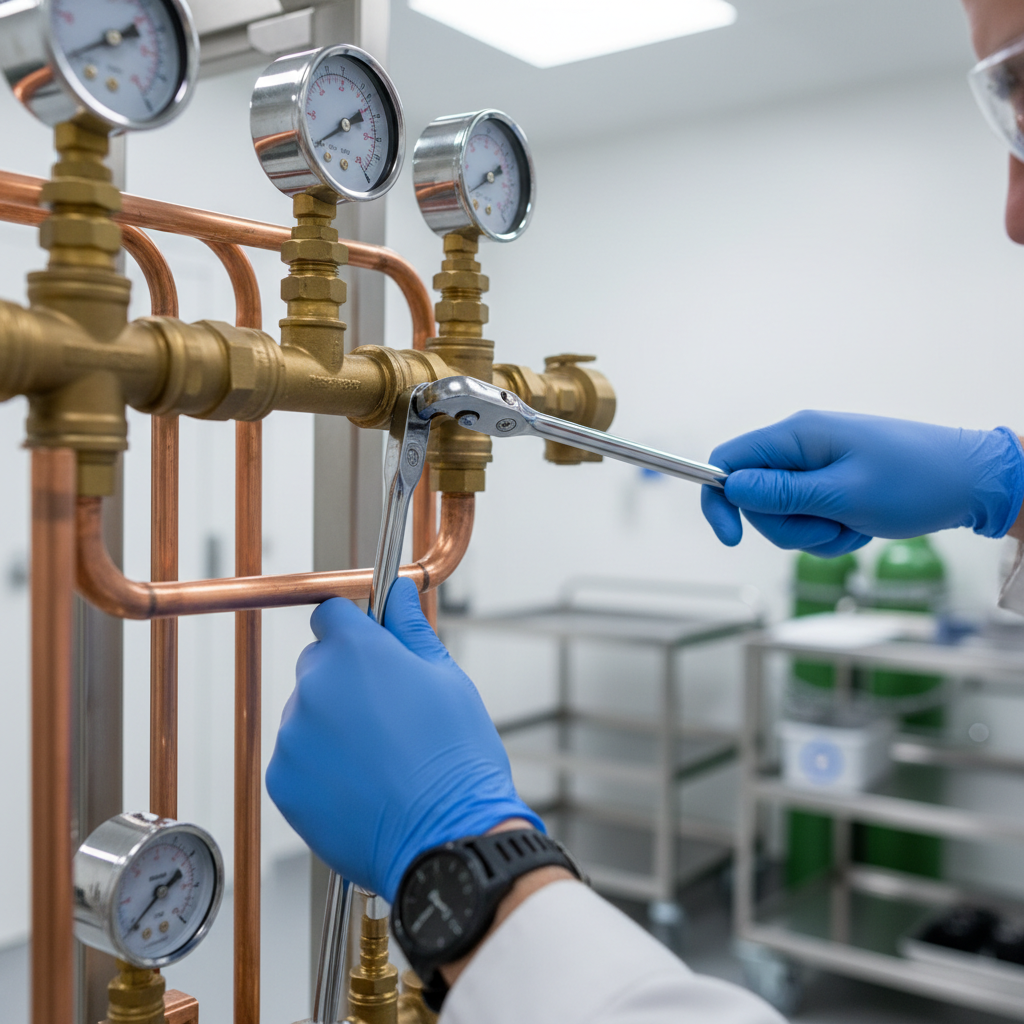
What is Medical Gas Preventive Maintenance?
Preventive maintenance (PM) is a proactive strategy involving regularly scheduled service, inspections, and component replacements to prevent equipment failure. It stands in stark contrast to "break-fix" or reactive maintenance, where service is only performed after a system has malfunctioned. For medical gas systems, a reactive approach introduces significant risks, including patient safety incidents, costly emergency repairs, and non-compliance with regulatory standards. A robust PM program, as provided by Medical Testing Solutions, ensures your equipment is always operating within manufacturer and code-specified parameters, maximizing uptime and safety.
Core Systems Covered in a Lakeland Maintenance Plan
A comprehensive medical gas maintenance plan goes far beyond a simple inspection. It involves hands-on service of the core equipment that generates and distributes the gases. For facilities in Lakeland, FL, a typical PM contract focuses on three critical areas.
Medical Vacuum and Air Compressor Source Equipment
The "heart and lungs" of your medical gas system, vacuum pumps and air compressors, are complex machines that run for thousands of hours a year.
Key Maintenance Tasks:
- Oil and Filter Changes: Regular changing of lubricating oil and coalescing filters is crucial to prevent overheating and contamination.
- Belt Inspection and Tensioning: Drive belts on rotary vane or claw-style pumps and compressors wear down over time. Proper tensioning and timely replacement are vital.
- Motor and Bearing Lubrication: Prevents premature failure of the electric motors driving the equipment.
- Performance Monitoring: Technicians check run-time hours, temperature, and pressure outputs to spot trends that may indicate a developing issue.
Medical Gas Manifold Systems
Manifolds are the control centers for your cylinder gases, ensuring an uninterrupted supply by automatically switching from the primary bank to the secondary bank. Their failure can lead to a complete loss of a specific gas.
Key Maintenance Tasks:
- Regulator and Valve Checks: Ensuring that primary and final-line regulators are providing the correct, stable pressure.
- Leak Detection: Using specialized equipment to check for minute leaks at all connection points, which can be costly and dangerous.
- Automatic Changeover Test: Simulating a bank depletion to confirm the manifold switches over reliably and triggers the appropriate alarm signal.
- Pressure Relief Valve Inspection: Verifying these critical safety devices are not compromised and will function correctly in an over-pressure event.
Master and Area Alarm Panels
Alarms are your facility's early warning system. Per NFPA 99, they must be tested and calibrated to ensure they accurately report the status of your medical gas systems.
Key Maintenance Tasks:
- Sensor Calibration: Verifying that pressure switches and sensors are accurate and trigger at the correct set-points.
- Signal Integrity Test: Activating a sensor to ensure the signal travels correctly to the master alarm panel and that the visual and audible indicators work as intended.
- Module Inspection: Visually inspecting alarm components for any signs of damage or loose connections.
NFPA 99 Requirements for Medical Gas Maintenance
The National Fire Protection Association (NFPA) 99, "Health Care Facilities Code," is the primary standard governing medical gas systems in the United States. It isn't just a guideline; it carries the force of law in most jurisdictions, including Florida.
Chapter 5 of NFPA 99 mandates that all medical gas and vacuum systems "shall be maintained in a safe, nonabusive, and reliable manner." It explicitly requires a "scheduled maintenance program" for the source equipment, including compressors, vacuum pumps, and manifolds. Furthermore, all maintenance activities, from routine checks to major repairs, must be documented and records must be retained.
Why this matters for compliance: Accrediting organizations like The Joint Commission (TJC) and DNV GL survey directly to NFPA 99 standards. A lack of a documented, ongoing medical gas maintenance services program is a frequent finding during surveys. Failing to produce maintenance logs can jeopardize a facility’s accreditation and lead to costly corrective action plans. Meticulous documentation provided by a professional vendor is your proof of compliance.
A Proactive Approach: Maintenance Contracts vs. Break-Fix Repairs
Facilities essentially have two choices for maintaining their equipment: establish a preventive maintenance contract or call for service only when something breaks. For a life-critical system, the choice is clear. A PM contract provides predictability in both cost and performance, mitigating the risks associated with unexpected failures.
Here’s a comparison of the two approaches:
| Feature | Preventive Maintenance Contract | On-Demand "Break-Fix" Repair |
|---|---|---|
| Cost | Predictable, budgeted annual or quarterly fee | Unpredictable, often high-cost emergencies |
| Uptime | Maximized; issues found before they cause failure | High risk of unplanned downtime |
| Compliance | Continuously assured with documentation | Inconsistent; documentation may be lacking |
| Response Time | Priority service as per contract | Variable, depends on technician availability |
| Equipment Life | Extended through regular care | Shortened due to stress and catastrophic failure |
Choosing a Qualified Medical Gas Maintenance Provider in Lakeland
Not just any mechanical contractor is qualified to work on these specialized systems. When selecting a partner for medical gas maintenance, credentials and experience are paramount.
Look for a company whose technicians are credentialed to ASSE 6040 (Medical Gas Systems Maintenance Personnel). This certification demonstrates that the individual has passed a rigorous exam on the specific maintenance procedures and NFPA 99 requirements for medical gas equipment. It is the gold standard for maintenance technicians.
As a leading statewide provider, Medical Testing Solutions ensures all its field technicians hold the appropriate ASSE credentials, from ASSE 6010 certified installations and medical gas verification to maintenance. We are a single-source partner for the full lifecycle of your medical gas systems.
Secure Your Facility's Compliance and Safety Today
Your medical gas systems are too important to be left to chance. A proactive, compliant maintenance program is an investment in patient safety, operational stability, and financial predictability. The team at Medical Testing Solutions has provided expert annual medical gas inspections and maintenance services to healthcare facilities across Florida for years.
If you manage a hospital, surgery center, or dental clinic in the Lakeland, FL area, contact us to discuss your specific needs. We will develop a maintenance program tailored to your facility’s equipment and budget. Call us today at +1 (754) 315-1078 or Request a quote online to get started. '''
Frequently Asked Questions
A preventive maintenance program is a scheduled plan of proactive service for medical gas equipment like pumps, compressors, and manifolds. It aims to prevent failures, ensure compliance with NFPA 99, and maximize equipment life, rather than just reacting to problems.
NFPA 99 dictates that a scheduled maintenance program must be in place. The exact frequency is determined by the manufacturer's recommendations, equipment usage, and the facility’s risk assessment. Typically, major source equipment is serviced on a quarterly or semi-annual basis.
Only technicians with specialized training and certification should perform maintenance. The ASSE 6040 credential is the nationally recognized standard for Medical Gas Systems Maintenance Personnel, ensuring they understand the unique risks and procedures involved.
A comprehensive plan covers all central source equipment, including medical air compressors, vacuum pumps, instrument air systems, and gas manifolds. It also includes functional testing of all associated master and area alarm panels.
Documentation provides a historical record of your equipment's health and is your primary proof of compliance with NFPA 99 standards for accrediting organizations like The Joint Commission. Detailed logs are crucial during any facility survey.
Request a quote for your facility
Talk with Medical Testing Solutions about your next inspection, repair or equipment request.