Medical Gas Maintenance in Key West, FL: A Guide to NFPA 99 Compliance
Medical Testing SolutionsJune 25, 20267 min read
Share
Medical gas systems are a fundamental component of patient care, as vital as electricity and water. From operating rooms to patient bedsides, the reliable delivery of oxygen, medical air, nitrous oxide, and vacuum is critical for life-sustaining treatments. For hospital administrators and facility managers in Key West, Florida, the failure of these systems is not an option. This is where a proactive, documented, and compliant medical gas maintenance program becomes essential.
This comprehensive guide explores the critical aspects of medical gas maintenance, as outlined by the National Fire Protection Association (NFPA) and ASSE International standards. We will detail the core components of a maintenance program, explain the benefits of a preventive maintenance contract, and outline what to look for in a certified service provider. Understanding these elements is the first step toward ensuring your facility is safe, compliant, and always prepared.
What is Medical Gas System Maintenance?
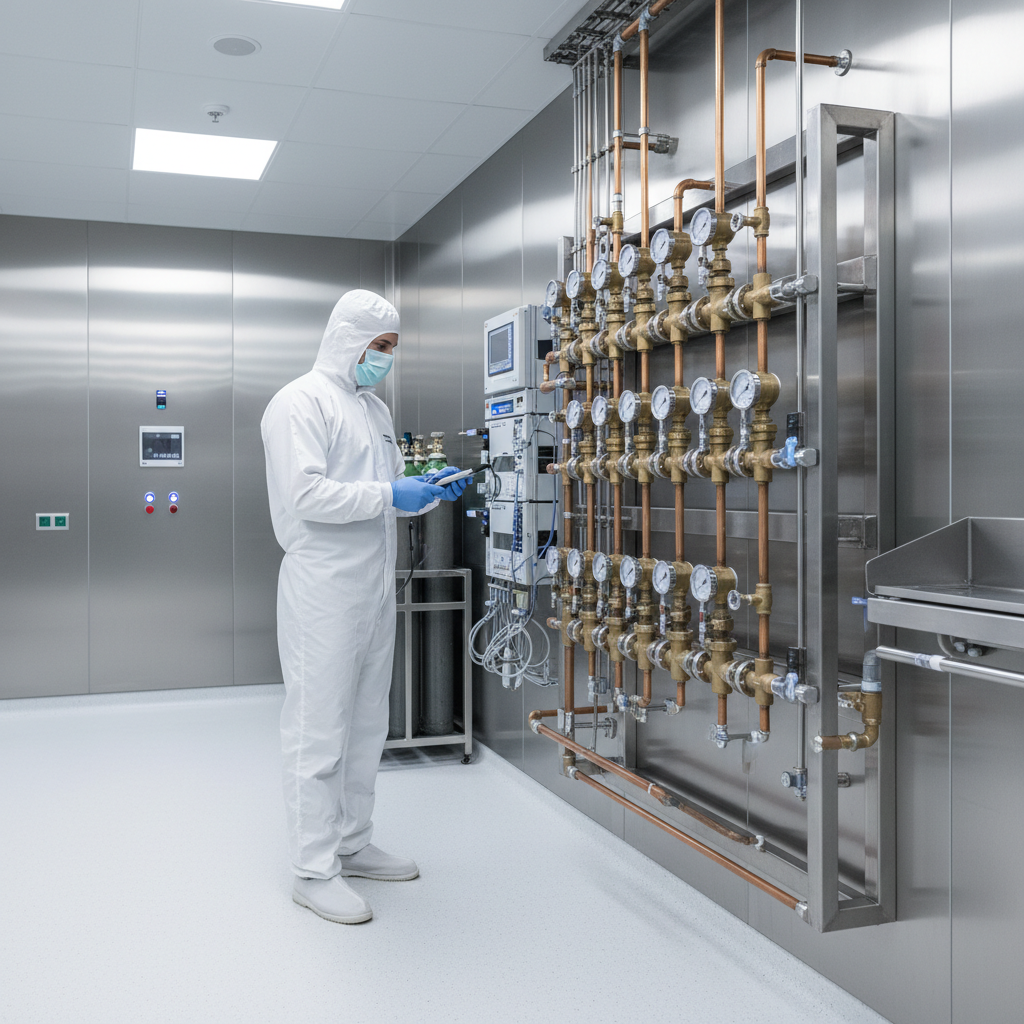
Medical gas maintenance is the scheduled, preventive care, inspection, and repair of a facility's entire medical gas infrastructure. It goes far beyond simply fixing problems as they arise. A proper maintenance program, as defined by NFPA 99, Health Care Facilities Code, involves a series of documented procedures to ensure the system consistently performs as intended, from the source equipment to the patient-use outlets.
A complete system includes:
Source Equipment: The heart of the system, including medical air compressors, vacuum pumps, and cryogenic or high-pressure manifolds that supply the facility.
Pipeline Distribution System: The network of specialized copper piping that carries gases and vacuum from the source to various points of use.
Control Valves: Sectional valves that allow portions of the system to be isolated for maintenance or in an emergency.
Alarms and Warning Systems: The critical nerve center that monitors system pressure and operational status, providing audible and visual warnings of any irregularities as required by NFPA 99 (5.1.9).
Terminal Units: The outlets and inlets in patient rooms and operating areas where medical devices are connected.
Proactive maintenance ensures every one of these components functions correctly, preventing failures that could jeopardize patient safety and lead to costly emergency repairs.
Core Components of an NFPA 99-Compliant Maintenance Program
A robust maintenance program is systematic and documented. It should be based on the equipment manufacturer's instructions, NFPA 99 guidelines, and a facility-specific risk assessment. Here are the primary areas of focus.
Source Equipment: Pumps, Compressors, and Manifolds
The "lungs" of your medical gas system require diligent attention. Failure here means a facility-wide outage.
Medical Air Compressors: Technicians check oil levels, change filters, test for lubricant carry-over, inspect belt tension, and monitor air quality and dew point levels to ensure the delivered air is clean and dry.
Vacuum Pumps: Maintenance involves checking oil levels, inspecting filters and exhaust lines, and verifying proper vacuum levels and pump performance.
Manifolds (Oxygen, Nitrous Oxide, etc.): For both cryogenic and high-pressure systems, maintenance includes leak checks, pressure gauge calibration, and function testing of automatic changeover mechanisms to ensure a seamless switch from the primary to the secondary cylinder bank.
Pipeline, Valves, and Distribution System
The integrity of the distribution network is crucial for safe and effective delivery.
Pipeline Purity & Integrity: While the pipeline itself is largely static, it must be protected from damage and contamination. A maintenance program includes visual inspections for damage, proper labeling (gas type and flow direction), and ensuring support brackets are secure.
Valves: All main, riser, and zone valve boxes must be verified for accessibility and proper operation. During scheduled shutdowns or new construction tie-ins, these valves are tested to ensure they close tightly.
Alarms and Warning Systems
Alarms are your first and most critical line of defense against system failure. Per NFPA 99 (5.1.9), all master, area, and local alarm systems must be regularly tested. This involves electronically simulating a fault condition (e.g., high pressure, low pressure) to verify that the audible and visual annunciators activate correctly at the source, at the master alarm panels (e.g., engineering office), and at the area alarm panels (e.g., nurses' station).
Outlets, Inlets, and Terminal Units
These are the most frequently used parts of the system and are subject to wear and tear. Maintenance includes:
Flow and Pressure Verification: Ensuring each outlet provides the proper gas at the specified pressure.
Gas-Specific Keying: Physically testing that a device for one gas type (e.g., an oxygen flowmeter) cannot be accidentally connected to an outlet for a different gas (e.g., medical air). This is a critical patient safety feature.
Leak Testing: Checking the outlet for any leaks when in use or not.
While a comprehensive risk assessment dictates exact frequencies, NFPA 99 provides a baseline for a compliant program. Medical Testing Solutions develops custom maintenance plans based on these requirements.
Maintenance Task
Typical Frequency
NFPA 99 Reference (2021 Ed.)
Medical Air Quality Test
Annually
5.1.3.5.11
Inspect Source Equipment
Per Manufacturer / Daily
5.1.1.4, 5.1.3.5
Test Alarm Systems
Per Facility Risk Assessment
5.1.9
Check Manifold Changeover
Per Manufacturer / Monthly
5.1.3.3.3.4
Outlet/Inlet Function & Flow
Per Facility Risk Assessment
5.1.12
Inspect Zone Valve Boxes
Per Facility Risk Assessment
5.1.4.3
Why this matters for compliance: Authorities Having Jurisdiction (AHJs) like The Joint Commission (TJC) and the Florida Agency for Health Care Administration (AHCA) survey directly against NFPA 99 standards. Failure to produce detailed and accurate maintenance logs is a common and serious finding that can jeopardize accreditation and patient safety.
The Role of the ASSE 6040 Certified Technician
Performing maintenance on medical gas systems is not a job for a general mechanic. It requires specialized expertise. ASSE 6040: Medical Gas Systems Maintenance Personnel certification is the industry standard for professionals qualified to perform this work.
An ASSE 6040 certified technician has demonstrated proficiency in:
All aspects of medical gas system maintenance.
Understanding and applying NFPA 99 requirements.
Safety procedures for handling high-pressure gases and electrical equipment.
Proper documentation and record-keeping.
Partnering with a provider that employs credentialed technicians is non-negotiable. Medical Testing Solutions is proud to employ a team of ASSE 6040 certified professionals, ensuring that all medical gas maintenance services are performed to the highest standards of safety and competence.
Benefits of a Preventive Maintenance Contract for Key West Facilities
For busy healthcare facilities in Key West and the Florida Keys, managing an in-house maintenance program can be a significant burden. A preventive maintenance contract with a specialized provider offers numerous advantages:
Ensured Patient Safety: Guarantees that life-support systems are always in a state of readiness.
Regulatory Compliance: Provides the documentation and proof of maintenance needed to pass any TJC or AHCA survey.
Long-Term Cost Savings: Prevents catastrophic failures and the high cost of emergency repairs and system downtime.
Extended Asset Life: Proper care extends the operational lifespan of expensive source equipment like pumps and compressors.
Expert Resource: Gives your team access to certified experts who can advise on repairs, upgrades, and compliance changes.
Peace of Mind: Frees your staff to focus on patient care and other facility management duties.
Choosing a Medical Gas Maintenance Provider in South Florida
When selecting a partner for this critical task, look for a company with a proven track record. Your provider should offer comprehensive services that cover the entire lifecycle of a medical gas system, from ASSE 6010 installation and ASSE 6030 verification to ongoing maintenance and certification.
Medical Testing Solutions, headquartered in Fort Lauderdale, has been a leading provider of medical gas services for facilities throughout South Florida, including Key West. Our deep understanding of NFPA codes and experience with local AHJs makes us an ideal partner for ensuring your facility's safety and compliance.
Secure Your Facility's Future: Contact Us Today
Your medical gas systems are too important to leave to chance. A proactive, professional maintenance program is the only way to ensure patient safety, maintain compliance, and protect your critical infrastructure. Don't wait for a system failure or a negative survey finding to take action.
Protect your patients and your Key West facility's compliance. Contact Medical Testing Solutions today for a comprehensive quote on a medical gas maintenance contract. Call our experts at +1 (754) 315-1078 or request a free quote online to get started.
'''
Frequently Asked Questions
The frequency depends on the specific component, the manufacturer's recommendations, and your facility's risk assessment. However, NFPA 99 outlines minimum schedules and tasks that must be performed. A qualified provider can help you create a custom, compliant schedule.
Inspection is typically a visual check for condition and labeling. Testing is a physical challenge of a component to verify it functions correctly (e.g., testing an alarm). Maintenance is the scheduled, hands-on work (e.g., changing oil, replacing filters) to keep equipment in optimal condition.
Only if they possess the specific qualifications and certifications required for the task, most notably an ASSE 6040 credential. Due to the specialized knowledge, tools, and liability involved, most healthcare facilities choose to outsource this to a certified third-party provider.
NFPA 99 requires that all medical gas system maintenance, repairs, and tests be meticulously documented. These logs must be detailed, accurate, and readily available for review by surveyors. This documentation is a key deliverable of any professional maintenance service.
Yes. Medical Testing Solutions proudly provides comprehensive medical gas maintenance and testing services to healthcare facilities throughout South Florida, from the Palm Beaches down to Key West and the entire Florida Keys.
Request a quote for your facility
Talk with Medical Testing Solutions about your next inspection, repair or equipment request.