For any healthcare facility in Clearwater, from a bustling hospital to a specialized dental clinic, the medical gas system is a life-sustaining utility. It's the silent, ever-present network that delivers oxygen, medical air, and other critical gases directly to patients. But like any complex mechanical system, it requires diligent, expert maintenance to ensure it operates safely, reliably, and in full compliance with national standards. This guide explains the essentials of a robust medical gas maintenance program, outlining key components, compliance requirements, and how to choose a qualified service partner.
Medical Gas Service
Compliance & Standards
Medical Gas Maintenance in Clearwater, FL: The Definitive Guide
Medical Testing SolutionsJune 24, 20266 min read
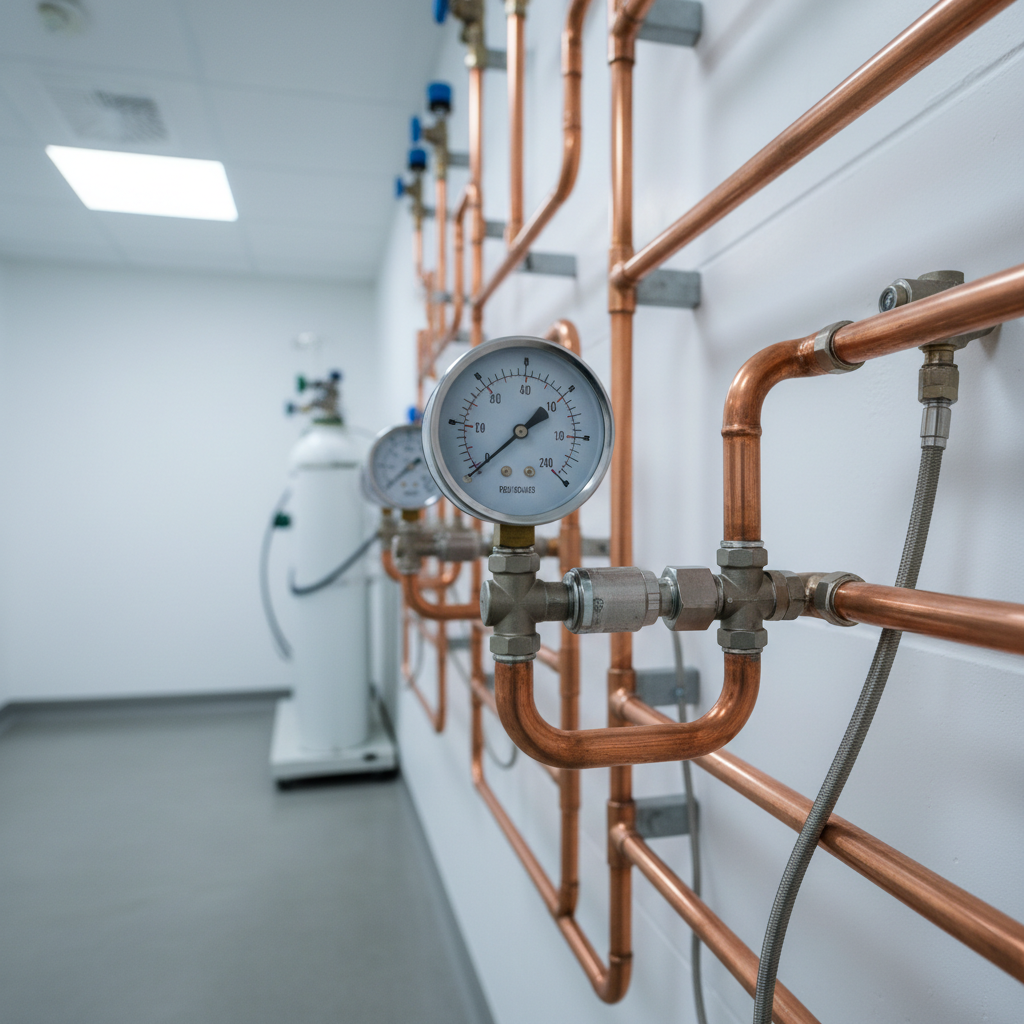
The Critical Role of Medical Gas Systems in Healthcare
A medical gas pipeline is far more than just pipes in the walls; it’s an integrated system with source equipment, distribution networks, and patient-facing delivery points. The failure of any single component can have immediate and severe consequences for patient care.
What Are Medical Gas Systems?
These systems deliver specific gases used for patient respiration, anesthesia, and powering surgical tools. Common gases include:
- Oxygen (O2): For respiratory therapy.
- Medical Air: A clean, compressed air supply used for respiratory applications.
- Nitrous Oxide (N2O): An anesthetic and analgesic agent, common in dental and surgical settings.
- Carbon Dioxide (CO2): Used for insufflation during minimally invasive surgeries.
- Vacuum/Suction: A critical utility for removing fluids and debris from the airway or surgical site.
Why Regular Maintenance is Non-Negotiable
Proactive maintenance is not simply about preventing breakdowns; it's a fundamental pillar of patient safety and regulatory compliance. The primary goals are to:
- Ensure Patient Safety: Prevent Cross-contamination, incorrect gas delivery, or system failures during procedures.
- Guarantee System Uptime: Avoid costly and disruptive emergency shutdowns.
- Extend Equipment Lifespan: Proper care reduces wear and tear on expensive components like pumps and compressors.
- Maintain Compliance: Adhere to the strict requirements of NFPA 99 and other regulatory bodies.
Core Components of Your Medical Gas System
A compliant maintenance plan must account for every part of the system, from the source to the patient. A comprehensive preventive medical gas maintenance program addresses three main areas.
1. Source Equipment: Manifolds, Pumps, and Compressors
This is the heart of the system. Maintenance here focuses on the machinery that generates or supplies the gases.
- Manifolds: These systems control the supply from high-pressure cylinders. Maintenance involves checking for leaks, verifying pressure readings, and testing the automatic changeover from the primary to the secondary bank.
- Medical Air Compressors: Technicians inspect intake filters, check oil levels and quality (for lubricated models), and verify dew point and carbon monoxide levels to ensure air purity.
- Vacuum Pumps: Service includes checking oil levels, changing filters, and testing overall system performance to ensure it can handle the facility's clinical load.
2. The Distribution Network: Piping, Valves, and Alarms
The network of pipes, valves, and sensors that transports the gases from the source to the point of use.
- Piping: While the piping itself is durable, the connections and valve boxes must be inspected for leaks.
- Zone Valve Boxes: These allow specific areas of the facility to be isolated in an emergency. They must be accessible and clearly labeled, and valves must be tested for proper operation.
- Alarm Panels: Master and area alarms are the system's nervous system. They alert staff to pressure drops, changeovers, or other critical issues. Each alarm signal must be tested to ensure it functions audibly and visually.
Why this matters for compliance: NFPA 99 (Chapter 5) provides detailed requirements for the maintenance of medical gas systems. It mandates that these systems be inspected and maintained by qualified individuals. Documented, routine maintenance by an ASSE-certified technician is your first line of defense against non-compliance and ensures a safe environment for patients.
A Proactive Approach: The Annual Medical Gas Maintenance Checklist
While requirements vary based on manufacturer specifications, a best-practice preventive maintenance program, often conducted as part of annual medical gas inspections, should be performed by an ASSE 6040 certified technician. This typically includes:
- Source Equipment Checks:
- Function testing the manifold automatic changeover.
- Verifying appropriate pressures and flows for all source systems.
- Checking fluid levels and condition in vacuum pumps and air compressors.
- Inspecting and replacing filters and belts as needed.
- Pipeline & Alarm Verification:
- Activating every master and area alarm signal to verify function.
- Verifying pressure switch and sensor settings.
- Checking labeling and accessibility of all zone valve boxes.
- Outlet & Inlet Testing:
- Testing a representative sample of outlets/inlets in each zone for flow, pressure, and leakage.
- Ensuring proper latching and gas-specific indexing.
Choosing Your Maintenance Provider: Key Differences
Not all maintenance providers are created equal. For a life-support system, specialized expertise is paramount. The team at Medical Testing Solutions has the ASSE certification and field experience that general mechanical contractors lack.
| Feature | In-House Staff (Non-Specialized) | General HVAC/Plumbing | ASSE-Certified Specialist (like MTS) |
|---|---|---|---|
| Certification | Often none specific to med gas | Varies, typically not ASSE | ASSE 6040 Certified Technicians |
| NFPA 99 Expertise | Limited / General | Limited | Deep, code-specific knowledge |
| Specialized Tools | May lack specific testers | Unlikely to have calibrated tools | Full suite of calibrated testing equipment |
| Liability & Insurance | Falls entirely on the facility | May have gaps for medical systems | Specific professional liability coverage |
| Long-Term Cost | High risk of costly repairs | Potential for incorrect repairs | Lower total cost of ownership via prevention |
Beyond Maintenance: Installation and Verification
A robust system starts with a proper foundation. The quality of the initial [medical gas system installation](/medical-gas-installation) (governed by ASSE 6010 standards) directly impacts its long-term reliability and ease of maintenance. Furthermore, after any new installation or modification to your system, a complete [medical gas verification](/medical-gas-verification) (per ASSE 6030) is required by code. This process confirms correct gas composition, purity, and pressure at every outlet before the system is used for patient care. Medical Testing Solutions is a trusted provider for both installation and verification services throughout Florida.
Ready to Ensure Compliance and Safety in Your Clearwater Facility?
Don't leave the integrity of your life-support systems to chance. The ASSE-certified team at Medical Testing Solutions provides meticulous, code-compliant medical gas maintenance for hospitals, surgery centers, and dental offices in Clearwater and across Florida. We help you build a safe, reliable, and efficient system from the ground up.
Contact us today for a comprehensive quote for a preventive maintenance contract. Call us at +1 (754) 315-1078 or fill out our [request a quote form](/request-a-quote) to speak with a specialist.
'''
Frequently Asked Questions
Per NFPA 99, maintenance should be performed according to the manufacturer's recommendations. However, a comprehensive inspection and preventive maintenance check by an ASSE 6040 certified technician should be performed at least annually.
Inspection is a systematic examination to determine if a system is operating as intended (e.g., checking alarm function). Maintenance is hands-on work to keep equipment in that condition (e.g., changing pump oil, replacing filters).
Only individuals holding an ASSE 6040 Medical Gas Maintenance Personnel certification are considered qualified to service these life-critical systems. This ensures they possess the specific training and code knowledge required by NFPA 99.
While in-house staff can handle routine visual checks, NFPA 99 requires that preventive maintenance and repairs be done by qualified, certified individuals. Using a specialized firm like Medical Testing Solutions ensures both compliance and patient safety.
Headquartered in Fort Lauderdale, Medical Testing Solutions proudly serves healthcare facilities throughout Florida, providing comprehensive services from maintenance and testing to installation and verification.
Request a quote for your facility
Talk with Medical Testing Solutions about your next inspection, repair or equipment request.