Understanding Medical Air Systems in Healthcare Facilities
Medical air is a critical life-support service in healthcare facilities, directly administered to patients for respiration. Unlike the ambient air we breathe, medical air is a manufactured product, produced on-site by specialized compressors and filtration systems. Its purity, quality, and delivery are rigorously regulated to protect vulnerable patients from contaminants. For facilities in Stuart, FL, ensuring these systems function flawlessly isn't just good practice, it's a matter of life safety and regulatory compliance. This guide will walk you through the essential requirements for medical air quality testing as mandated by the National Fire Protection Association (NFPA), specifically the NFPA 99 Health Care Facilities Code.
At its core, a medical air system comprises several key components: compressors, dryers, filters, regulators, and a distribution network of piping. Each part must work in harmony to deliver air that is free from contaminants, of the correct pressure, and reliably available. We will explore the specific tests required to verify the quality of this medical air, including checks for dew point, carbon monoxide, volatile organic compounds (VOCs), and particulates, as specified by industry standards.
The "Big Four": Critical Contaminants in Medical Air
NFPA 99 outlines specific purity requirements for medical air, focusing on the absence of contaminants that could harm patients. The four primary concerns are moisture, oil, gaseous pollutants, and particulates. Regular, certified testing is the only way to ensure your system is delivering safe, compliant medical air.
1. Dew Point (Moisture Content)
Moisture is the enemy of a medical air system. Excessive water vapor can promote bacterial growth within the pipeline and can even freeze in cold spots, causing obstructions. NFPA 99 specifies a pressure dew point limit to prevent condensation. The test ensures that the system's dryers are performing correctly, removing moisture to a level where it cannot condense into liquid form within the piping network under pressure.
2. Carbon Monoxide (CO)
Carbon monoxide is a toxic gas that can be introduced into the system if the air intake for the compressor is located near the exhaust of a running engine or if the compressor itself malfunctions and overheats, breaking down its lubricating oil. The acceptable limit for CO in medical air is extremely low (10 ppm in the U.S.).
3. Volatile Organic Compounds (VOCs) and Oil
VOCs can originate from various sources, including cleaning solvents, nearby construction, or most commonly, from the compressor's own lubricants. Oil-lubricated compressors can introduce vaporous or liquid hydrocarbons into the air stream if filtration systems fail. These contaminants pose a significant respiratory hazard. NFPA 99 sets a limit for total volatile hydrocarbons to protect patients.
4. Particulate Matter
The final physical contaminant is particulate matter. Dust, debris from construction, and wear particles from the system components can be introduced into the airstream. Multi-stage filtration is used to capture these particles down to a microscopic level. A particulate test verifies that the filtration system is intact and effective.
Why this matters for compliance: NFPA 99, Chapter 5, outlines the explicit limits for these contaminants in medical gas systems. Failure to meet these standards during an inspection can result in costly citations and require immediate remediation. Regular testing by an ASSE 6030 certified technician provides the necessary documentation to prove compliance.
The NFPA 99 Testing Process: What to Expect
When you contract a certified organization like Medical Testing Solutions for medical air system testing, our ASSE 6040 certified technicians follow a precise, multi-step process. This ensures that every aspect of your system is evaluated against the stringent requirements of the NFPA 99 code.
Key Testing Steps Include:
- Visual Inspection: Technicians inspect the compressor system, intake location, filtration, and monitoring equipment for any visible issues.
- Air Sampling: Samples are drawn from a patient outlet or a designated test port in a controlled manner.
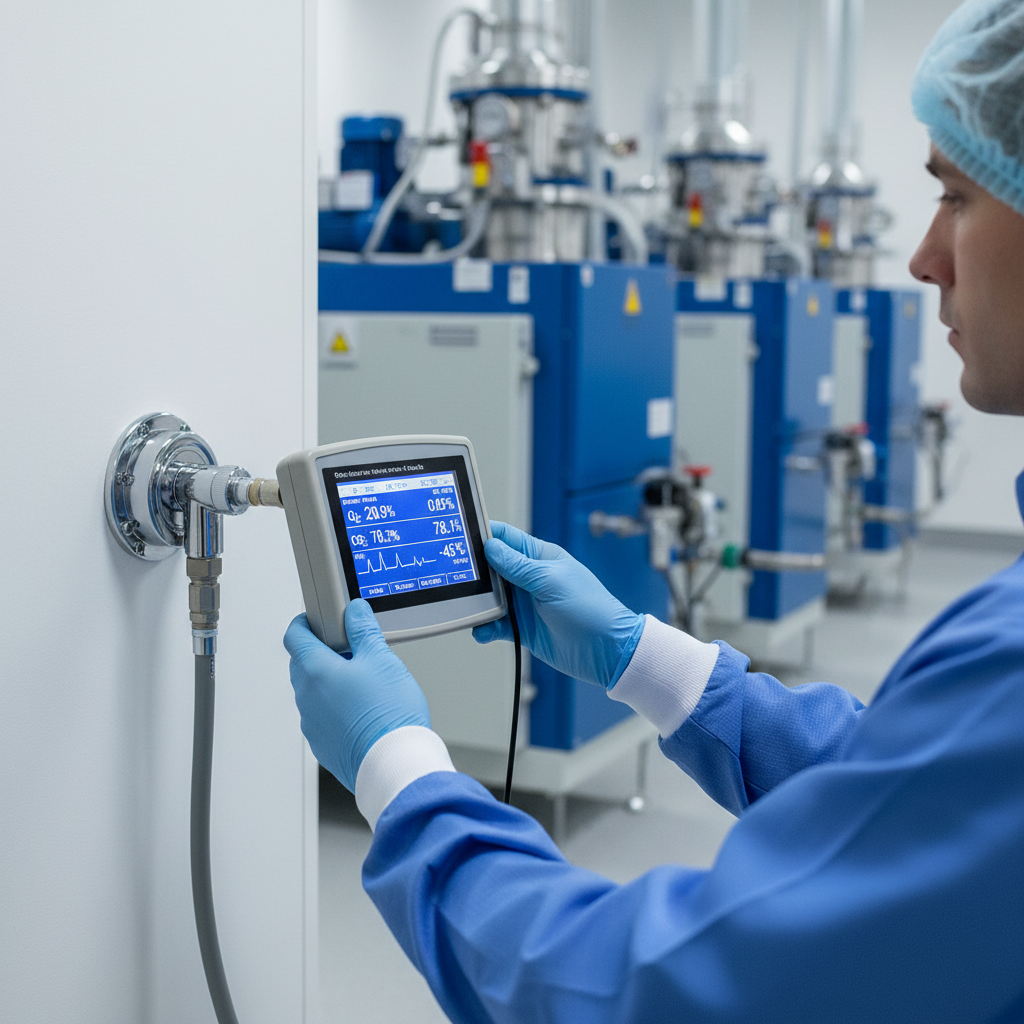
- On-Site Analysis: Using calibrated, high-precision instruments, the technician measures:
- Dew Point: To check for moisture.
- Carbon Monoxide: To detect CO levels.
- Oxygen Concentration: To ensure it is within the proper range (20.9% ± 1%).
- Total Volatile Hydrocarbons: To check for oil and VOCs.
- Particulate Test: A special filter is used to capture particulates, which are then analyzed to determine the level of contamination.
This process is part of a broader set of evaluations covered under our annual medical gas inspections, which provide a comprehensive overview of your entire medical gas infrastructure.