Medical Air System Testing in Miramar, FL: A Guide to NFPA 99 Compliance
Medical Testing SolutionsSeptember 14, 20265 min read
Share
Location: 501 E Las Olas Blvd, Ste 300, Fort Lauderdale, Florida.
Medical air is a critical utility in any healthcare facility, directly impacting patient safety and outcomes. Unlike the ambient air we breathe, medical air is a manufactured product that must meet stringent purity standards. For facilities in Miramar, Florida, ensuring the quality of your medical air system is not just a best practice, it's a regulatory requirement. This guide will walk you through the essentials of medical air system testing, why it matters, and how to comply with NFPA 99 standards.
This post will cover:
The critical differences between medical air and regular air.
The specific contaminants that must be tested for under NFPA 99.
The process for quarterly and annual medical air testing.
How to choose a qualified testing provider like Medical Testing Solutions.
What is Medical Air and Why Is It Different?
Medical air is a vital life-support service, classified by the FDA as a prescription drug. It is used for patient ventilation, respiratory treatments, and to power surgical tools. Unlike ambient air, which contains variable levels of moisture, dust, and pollutants, medical air is supplied via a dedicated, closed-loop system designed to be free of contaminants.
The National Fire Protection Association (NFPA) standard 99, Health Care Facilities Code, sets the baseline for the purity and quality of all medical gases, including air. These standards are in place to prevent severe patient harm, such as introducing contaminants into the lungs or other sensitive tissues.
Contaminants of Concern: What We Test For
NFPA 99, Table 5.1.11.1, specifies the maximum allowable levels for several key contaminants in medical compressed air. A failure in any of these areas can have immediate and severe consequences for patients. Our testing process targets these specific parameters:
Dew Point (Moisture): We test for excessive moisture. The dew point for medical air must be below 35°F (1.6°C) at 50 psi. High moisture can corrode equipment and foster bacterial growth within the pipeline.
Carbon Monoxide (CO): A toxic gas often produced by overheating compressor components. The limit is just 10 parts per million (ppm).
Carbon Dioxide (CO2): The allowable limit is 500 ppm. Elevated levels often point to an issue with the compressor's intake location.
Volatile Organic Compounds (VOCs): Gaseous hydrocarbons have a limit of 25 ppm. These can be introduced from cleaning solvents, exhaust fumes, or oil from the compressor itself.
Solid Particulates: Dust, debris, and other particles are measured to ensure the system's filtration is working correctly. We test for particles down to 1 micron.
The Medical Air System Testing Process
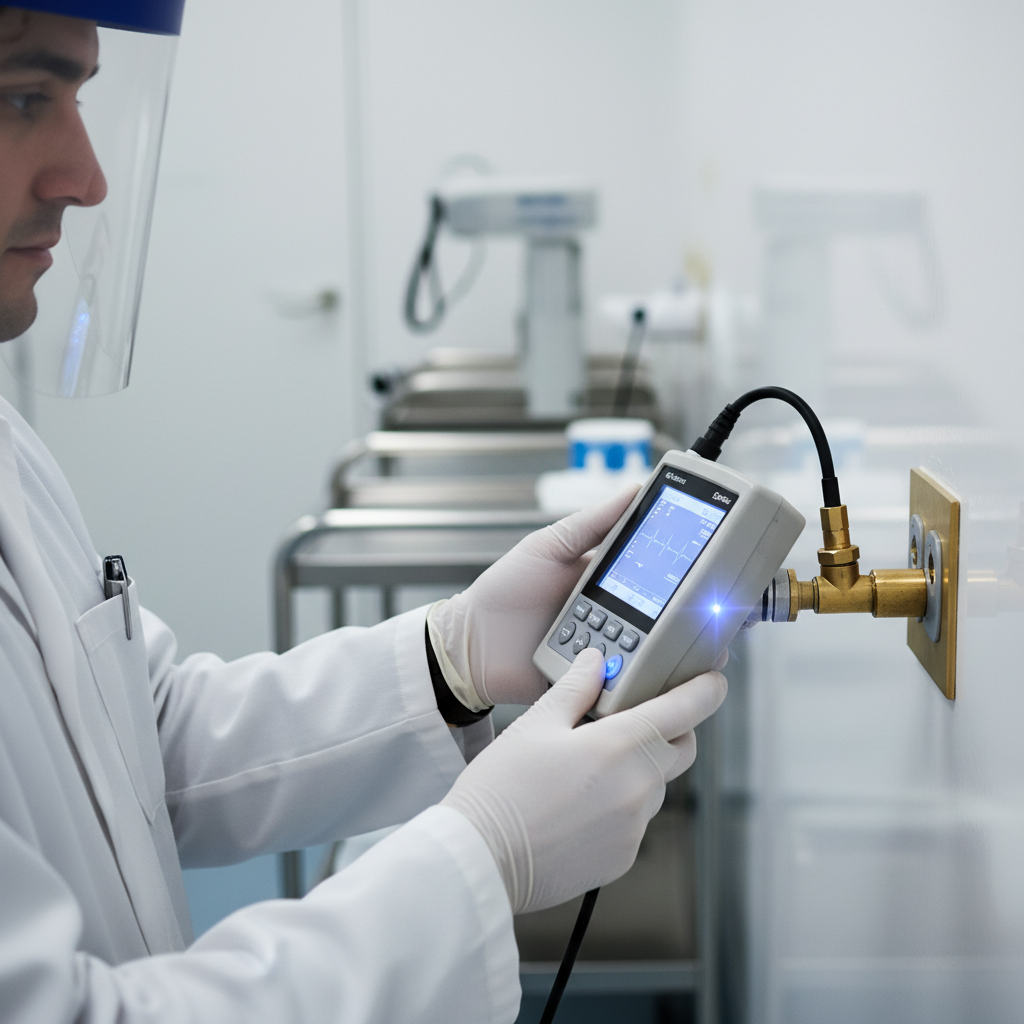
The testing process is a meticulous procedure performed by an ASSE 6030 Certified Medical Gas Verifier. It involves drawing samples from the system at designated points, typically at the source equipment and at various points of use throughout the facility.
Source Equipment Inspection: The process begins at the medical air compressor, inspecting intake location, filtration, dryers, and monitors.
Sample Collection: The verifier uses specialized, calibrated equipment to draw air samples from the system.
On-Site Analysis: Contaminants like CO, dew point, and particulates are often analyzed on-site using electronic sensors and impactor plates.
Lab Analysis (if required): Some tests for specific hydrocarbons or other trace elements may require samples to be sent to a laboratory for detailed analysis.
Reporting: Following the tests, the facility receives a detailed report outlining the results for each parameter, a pass/fail assessment, and recommendations for remediation if any issues are found.
For facilities looking to ensure their systems are in peak condition, MTS provides comprehensive medical gas maintenance services that can identify and correct issues before they lead to a failed test.
Frequency of Testing: Meeting NFPA 99 Requirements
NFPA 99 mandates a regular cadence for medical air testing. The frequency depends on whether it is a new installation or an existing system.
Initial Verification: After any new medical gas installation, a full system verification by an ASSE 6030 credentialed verifier is required before the system is used for patient care. This is a comprehensive process that tests every component of the system.
Annual Testing: Existing systems must be tested at least annually to ensure ongoing purity. This routine check is crucial for catching degradation in system performance.
After Maintenance: Testing is also required after any major repairs or modifications to the compressor or pipeline distribution system.
Why this matters for compliance: Regular, documented testing provides the necessary proof of compliance for regulatory bodies like The Joint Commission, AHCA, and DNV. Failure to produce these records can result in citations and put a facility's accreditation at risk.
Comparing Medical Air Testing Requirements
Understanding the different testing types is crucial for facility managers. Here is a comparison:
Test Type
ASSE Credential
When It Is Performed
Scope
Verification
ASSE 6030
After new construction or modification
Full system validation, purity, pressure, flow, alarms.
When selecting a company for your medical air system testing, credentials are non-negotiable. Only individuals holding an ASSE 6030 Medical Gas Verifier certification are qualified to perform purity testing and system verification. Medical Testing Solutions employs a team of certified professionals who are experts in NFPA 99 and the unique challenges of healthcare facilities in South Florida.
Our team not only performs testing but also offers medical gas certification to ensure your staff and facility meet all required standards.
Secure Your Compliance and Patient Safety Today
Your medical air system is a lifeline. Ensuring its purity and reliability is a fundamental responsibility. Don't leave your facility's compliance and patient safety to chance. The certified experts at Medical Testing Solutions have the expertise and equipment to provide accurate, reliable medical air system testing for facilities throughout Miramar and South Florida.
Contact us today to schedule your annual inspection or to get a quote for system verification. Call our team directly at (754) 315-1078 or request a quote online to ensure your facility is safe and compliant.
Frequently Asked Questions
High dew point (moisture) is a frequent issue, often caused by malfunctioning or undersized refrigerant dryers. Contaminants from a poorly located compressor intake (e.g., near vehicle exhaust) are also a common problem.
A routine annual test for a small to medium-sized facility can typically be completed in 2-4 hours. A full system verification after new construction takes significantly longer.
The testing provider will issue a report detailing the failure and recommending corrective actions. The system should not be used for patient care until the issue is resolved and the system has been re-tested and passed.
No. NFPA 99 requires that medical gas testing and verification be performed by a qualified, third-party ASSE 6030 certified verifier. This ensures an unbiased and accurate assessment.
Request a quote for your facility
Talk with Medical Testing Solutions about your next inspection, repair or equipment request.