Medical air is not just compressed air; it's a critical life-support service classified as a drug by the FDA. For healthcare facilities in Doral, Florida, ensuring the purity and integrity of the medical air supply is a matter of patient safety and regulatory compliance. A compromised medical air system can introduce contaminants, moisture, or incorrect gas concentrations, posing significant risks to patients. This comprehensive guide explains the critical requirements for medical air system testing as mandated by NFPA 99. You will learn what contaminants are tested for, the standards that govern air quality, the testing process, and how to ensure your facility remains compliant and prepared for inspections.
Medical Gas Service
Compliance & Standards
Medical Air System Testing in Doral, FL: A Guide to NFPA 99 Compliance
Medical Testing SolutionsSeptember 14, 20267 min read
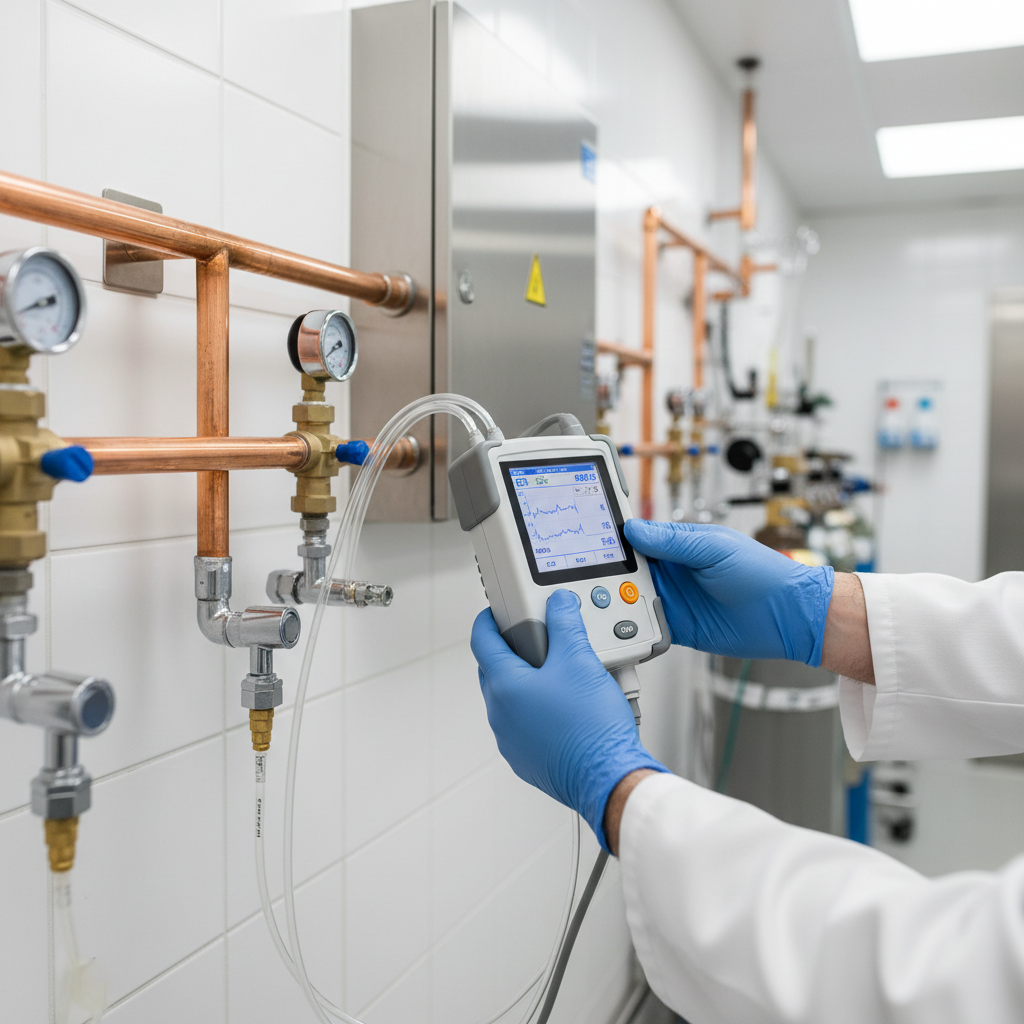
What is a Medical Air System?
A medical air system is a dedicated, self-contained system designed to supply clean, compressed air for medical and surgical applications. Unlike general-purpose compressed air, medical air must meet stringent purity standards because it is used for ventilation, as a carrier gas for anesthesia, and for various other patient applications.
These systems typically consist of:
- Compressors: The heart of the system, which draws in and compresses ambient air.
- Dryers and Filters: A series of components designed to remove moisture (dew point), oil, and particulate matter.
- Monitors: Alarms and sensors that continuously monitor for carbon monoxide (CO), dew point, and system pressure.
- Receivers: Tanks that store the compressed air.
- Piping Distribution Network: A dedicated network of pipes, typically copper, that delivers the air to patient care areas.
Because these systems are complex, regular testing by qualified professionals is not just recommended, it's required. Medical Testing Solutions provides ASSE 6030 certified verification and testing for facilities throughout South Florida, including Doral.
NFPA 99: The Standard for Medical Air Quality
The National Fire Protection Association (NFPA) sets the benchmark for healthcare safety. NFPA 99, Health Care Facilities Code, is the primary standard governing medical gas and vacuum systems, including medical air. Chapter 5, "Gas and Vacuum Systems," outlines the specific requirements for the installation, monitoring, and testing of these critical systems.
For medical air, the code specifies maximum allowable levels for various contaminants. Testing ensures that the air delivered to the patient is safe and free from harmful substances that could be introduced by the compressor system or the surrounding environment.
Why this matters for compliance: Failure to adhere to NFPA 99 can result in failed inspections, costly remediation, and potential loss of accreditation from bodies like The Joint Commission (TJC). More importantly, it can directly endanger patient lives. Regular, documented testing is your primary evidence of compliance.
Key Parameters in Medical Air Quality Testing
When an ASSE 6040 Certified Medical Gas Verifier tests a medical air system, they are analyzing the air for several specific characteristics and contaminants as required by NFPA 99. This process is a core component of a comprehensive medical gas verification service.
1. Dew Point (Moisture Content)
Moisture is the enemy of a medical air system. Excess water can foster microbial growth (like bacteria and mold) within the pipelines and potentially lead to patient infections. It can also cause corrosion and damage sensitive medical equipment, such as ventilators and anesthesia machines.
- NFPA 99 Requirement: The pressure dew point must be maintained at or below 35°F (1.7°C) at 50 psi. This low dew point ensures that water remains in a vapor state and does not condense into liquid form within the piping.
2. Carbon Monoxide (CO)
Carbon monoxide is a toxic gas that can be introduced into the system if the air compressor intake is located near the exhaust of a running engine or if the compressor itself overheats and lubricant breaks down. CO is odorless and colorless, making it impossible to detect without specialized equipment.
- NFPA 99 Requirement: The maximum allowable concentration of CO is 10 parts per million (ppm).
3. Volatile Organic Compounds (VOCs) & Gaseous Hydrocarbons
This category includes a wide range of oil vapors and other hydrocarbons that can be introduced by oil-lubricated compressors or from ambient air contamination. Inhaling these vapors can cause respiratory irritation and other adverse health effects.
- NFPA 99 Requirement: Total gaseous hydrocarbons (as methane) are limited to 25 ppm.
4. Particulate Matter
Dust, debris, and other solid particles can be drawn in by the compressor or generated within the system. These particulates can clog equipment and, if they reach the patient, cause serious respiratory issues.
- NFPA 99 Requirement: The system must be filtered to 0.01 micron. Particulate testing ensures the filtration system is performing as designed.
The Medical Air System Testing Process
Testing must be performed by an individual certified to the ASSE 6000 series standard, typically an ASSE 6030 Verifier. The process involves several steps:
- System Assessment: The technician reviews the facility's system, including the type of compressor (e.g., oil-less, oil-lubricated), the location of the intake, and the filtration setup.
- Sample Collection: The verifier draws air samples from a designated outlet, typically one that is representative of the entire system.
- On-Site Analysis: Using calibrated, high-precision instruments, the technician measures the concentration of contaminants.
- Documentation: A detailed report is generated that documents the findings for each tested parameter, indicating a "Pass" or "Fail" status. This documentation is crucial for audits and accreditation surveys.
Medical Testing Solutions offers comprehensive annual medical gas inspections that include full-panel air quality testing for Doral-area hospitals, surgery centers, and dental offices.
NFPA 99 Contaminant Limits for Medical Air
This table summarizes the key thresholds for medical air purity as defined in NFPA 99. Your testing provider must use equipment capable of accurately measuring these levels.
| Contaminant/Parameter | NFPA 99 Limit (USP) | Potential Source |
|---|---|---|
| Carbon Monoxide (CO) | ≤ 10 ppm | Compressor intake, lubricant breakdown |
| Dew Point @ 50 psi | ≤ 35°F (1.7°C) | Ineffective dryers, ambient humidity |
| Gaseous Hydrocarbons (as methane) | ≤ 25 ppm | Oil-lubricated compressors, intake air |
| Halogenated Hydrocarbons | ≤ 2 ppm | Cleaning solvents, degreasers |
| Liquid Hydrocarbons (Oil) | No detectable liquid | Compressor failure, filter bypass |
| Solid Particulates | Filtered to 0.01 micron | Ambient air, system debris |
When is Medical Air Testing Required?
Testing is not a one-time event. NFPA 99 mandates testing at several key moments:
- After new installation: Before a new medical gas system is placed into service, it must be verified by a third-party ASSE 6030 verifier. This is a crucial step in any medical gas installation project.
- After modification or repair: If any part of the source equipment or main distribution lines is modified, the system must be re-verified.
- Periodically: The Joint Commission and other authorities having jurisdiction (AHJs) typically require periodic air quality testing, often annually. Proactive testing is a best practice for risk management.
Choosing a Certified Testing Provider in Doral, FL
When selecting a company for your medical air system testing, expertise and certification are non-negotiable. Ensure your provider meets the following criteria:
- ASSE 6040 Certified: The technician performing the test must hold a current ASSE 6040 Medical Gas Verifier certification.
- Calibrated Equipment: The provider must use and maintain regularly calibrated, high-sensitivity testing equipment.
- Comprehensive Reporting: The final report should be clear, detailed, and suitable for submission to regulatory bodies.
Medical Testing Solutions is a premier provider of ASSE-certified medical gas services in Doral and across Florida. Our technicians are highly trained, insured, and committed to the highest standards of safety and accuracy.
Secure Your Compliance and Patient Safety Today
Ensuring your medical air system is clean, dry, and compliant is a fundamental responsibility for any Doral healthcare facility. Don't leave patient safety to chance. Partner with a certified, experienced team to protect your patients, your equipment, and your accreditation.
Contact Medical Testing Solutions today for a free consultation and quote for your medical air system testing needs. Call us at (754) 315-1078 or request a quote online to schedule your service.
Frequently Asked Questions
Testing is required after a new installation or modification. For ongoing compliance, most accrediting organizations recommend annual testing. Some risk assessments may suggest a more frequent schedule based on system age and performance.
If a test fails, the source of the contamination must be identified and corrected immediately. This could involve repairing the compressor, replacing filters, or relocating the air intake. The system must then be re-tested and pass before being used for patient care. Our team can assist with diagnostics and maintenance services.
No. Medical air compressors must be specifically designed for this purpose, with features like specialized filtration, monitoring systems, and often oil-free designs to meet the stringent requirements of NFPA 99.
An ASSE 6020 Inspector is qualified to inspect the installation of the piping network. An ASSE 6030 Verifier conducts the final system tests, including air quality testing, to ensure it is safe to use for patients. The verifier is the one who performs the contaminant tests discussed in this article.
Request a quote for your facility
Talk with Medical Testing Solutions about your next inspection, repair or equipment request.