Medical Air Compressor: A Guide to Sizing, NFPA 99 & System Design
Medical Testing SolutionsJune 20, 20268 min read
Share
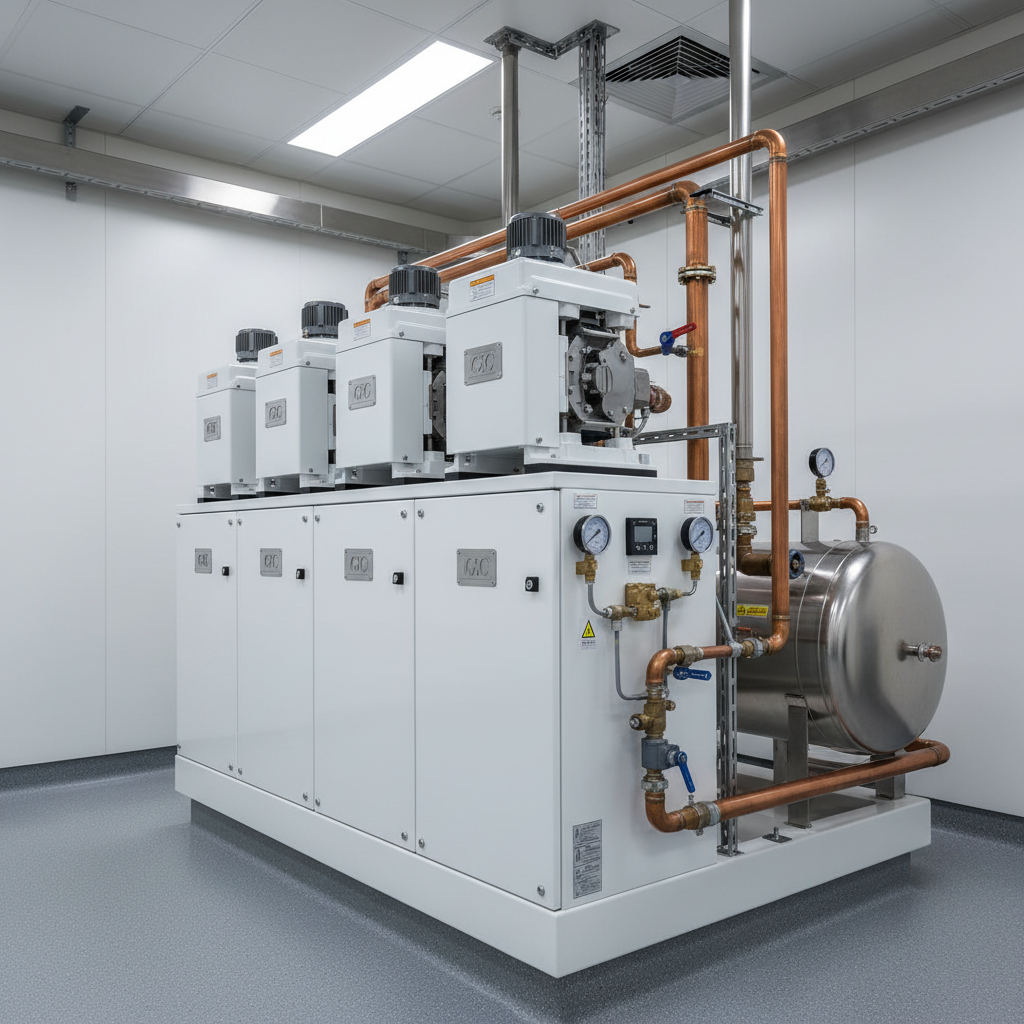
A medical air compressor is the heart of a facility's medical gas system, a life-sustaining utility that provides breathable, contaminant-free air for patient respiration and powers critical medical devices. Unlike a standard industrial compressor, a medical air source is a highly-engineered system designed and built to meet the stringent purity and reliability standards of the National Fire Protection Association (NFPA). Proper sizing, configuration, and maintenance are not just matters of operational efficiency, they are fundamental to patient safety and regulatory compliance.
This guide provides a definitive overview for hospital facility managers, engineers, and procurement specialists. You will learn the critical principles of medical air compressor sizing, the non-negotiable requirements of NFPA 99, the differences between system configurations like duplex and triplex, and the essential components like dryers and filters that ensure the air is safe for patient use.
What Differentiates a "Medical" Air Compressor?
Standard air compressors are designed for powering tools and industrial processes, where trace amounts of oil, moisture, and particulate are often acceptable. Medical air, however, is a patient-consumed product. The key difference lies in the compressor's design and the extensive ancillary components mandated to ensure the air delivered to patient outlets is clean, dry, and free of contaminants.
According to NFPA 99, Health Care Facilities Code, medical air must be:
Oil-Free: Delivered from a compressor designed to not add any oil to the airstream.
Dry: Cooled and dried to a specific pressure dew point to prevent moisture.
Filtered: Passed through a series of filters to remove particulates and potential contaminants.
Reliable: Sourced from a system with built-in redundancy to ensure continuous operation, even if a primary component fails.
This is why a medical air "plant" or "system" is more than just the compressor pump itself; it's an integrated package of machinery and monitoring equipment working together.
Decoding NFPA 99 Requirements for Medical Air Systems
NFPA 99 is the foundational code governing medical gas systems in the United States. For medical air, the code outlines specific requirements for the source equipment, pipeline, and alarms to ensure uninterrupted delivery of compliant air. The most critical requirements for the compressor system itself are found in Chapter 5, "Gas and Vacuum Systems."
Key NFPA 99 mandates include:
Redundancy (NFPA 5.1.3.5.5): The system must be "sized to serve the peak calculated demand with the largest single compressor out of service." This is the basis for duplex, triplex, and quadraplex configurations. For example, a duplex system must have each of its two compressors capable of handling 100% of the facility's peak demand.
Contaminant Prevention: The code requires specific components to purify the air, including an aftercooler, a receiver, air dryers, and a series of filters (for particles, liquid, and odors). It also mandates a very low moisture level, requiring a pressure dew point of 35°F (1.7°C) at 50 psi.
Monitoring & Alarms (NFPA 5.1.9): Local alarms at the source equipment are required for issues like high temperature and backup compressor activation. Master alarms must alert staff elsewhere in the facility to system issues, ensuring a rapid response. Carbon monoxide (CO) monitors are also required to continuously check the quality of the ambient air being drawn into the system.
Why this matters for compliance: Failure to meet NFPA 99 standards can result in costly project delays, failed inspections, and significant patient safety risks. Working with a company that provides ASSE 6030 medical gas verification is essential to certify that your system is compliant before it goes into service. Medical Testing Solutions offers comprehensive verification services to ensure your facility meets or exceeds all code requirements.
How to Correctly Size a Medical Air Compressor
Sizing is the most critical decision in designing a medical air system. Undersizing leads to pressure drops, inadequate flow for life-support equipment, and premature wear. Oversizing leads to high upfront costs, wasted energy, and inefficient operation.
Sizing is based on the facility's "peak calculated demand", the total amount of air (in Standard Cubic Feet per Minute, or SCFM) required if every connected device were running simultaneously. This is calculated by adding up the requirements of every medical gas outlet.
Sizing Steps:
Count the Outlets: Tally every wall and ceiling outlet designated for medical air.
Determine Usage Factor: Not all outlets are used at once. NFPA 99 Annex A provides guidance on applying a "use factor" or "diversity factor" based on the type of facility and the number of outlets. For example, a large hospital may only use 10-25% of its outlets concurrently.
Calculate Total Demand: Multiply the total number of outlets by the flow rate per outlet (a typical value is 1.5 SCFM) and then by the diversity factor.
Apply the Redundancy Rule: The final number determines the required size for each compressor in the redundant system (e.g., in a duplex system).
Facility Type
Number of Outlets
Typical Diversity Factor
Peak Demand (SCFM)
Required Compressor Size (SCFM)
Small Dental Clinic
10
100%
15
15
Surgical Center
50
50%
37.5
40
Community Hospital
200
25%
75
75-80
Large Medical Center
1000
15%
225
225
This table is for illustrative purposes only. Actual calculations must be performed by a qualified engineer.
System Configurations: Duplex, Triplex, and Quadruplex
NFPA 99's redundancy requirement leads to multi-compressor configurations. The choice depends on the facility's size and criticality.
Duplex System (Two Compressors): The most common configuration. Each compressor is sized for 100% of peak demand. They typically alternate operation to ensure even wear, with one acting as a backup.
Triplex System (Three Compressors): Each compressor is sized for 50% of peak demand. Two are required to meet the peak, leaving one as a backup. This offers greater flexibility and energy efficiency, as only the required number of compressors run.
Quadruplex System (Four Compressors): Each compressor is sized for 33% of peak demand. Three are required to meet the peak, with one in reserve. This modular approach is common in large hospitals and provides the highest level of reliability and efficiency.
Oil-Free vs. Oil-Less Technology: Scroll, Reciprocating, and Rotary Screw
The mandate for oil-free air has led to several specialized compressor technologies. The most common for modern medical applications is the oil-free scroll compressor.
Scroll Compressors: These use two interleaved spiral-shaped scrolls. One is stationary, while the other orbits around it, trapping and compressing pockets of air. They are known for being exceptionally quiet, smooth-running, and highly reliable due to having few moving parts. They are the top choice for most new medical air installations.
Oil-Free Reciprocating Compressors: These use pistons to compress air, but employ special materials like Teflon or carbon rings instead of oil for lubrication. They are a proven technology but are generally louder and have higher vibration than scroll compressors.
Oil-Less Rotary Screw Compressors: Typically used for very large facilities with high demand, these use two intermeshing screws to compress air without any oil in the compression chamber.
Compressed air leaves the pump hot, saturated with moisture, and containing particulate matter from ambient air. A multi-stage package is required to clean and dry it.
Aftercooler: The first step is to cool the hot air, which causes a large amount of water vapor to condense into liquid, which is then drained away.
Refrigerated Dryer (Optional): Some systems use a refrigerated dryer as a pre-treatment to remove bulk moisture, reducing the load on the final desiccant dryer.
Desiccant Dryer: This is the primary drying component. It uses activated alumina or other desiccant material to absorb water vapor, achieving the low dew point required by NFPA 99. The most common type is a "dual-tower" regenerative dryer, where one tower is drying the air while the other is being purged of moisture.
Filter Triad: After drying, the air passes through a final set of filters:
Particulate Filter: Removes solid particles.
Coalescing Filter: Removes any remaining liquid water or oil aerosols.
Charcoal Filter: Removes hydrocarbon vapors and odors.
Proper and routine preventative maintenance of these components is crucial for ensuring your system continues to deliver compliant medical air.
Installation and Maintenance by Certified Professionals
A medical air compressor is not a plug-and-play device. Both NFPA 99 and state health departments require that it be installed by technicians certified to the ASSE 6010 Medical Gas Systems Installer standard. This ensures that all components are correctly integrated, brazing is done properly, and the system is safe to operate.
Following installation, a full system verification must be performed by an independent third-party agency. This ASSE 6030 verification process involves rigorous testing of the entire system, from the compressor intake to the furthest patient outlet, to confirm that it meets all performance and safety requirements of the code.
Ensuring your medical air compressor system is correctly sized, installed, and maintained is fundamental to patient care and facility compliance. From selecting the right equipment to performing the final ASSE 6030 verification, the process requires deep expertise in NFPA code and system engineering.
Trust the ASSE-certified professionals at Medical Testing Solutions. We provide, install, and service industry-leading medical air systems for healthcare facilities nationwide.
Contact us today at +1 (754) 315-1078 or request a quote online to discuss your medical air needs.
'''
Frequently Asked Questions
Medical air compressors must deliver completely oil-free, dry, and pure air that is safe for patients to breathe. They are built to higher standards of reliability, featuring mandatory redundancy (duplex/triplex systems) and sophisticated monitoring alarms as required by NFPA 99.
A full system verification is required upon initial installation. After that, ongoing maintenance and testing should follow NFPA 99 guidelines and the manufacturer's recommendations. Air quality testing and annual inspections of key components like alarms and dew point monitors are standard practice.
A scroll compressor uses a quiet, orbiting scroll design with few moving parts, offering high reliability and low vibration. An oil-free reciprocating compressor uses a traditional piston design but with non-lubricated rings. Scroll technology is generally considered superior for most modern medical applications.
NFPA 99 requires a very low dew point (the temperature at which moisture will condense) to prevent microbial growth and corrosion in the medical gas pipeline. Desiccant dryers are the only type that can consistently achieve this stringent requirement, unlike standard refrigerated dryers.
No. NFPA 99 (5.1.10.11.1) mandates that the installation of medical gas systems, including the source equipment, must be performed by technicians who are certified to the ASSE 6010 standard. This is a specialized, credentialed skill.
Request a quote for your facility
Talk with Medical Testing Solutions about your next inspection, repair or equipment request.