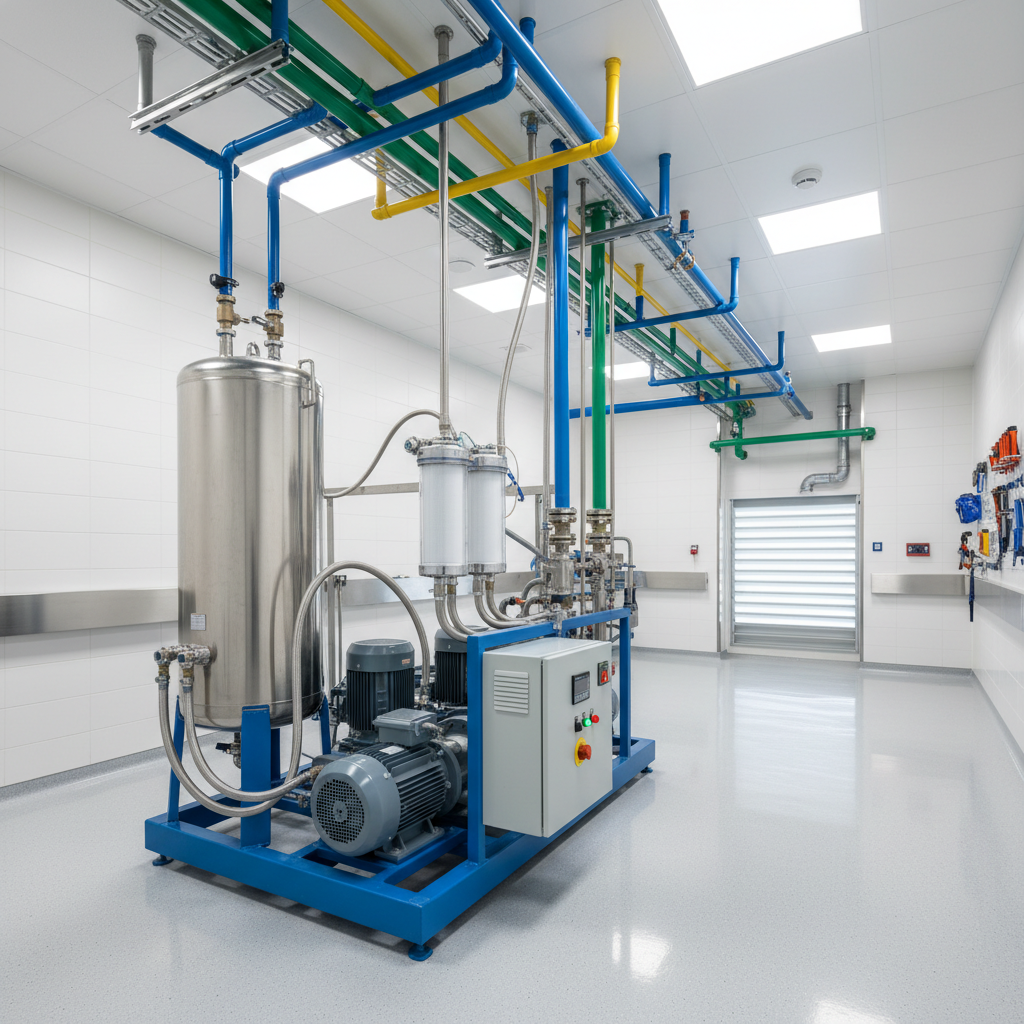
A medical vacuum pump system is the unsung mechanical backbone of any clinical environment, providing continuous negative pressure required during surgical suction, wound drainage, airway clearing, and anesthetic scavenging. Unlike standard industrial suction units, healthcare vacuum infrastructure must operate under stringent life-safety mandates where equipment failure is not an option.
In this comprehensive guide, we unpack the mechanical architecture, operational cycles, and regulatory compliance standards governing medical surgical vacuum systems. You will explore a detailed schematic breakdown of a NFPA 99-compliant duplex vacuum system, analyze the physical functions of receivers, inlet bacterial filters, and automated control panels, compare primary pump technologies, and review preventive maintenance protocols designed to guarantee continuous clinical vacuum.
The Core Concept: How Medical Vacuum Works
At its physical foundation, a medical vacuum system does not "suck" air or fluid into a pipeline. Instead, it creates a controlled zone of negative pressure, a pressure gradient lower than ambient atmospheric pressure (typically operating between 12 inHg and 19 inHg, or 300 to 480 mmHg below atmospheric). Ambient atmospheric pressure within the operating room or patient suite pushes air, bodily fluids, surgical debris, and spent gases into terminal pipeline inlets toward the lower pressure created at the central source.
In a clinical facility, vacuum piping runs from patient headwalls, surgical booms, and dental operatory terminals directly back to a central mechanical room plant. This plant continuously evacuators pipeline volume, traps moisture and biological particulate before it reaches the pumps, and exhausts air directly to the outside atmosphere away from personnel and fresh air intakes.
Why this matters for compliance: NFPA 99 (2024 edition, Section 5.1.3.7) mandates that medical-surgical vacuum sources must maintain a continuous minimum of 12 inHg (300 mmHg) of vacuum at the most distant terminal inlet during periods of maximum calculated system demand. Failure to maintain this baseline can compromise airway clearing in acute clinical emergencies.
Anatomy of a Duplex Medical Vacuum System (With Diagram)
To satisfy National Fire Protection Association (NFPA) Category 1 and Category 2 requirements, medical vacuum packages cannot rely on a single pump. They require multi-pump redundant architectures, most commonly duplex (two pumps), triplex (three pumps), or quadplex configurations, sized such that if the single largest pump fails, the remaining unit(s) can satisfy 100% of maximum facility demand.
System Schematic & Process Flow Diagram
The ASCII diagram below illustrates the complete fluid flow, mechanical redundancy, and filtration path of a standard NFPA 99 duplex medical-surgical vacuum system package:
| Diagram text |
|, |
| INLET ISOLATION VALVE |
| INLET BACTERIAL INLET BACTERIAL |
| FILTER (PRIMARY) FILTER (STANDBY) |
| (Efficiency: 99.97%) (Efficiency: 99.97%) |
| VACUUM RECEIVER TANK |
| (Fluid Trap / Dampener) |
| PUMP #1 PUMP #2 |
| (Lead Pump / Vane (Lag Pump / Auto- |
| or Claw or VFD) Alternating Assist) |
| EXHAUST SILENCER / EXHAUST SILENCER / |
| OIL-MIST ELIMINATOR OIL-MIST ELIMINATOR |
| OUTDOOR EXHAUST TERMINATION |
| (Screened Gooseneck Flange |
| >25' from HVAC Fresh Intakes) || Diagram text |
|, |
| MASTER ELECTRICAL CONTROL |
| PANEL |
| - PLC / Pressure Transducers |
| - Automatic Lead/Lag Selector |
| - Low Vacuum Alarm Contacts |
| - Visual / Audio Status HMI |
| (Monitors System Pressure) (Controls Starters) |
Step-by-Step Walkthrough: The 5 Core Stages of Operation
Understanding how a medical vacuum system functions requires walking through the journey of evacuated air from the patient room to outdoor exhaust.
1. Intake and Filtration (Bacterial Protection)
Before any gas or suctioned particulate reaches mechanical pumps or receiver tanks, it encounters the source isolation valves and the dual inlet bacterial filtration assembly. In surgical environments, fluids are captured locally via point-of-use canisters (suction liners). However, aerosolized pathogens, micro-droplets, and contaminated vapor still travel through the medical gas copper piping.
NFPA 99 Section 5.1.3.7.4 requires duplex inlet bacterial filters arranged in parallel so that one filter can be isolated and serviced while the remaining filter handles 100% of peak clinical flow. These sub-micron coalescing elements must carry an absolute rating of at least 99.97% retention at 0.3 microns (HEPA standard). Transparent fluid sight glasses allow facilities engineers to inspect fluid accumulation, and manual purge drain valves allow sterile drainage of collected biofluids.
2. Receiver Accumulator Dynamics
Once filtered, the gas stream enters the vacuum receiver tank. The receiver fulfills three critical operational needs:
- Pulsation Dampening: Rotary and claw vacuum pumps produce mechanical pressure oscillations. The tank acts as a buffer chamber, smoothing suction throughout the facility.
- Surge Volume & Pump Cycle Minimization: Instead of starting electric motors every time a clinician turns on a suction valve, the receiver acts as stored potential energy. Short-term peak draws draw from the tank volume, keeping pump cycles under manufacturer limits (typically under 10–15 motor starts per hour).
- Secondary Liquid Knockout: Due to the internal velocity drop as incoming air expands into the large vessel volume, moisture and condensed aerosols fall out of suspension into the base of the tank, where a bottom drain valve prevents fluid ingress into pump chambers.
3. Redundant Mechanical Pump Extraction
Downstream of the receiver, individual drop legs route evacuated gas to the operational pumps. Each pump leg includes an isolation ball valve and a spring-loaded non-return check valve. The check valve prevents back-leakage of atmospheric air into the system when a pump is offline or undergoing teardown.
Depending on clinical load, the lead pump pulls gas from the receiver and compresses it to slightly above atmospheric pressure for discharge. If an emergency occurs in surgical suites and demand outstrips the CFM capacity of the single lead unit, the line pressure drops below a pre-set threshold (e.g., falling from 19 inHg to below 14 inHg). The automated control panel instantly triggers the secondary (lag) pump to ramp up and provide parallel mechanical extraction.
4. Automated Electrical Control and Alternation
The system's "brain" is a NEMA-rated duplex control panel equipped with programmable logic controllers (PLCs), pressure transducers, and variable frequency drives (VFDs). The control system performs four vital roles:
- Automatic Alternation: After each runtime cycle or at timed intervals (e.g., every 24 hours), the controller swaps the lead and lag assignments. This balances operational run hours across both pump assemblies, preventing uneven motor wear.
- Fail-Safe Cascade: If the lead pump faults due to motor thermal overload or drive failure, the lag pump starts automatically without human intervention.
- Signal Transmission to Master Alarms: Under NFPA 99 Section 5.1.9, the vacuum source panel must trigger local visual/audible alarms and send low-vacuum fault contacts to facility-wide master alarm panels if pipeline pressure falls below 12 inHg.
- Energy Optimization: VFD-equipped systems dynamically adjust motor RPM to track precise surgical suction demand rather than running continuously at full load.
5. Separation, Silencing, and Safe Atmospheric Exhaust
The final phase involves neutralizing physical noise and safely rejecting contaminated air. Compressing vacuum air into an exhaust line generates significant acoustic energy and, in oil-sealed systems, vaporized lubricant aerosols.
Exhaust lines run through dedicated oil mist eliminators (which recover oil and return it to the pump casing) and industrial silencers. NFPA 99 strictly dictates the termination of medical vacuum exhaust:
- Must terminate outdoors at least 25 feet away from any building fresh air intakes, operable windows, doors, or public thoroughfares.
- Must terminate at a vertical level distinct from other building exhaust points.
- Must point downward (gooseneck or screened tee) with an end-screen to prevent rain ingress and pest nesting.
- Must never interconnect with building HVAC exhaust, medical air compressor intakes, or combustible waste flues.
Vacuum Pump Technologies Compared
Selecting the correct mechanical pump technology determines long-term maintenance costs, noise levels, water conservation, and life expectancy. Three primary pump configurations dominate clinical healthcare installations.
| Feature / Metric | Oil-Less Rotary Claw | Oil-Sealed Rotary Vane | Contact-Free Dry Rotary Vane |
|---|
| Operating Principle | Non-contacting counter-rotating claw rotors | Sliding vanes in eccentric rotor sealed with synthetic oil | Self-lubricating carbon-graphite sliding vanes |
| Lubrication Type | 100% Dry pumping chamber (gearbox oil only) | Continuous oil-injection or recirculating reservoir | 100% Dry / Oil-less |
| Typical Efficiency (CFM/HP) | Very High (3.5 – 4.5 CFM/HP) | High (3.0 – 4.0 CFM/HP) | Moderate (2.5 – 3.2 CFM/HP) |
| Max Vacuum Level | Up to 28.5 inHg | Up to 29.5 inHg | Up to 26.0 inHg |
| Maintenance Demands | Low (gearbox oil change every 5,000–8,000 hrs) | Moderate/High (frequent oil & exhaust separator changes) | High (carbon vane replacement every 3,000–5,000 hrs) |
| Water Consumption | Zero | Zero | Zero |
| Heat Dissipation | Moderate to High (requires room ventilation) | Moderate | Moderate to High |
| Initial Capital Cost | Moderate to High | Moderate | Low to Moderate |
| NFPA 99 Suitability | Standard of choice for new construction | Highly prevalent in existing hospitals | Common in smaller surgical centers / clinics |
For most modern healthcare facilities, oil-less rotary claw technology has become the industry standard. Because the claws do not make physical contact inside the compression chamber, there is zero internal friction, eliminating mechanical wear inside the swept volume and preventing synthetic oil aerosols from entering medical exhaust pathways.
Critical NFPA 99 Compliance Mandates for Medical Vacuum
Compliance is not an afterthought in medical gas architecture; it dictates every pipe diameter, valve selection, and wiring junction box. When evaluating or upgrading your vacuum source equipment, verify strict alignment with the latest editions of NFPA 99: Health Care Facilities Code.
- Redundancy (N+1 Rule - Section 5.1.3.7.1): A medical-surgical vacuum source must consist of two or more identical or variable-capacity vacuum pumps. The total system capacity must satisfy 100% of peak hospital demand with the largest single pump out of service.
- Emergency Power Connection (Section 5.1.3.7.2): Medical vacuum pumps, control panels, and alarm monitoring circuits must be connected to the facility's Essential Electrical System (Life Safety or Critical branch emergency generators) with automatic transfer switch (ATS) failover.
- Pipeline Material and Joining (Section 5.1.10.1): Vacuum lines within the building must use seamless hard-drawn ASTM B819 copper tubing (Type L or K). Joints must be brazed using a copper-phosphorus (BCuP series) brazing alloy without flux, purged continuously with oil-free dry nitrogen to eliminate internal copper oxide scaling.
- Third-Party Verification (Section 5.1.12): Prior to patient care use, every new installation, pipeline extension, or pump replacement must undergo independent ASSE 6030 verification testing to certify particulate counts, system cross-connection integrity, and operational flow rate thresholds.
To explore certified installation processes that meet these rigorous requirements, read our guide on professional medical gas installation services.
Actionable Preventive Maintenance: Routine Vacuum Checklist
Neglecting medical vacuum machinery can result in catastrophic suction loss in intensive care units or operating rooms. Facilities teams must enact an ongoing preventive maintenance program aligned with ASSE standard operating procedures.
Weekly Maintenance Protocols
- Inspect Pipeline Vacuum Gauge: Confirm system operates steadily between 15 inHg and 19 inHg.
- Drain Receiver Condensate: Manually open the receiver drain valve to expel trapped moisture and check for biological fluid breakthrough.
- Inspect Filter Sight Glasses: Verify that bacterial filter coalescing bowls are dry and free of particulate buildup or water logging.
- Check Oil Levels (Oil-Sealed Units): Ensure pump oil reservoirs are within manufacturer operating sights; look for discoloration or milky contamination.
Monthly Maintenance Protocols
- Exercise Lead/Lag Alternation: Manually cycle the control panel selector switch to confirm secondary and tertiary pumps start cleanly without motor shudder or thermal tripping.
- Inspect Exhaust Discharge: Verify outdoor exhaust terminations are unblocked, bug screens are undamaged, and no oil mist is accumulating on facility roof membranes.
- Vibration and Thermal Scans: Use an infrared thermometer to verify pump operating heads remain within baseline operating temperature curves.
Annual Certification and Mechanical Overhaul
Annual operational verifications are critical to maintaining hospital accreditation and Joint Commission readiness. Professional testing ensures pipeline sensors remain calibrated and that motor contactors switch reliably under dynamic loads. Discover what occurs during an annual medical gas inspection to keep your vacuum plant running smoothly.
For facilities handling proactive asset maintenance, establishing structured medical gas maintenance services drastically minimizes sudden mechanical outages and prolongs pump life by up to 10 years.
Clinical Implications: The Cost of Vacuum Failure
Why are these mechanical details so relentlessly scrutinized? In an operating room, vacuum powers surgical suction tips (Yankauer devices) clearing blood and fluid to allow surgeons to visualize hemorrhaging blood vessels. In post-anesthesia care units (PACU) and emergency trauma bays, high-flow vacuum clears vomitus and secretions from compromised patient airways during rapid sequence intubation.
A drop from 15 inHg to 8 inHg can mean the difference between immediate airway clearance and fatal pulmonary aspiration. Furthermore, poor vacuum exhaust design can cause hazardous anesthetic vapors or surgical smoke to be drawn into air handler units, contaminating adjacent clinical spaces. For facilities evaluating overall operating room safety and anesthetic gas handling, refer to our specialized WAG and chemical vapor monitoring solutions.
Why Partner with Medical Testing Solutions (MTS)?
Medical Testing Solutions (MTS) is a nationally recognized, ASSE-certified medical gas service and equipment provider headquartered in Fort Lauderdale, Florida. We specialize in end-to-end medical gas infrastructure lifecycle management:
- Equipment Sourcing & Distribution: We supply industry-leading NFPA 99-compliant medical vacuum systems, including oil-less claw, rotary vane, and custom multiphase package configurations through our comprehensive products catalog.
- Turnkey ASSE 6010 Installation: Our certified installation specialists ensure your piping, valves, and mechanical plants are fabricated cleanly, purged with inert nitrogen, and pressure-tested without failure.
- Independent ASSE 6030 Verification: Our credentialed inspectors perform meticulous third-party verification testing, issuing full documentation packages required by AHCA, Joint Commission, and CMS. Learn more about our rigorous medical gas verification protocols.
- Maintenance & Regulatory Certification: From routine semi-annual preventive overhauls to emergency vacuum pump rebuilds, our factory-trained technicians keep healthcare infrastructure running 24/7/365. Review our comprehensive medical gas certification solutions.
Upgrade, Verify, or Service Your Medical Vacuum Infrastructure
Whether you are designing a brand-new surgical center, replacing an aging oil-sealed vane vacuum package, or preparing for an upcoming Joint Commission accreditation audit, Medical Testing Solutions delivers the equipment, installation expertise, and verification services you need to remain compliant and operational.
Don't wait for a mechanical pump fault to disrupt surgical schedules. Contact our ASSE-credentialed medical gas specialists today to schedule an inspection or request an engineering quote.